Cranberries: Tart Little Powerhouses for Cold-Weather Cooking
From sauce to smoothies to salads — how cranberries' type-A proanthocyanidins support urinary health, and 12 pro tips for making the most of them all winter.
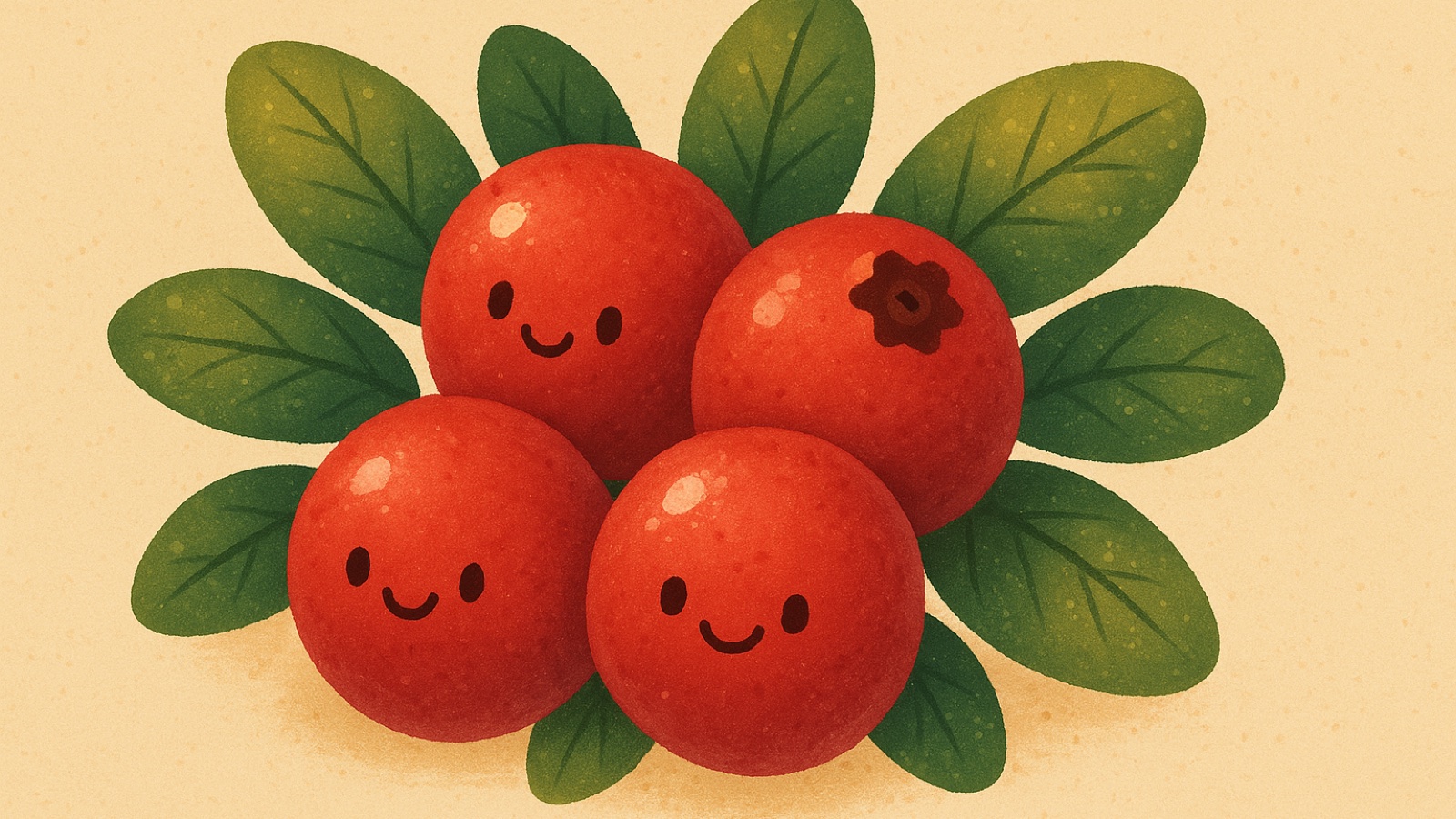
From jewel-red sauces to bright salads, smoothies, bakes, and chutneys, cranberries signal the start of cozy season. Their bold tartness can wake up almost any dish, and unlike many fruits, they shine in both savory and sweet recipes. Bonus: cranberries bring fiber, vitamin C (when fresh), and a distinctive set of polyphenols (notably type‑A proanthocyanidins) linked to well‑studied urinary tract benefits.
Nutrition & Evidence‑Informed Health Notes
At a glance (per 1 cup / ~100 g raw cranberries): ~46-51 kcal, ~4-5 g fiber, ~14 mg vitamin C, ~85-87% water. Dried cranberries are typically sweetened- check labels for added sugars and smaller fiber content per serving.
What's reasonably supported:
- Cranberries are rich in polyphenols, especially type‑A proanthocyanidins (PACs) – that can reduce bacterial adhesion in the urinary tract.
- Large reviews report that cranberry products help prevent (not treat) recurrent UTIs in certain groups (e.g., women with recurrent UTIs), while showing no benefit in others (e.g., elderly in care settings). Formulations and doses vary across studies.
- As a fruit ingredient, cranberries contribute fiber and vitamin C (fresh forms), and their polyphenols add to overall antioxidant intake. Evidence for broader cardiometabolic effects is emerging but mixed; keep claims modest.
Takeaway: Use cranberries first for flavor and texture, and consider their prevention‑oriented UTI support as a potential bonus in specific populations. They are not a treatment for active UTIs.
How to Choose & Store Cranberries
Choose:
- Look & feel: Berries should be firm, glossy, and deeply red; toss any soft, shriveled, or bruised fruit.
- Sound/"bounce" test: Very fresh berries are firm enough to bounce lightly, an old grower trick that correlates with internal freshness.
- Forms: Fresh (bags), frozen (unsweetened), or dried (usually sweetened). For sauces and bakes, fresh or frozen deliver the brightest flavor.
Store:
- Refrigerate fresh cranberries in original packaging or a breathable container for up to ~4 weeks.
- Freeze fresh berries directly in their bag or tray‑freeze first; keep up to 1 year. Rinse just before using, no thaw needed for most recipes.
Dried cranberries keep well in an airtight container; mind added sugar amounts per serving.
How Cranberries Are Enjoyed
- North America: Classic sauces and relishes; baked goods; salads; turkey and pork pairings.
- Canada: Jams, compotes, and holiday desserts; savory chutneys.
- Poland/Europe: Cranberry preserves and meat accompaniments (note: regional Vaccinium species vary, but culinary roles are similar).
- Modern kitchens: Smoothies, fermented relishes, pickled cranberries, and reduced‑sugar compotes.
12 Practical Tips to Prep & Cook Cranberries Like a Pro
- Balance the tartness: Use orange zest, apple, pears, or a touch of maple/honey instead of all refined sugar.
- Quick small‑batch sauce: Simmer 2 cups cranberries with 1 orange (zest + juice) and 2-3 tbsp maple; cook until just popped.
- Roast for depth: Toss with a little oil and roast at 425°F/220°C until blistered, great for grain bowls.
- No‑cook relish: Pulse fresh berries with orange, jalapeño, and herbs for a bright condiment.
- Add to savory pans: Deglaze roasted chicken or pork drippings with cranberries + stock for a tangy pan sauce.
- Fold into batters: Toss berries with a bit of flour before adding to muffins/quickbreads to reduce sink.
- Boost salads: Add fresh or thawed cranberries to kale or cabbage slaws with a citrus vinaigrette.
- Make a chutney: Cranberries + onion + ginger + vinegar; serve with lentils, tofu, or grilled fish.
- Use frozen straight from the bag: Especially in sauces, compotes, smoothies, and oatmeal.
- Lightly sweeten dried cranberries: Rehydrate in hot tea or citrus juice to soften and disperse sweetness.
- Try pickled cranberries: Briefly simmer in a spiced vinegar brine; great with soft cheeses.
- Batch and freeze: Cook a low‑sugar base sauce, cool, and freeze in small jars for quick sides all winter.
Final Thought
Cranberries bring color, tang, and texture to fall and winter plates, and they travel well across cuisines. Keep a bag in the fridge or freezer, lean on citrus and spices to balance the tartness, and use them beyond the holidays in everyday bowls, salads, and sauces.
References
- USDA FoodData Central / MyFoodData. Nutrition facts for raw and dried cranberries. https://tools.myfooddata.com/nutrition-facts/171722/wt1 ; https://tools.myfooddata.com/nutrition-facts/171723/wt1 ; https://tools.myfooddata.com/nutrition-facts/2604246/wt1
- Cochrane Review (2023 treatment). Cranberries for treating UTIs: evidence to date does not support use for treatment. PubMed: https://pubmed.ncbi.nlm.nih.gov/38096261/
- National Center for Home Food Preservation. Freezing cranberries; Using and preserving cranberries. https://nchfp.uga.edu/how/freeze/fruits/freezing-cranberries/ ; https://nchfp.uga.edu/resources/entry/using-and-preserving-cranberries
- UC Davis Postharvest Technology Center. Bushberries (cranberry) storage recommendations: temp, RH, and shelf life. https://postharvest.ucdavis.edu/produce-facts-sheets/bushberry ; general storage resources: https://postharvest.ucdavis.edu/storage-recommendations
- Pourmasoumi M, et al. Effects of cranberry on cardiovascular metabolic risk factors: a systematic review and meta‑analysis. Clin Nutr ESPEN. 2020;37:9‑16. PubMed: https://pubmed.ncbi.nlm.nih.gov/31023488/
- Wang Y, et al. Effects of chronic consumption of specific fruit on blood pressure: a systematic review and meta‑analysis of RCTs (includes cranberry/cherry juice). Nutrients. 2020;12(6):1726. PubMed: https://pubmed.ncbi.nlm.nih.gov/32535781/
Note: The information provided should not replace professional medical advice.