Halibut: The Mild, Meaty Fish That Does More Than Fill Your Plate
27g protein per serving, vitamin D, B12, and selenium — the complete guide to halibut's science-backed benefits for heart, brain, and muscle health.
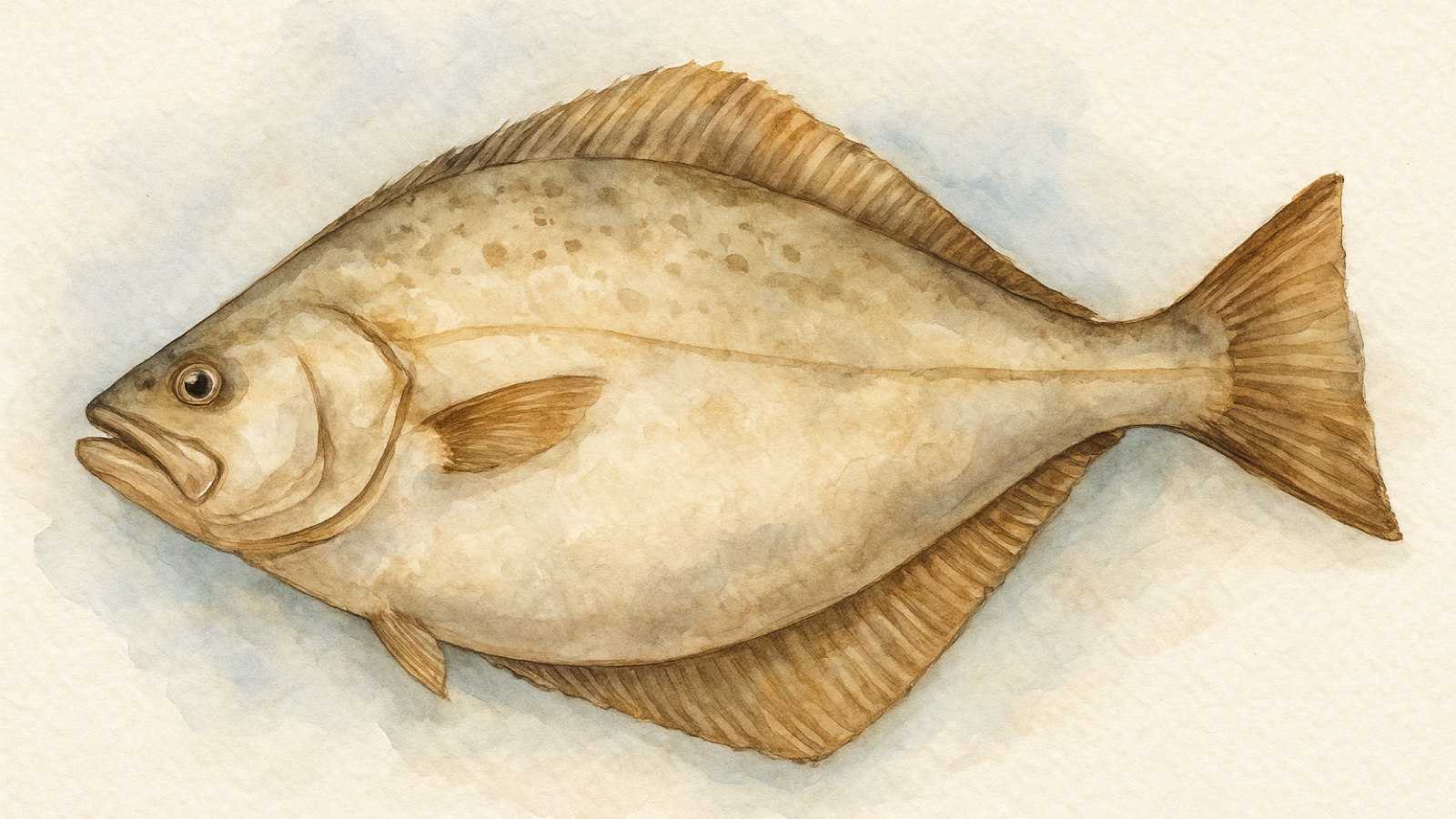
Think about the last time you ordered grilled fish at a restaurant or baked a flaky fillet at home. Chances are it might've been halibut. This lean white fish shows up in tacos, chowders, seared entrees, and fish and chips across many cuisines. With its mild taste and satisfying texture, halibut is an easy go-to. But what many people don't realize is that halibut isn't just delicious. It's also an underappreciated powerhouse of health benefits.

Nutritional Facts & Health Benefits of Halibut
Halibut is low in fat yet packed with protein, omega-3 fatty acids, and essential nutrients that support brain, heart, and muscle function. Here's what a 3.5 oz (100g) serving of cooked halibut typically provides:
- Calories: 140 kcal
- Protein: 27g
- Fat: 3g (including ~500mg omega-3s)
- Vitamin D: ~33% of Daily Value (DV)
- Vitamin B12: ~90% DV
- Selenium: ~80% DV
- Magnesium, Niacin, and Potassium: ~10–20% DV
Here are some peer-reviewed findings on halibut or lean fish intake:
- Cardiovascular Health in Older Adults
- A cohort study in Circulation (2005) of over 5,000 U.S. adults aged 65+ found that consuming lean fish like halibut at least once a week was associated with a 27% lower risk of heart failure. [https://www.ahajournals.org/doi/10.1161/01.CIR.0000163014.75162.29]
- Omega-3s and Brain Aging
- A meta-analysis in Frontiers in Aging Neuroscience (2016) reviewing 21 studies found that moderate intake of omega-3-rich fish like halibut helped preserve brain volume and reduced age-related cognitive decline in older adults. [https://www.ncbi.nlm.nih.gov/pmc/articles/PMC4937016/]
- Mental Health & Depression Risk
- A systematic review in Journal of Affective Disorders (2015) showed that fish consumption, especially species with moderate omega-3s like halibut, was linked to lower depression risk across 26 studies including diverse adult populations. [https://pubmed.ncbi.nlm.nih.gov/25701420/]
- Muscle Mass in Aging Adults
- A clinical trial in The American Journal of Clinical Nutrition (2017) with 60 older adults found that a high-protein diet including lean fish like halibut improved muscle retention during weight loss. [https://academic.oup.com/ajcn/article/106/2/339/4557570]
- Heart Health in Children and Teens A multi-country observational study in Public Health Nutrition (2020) including 1,800 adolescents found that higher fish intake, including halibut, was associated with lower blood pressure and better omega-3 index. [https://www.cambridge.org/core/journals/public-health-nutrition/article/abs/fish-consumption-and-cardiometabolic-health-in-european-adolescents/]
How to Choose High-Quality Halibut
Whether you're shopping at a grocery store or your local fishmonger, here's how to pick the best halibut:
- Smell: Fresh halibut should smell clean, like the sea—not fishy.
- Texture: Look for firm, translucent white flesh. Avoid mushy, dull, or yellowing fillets.
- Skin-on pieces: Should appear shiny and tight, not slimy.
- Frozen options: Choose vacuum-sealed fillets labeled as wild-caught or sustainably sourced.
At farmers or coastal markets: Ask when it was caught. The fresher, the better. If possible, buy directly from vendors who source from local fisheries.
How Halibut is Enjoyed Around the World
- Pacific Northwest & Alaska: Pan-seared or cedar plank grilled, often served with lemon and herbs.
- France: Poached in court-bouillon or beurre blanc sauce for a delicate entrée.
- Japan: Used raw as sushi or sashimi (hirame), showcasing its clean texture.
- Norway: Slow-baked or pan-fried with butter and dill, highlighting freshness.
- Mexico: Flaked into tacos with lime and avocado.
- Russia: Smoked halibut is a common delicacy in northern regions.
10+ Smart Tips to Cook and Prep Halibut
- Pan-sear with lemon and thyme for crispy edges and a tender center.
- Bake with garlic, olive oil, and cherry tomatoes for a one-pan meal.
- Steam with ginger and scallions for a light, Asian-inspired dinner.
- Grill on a cedar plank to infuse smoky flavor.
- Broil with mustard glaze for a tangy finish.
- Flake into fish tacos with cabbage slaw and lime crema.
- Add to chowders or stews; halibut holds shape well.
- Poach in vegetable broth for a protein-rich soup.
- Marinate with herbs and citrus before baking.
- Wrap in parchment with veggies for no-mess oven cooking.
- Cube for kebabs with zucchini and bell pepper on skewers.
Final Thoughts: Halibut is Subtle, But Mighty
Halibut is more than a mild fish — it's a health-boosting food that works well in everything from elegant entrees to family-friendly dinners. With impressive amounts of protein, omega-3s, B vitamins, and minerals, halibut supports heart health, brain function, and strong muscles at any age.
So the next time you see halibut on a menu or in the seafood case, don't overlook it. Pick it, prep it, and enjoy knowing that this delicious fish is doing your body plenty of good.
Note: The information provided should not replace professional medical advice.