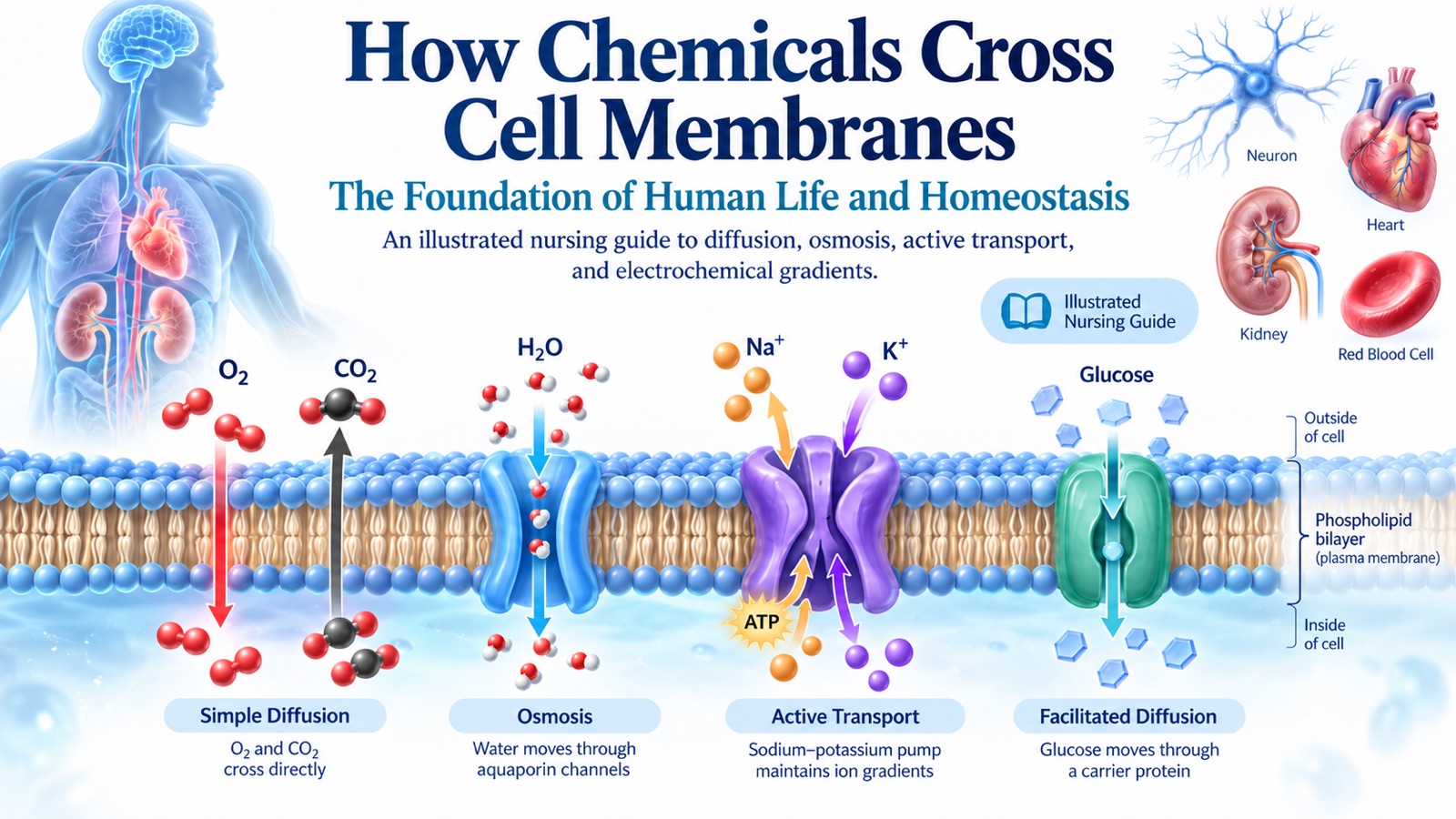
From Atoms to Organism: The 8 Levels of Human Body Organization
A visual, nursing-friendly guide to how atoms become molecules, organelles, cells, tissues, organs, organ systems, and ultimately the human body.
The human body looks unbelievably complicated.
And, to be fair, it is.
But underneath all that complexity is a surprisingly organized structure.
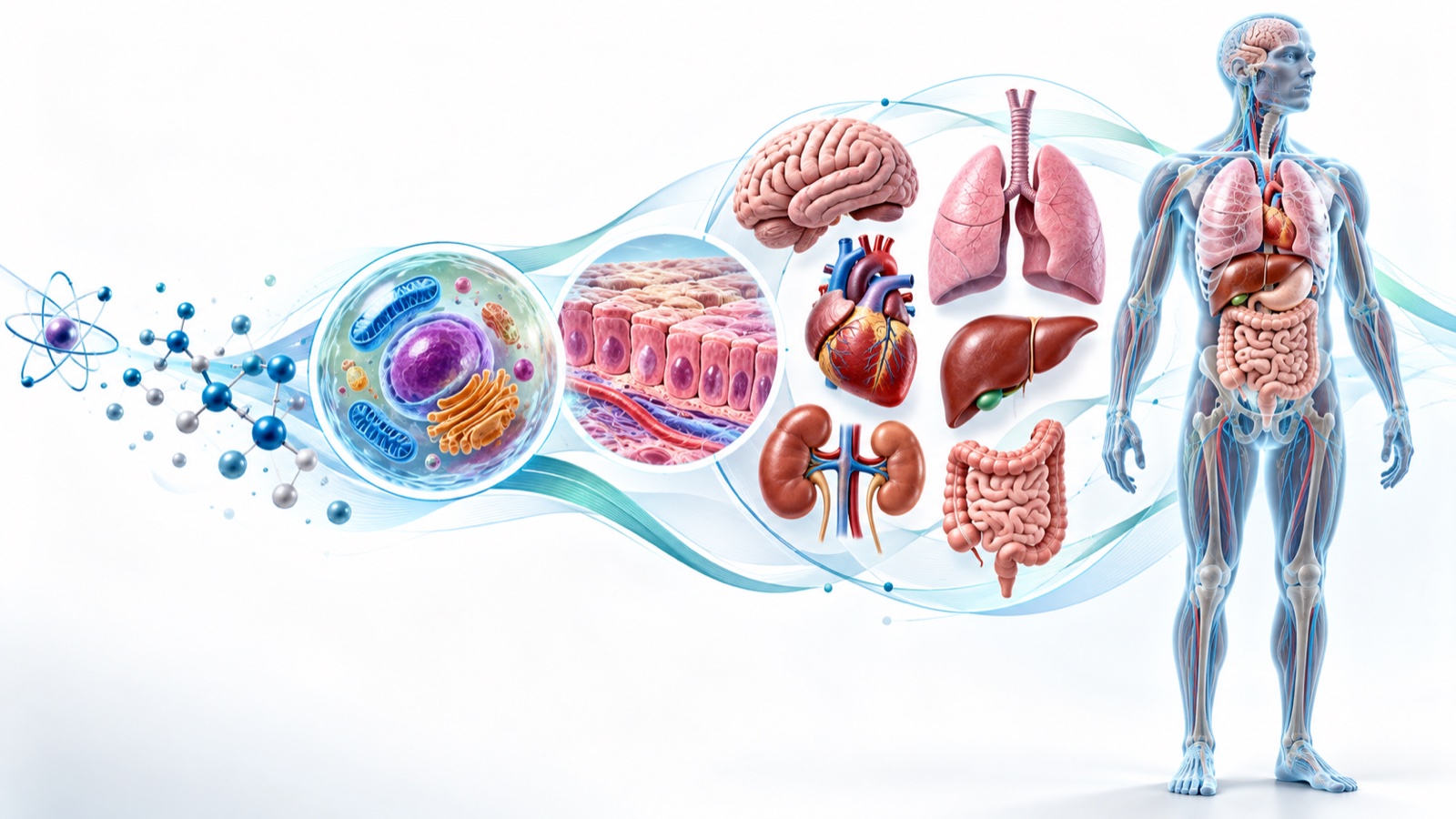
If we start with the smallest building blocks and work our way upward, the hierarchy looks like this:
Atoms → Molecules → Organelles → Cells → Tissues → Organs → Organ Systems → Organism
In traditional anatomy and physiology, these are often grouped into six major levels:
Chemical → Cellular → Tissue → Organ → Organ System → Organism
For learning purposes, however, we will expand the chemical and cellular levels so that each step is easier to understand.
Think of it as building the human body one layer at a time.
Quick Overview
| Level | What It Represents | Example |
|---|---|---|
| 1. Atoms | Small chemical building blocks | Oxygen, sodium, potassium |
| 2. Molecules | Atoms chemically joined together | Water, glucose, ATP |
| 3. Organelles | Specialized structures inside cells | Nucleus, mitochondria |
| 4. Cells | Smallest living units | Neuron, muscle cell |
| 5. Tissues | Groups of similar cells | Muscle tissue |
| 6. Organs | Multiple tissues working together | Heart, lungs |
| 7. Organ Systems | Groups of organs with related functions | Cardiovascular system |
| 8. Organism | The complete living human being | Human |
Level 1: Atoms
Everything starts ridiculously small.
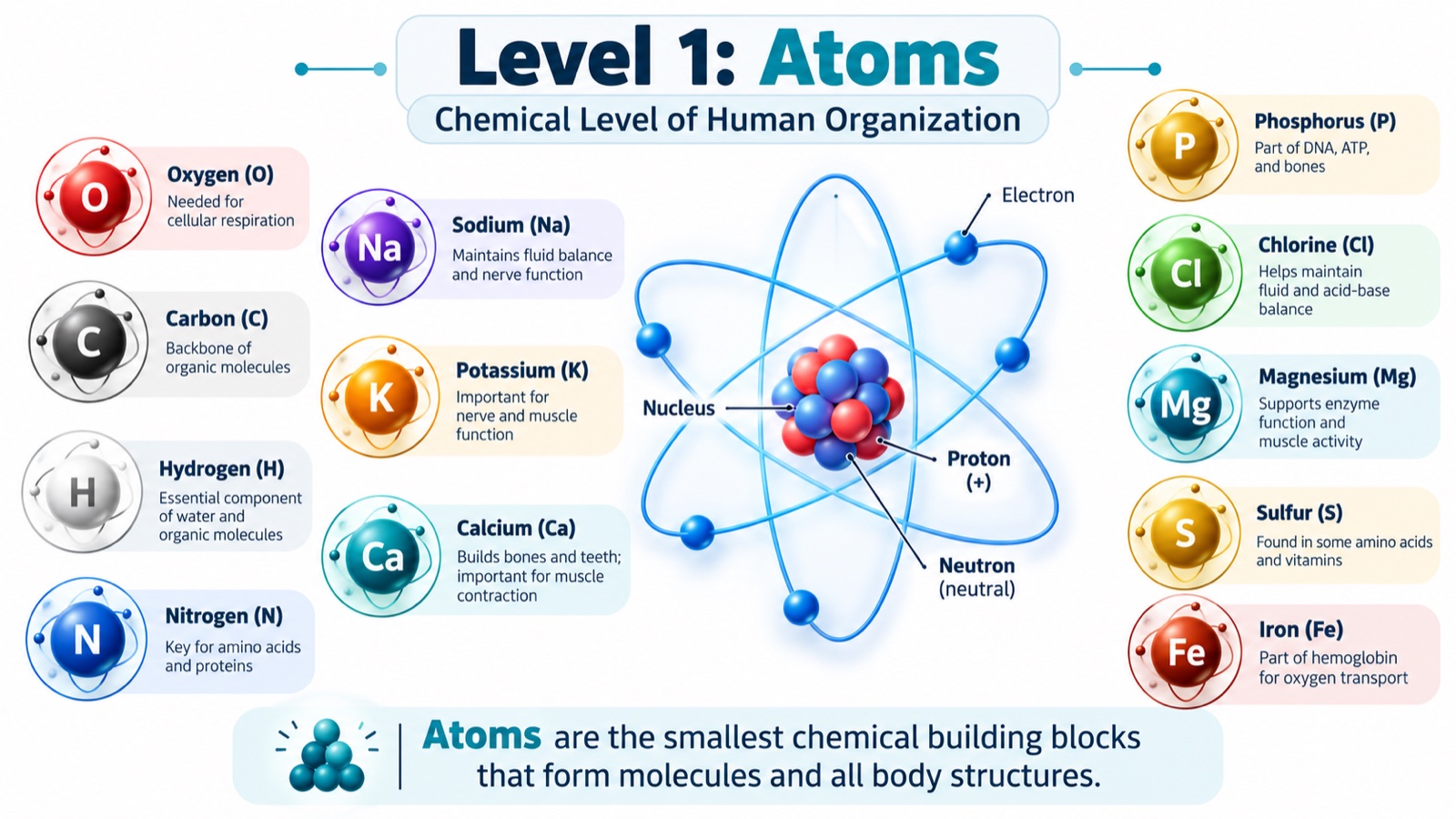
Atoms are the basic chemical building blocks of matter.
The human body contains many important elements, including:
- Oxygen
- Carbon
- Hydrogen
- Nitrogen
- Sodium
- Potassium
- Calcium
- Phosphorus
- Magnesium
- Chlorine
- Sulfur
- Iron
They may look like ordinary entries on the periodic table, but inside the human body they are constantly involved in processes necessary for life.
Important Examples
Oxygen supports cellular respiration.
Carbon forms the backbone of many organic molecules.
Hydrogen is a major component of water and participates in acid-base balance.
Sodium helps regulate fluid balance and nerve activity.
Potassium is essential for nerve transmission and muscle contraction.
Calcium supports bones, muscle contraction, nerve signaling, and blood clotting.
Iron is an important part of hemoglobin, which helps transport oxygen.
Tiny atoms.
Very large consequences.
Why Nurses Care
Many nursing problems begin at the atomic and ionic level.
For example:
- Abnormal potassium can affect cardiac electrical activity.
- Abnormal sodium can cause neurological symptoms.
- Abnormal calcium can affect nerves, muscles, and the heart.
- Abnormal magnesium can contribute to neuromuscular and cardiac problems.
This is why nurses become very familiar with laboratory values such as:
Na⁺, K⁺, Ca²⁺, Mg²⁺, and Cl⁻
Key takeaway: Atoms are the basic chemical building blocks of the human body.
When atoms combine chemically, they form molecules.
Level 2: Molecules
Atoms discover teamwork.
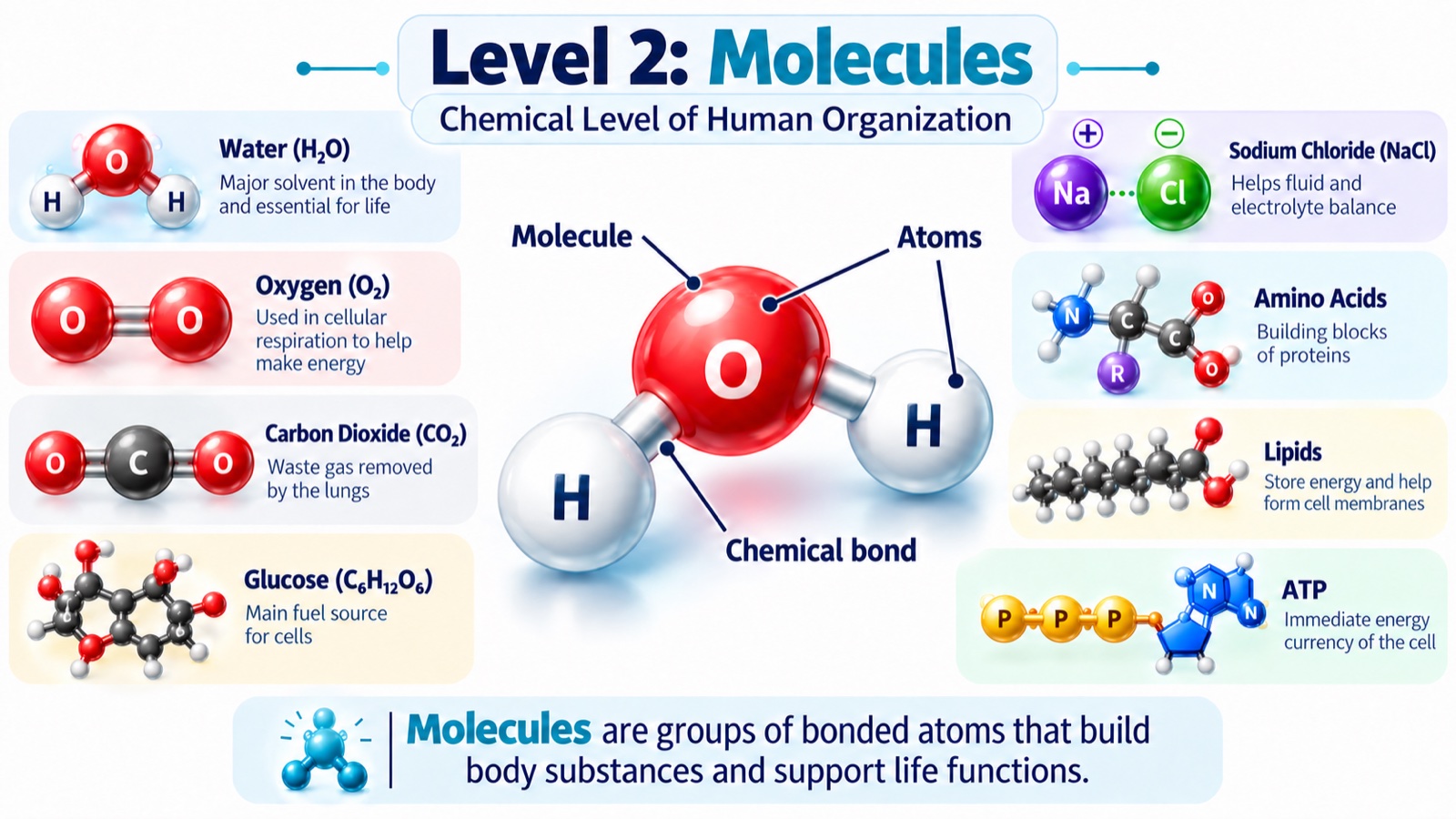
A molecule forms when atoms are chemically bonded together.
For example:
2 hydrogen atoms + 1 oxygen atom = H₂O
That is water.
Other important biological molecules include:
- Water
- Oxygen
- Carbon dioxide
- Glucose
- Amino acids
- Lipids
- Proteins
- DNA
- ATP
Your body is essentially an extremely sophisticated chemistry experiment that somehow learned how to walk around and complain about being tired.
Important Molecules
Water is the body's major solvent.
It provides the environment where many chemical reactions occur and is essential for:
- Fluid balance
- Temperature regulation
- Transport
- Metabolism
Oxygen is required for efficient cellular energy production.
Carbon dioxide is produced during metabolism and must be removed, mainly through the respiratory system.
Glucose is an important fuel source for cells.
Amino acids are building blocks used to form proteins.
Lipids:
- Store energy
- Form parts of cell membranes
- Participate in hormone production
ATP stands for adenosine triphosphate.
It acts as an immediately usable energy source for cells.
Why Nurses Care
The molecular level connects directly to major nursing concepts such as:
- Fluid balance
- Electrolytes
- Glucose regulation
- Oxygenation
- Acid-base balance
- Nutrition
- Metabolism
- Medication action
When you monitor blood glucose, administer oxygen, evaluate electrolytes, or give IV fluids, chemistry has officially followed you into clinical practice.
Key takeaway: Molecules are groups of chemically bonded atoms that form substances needed for life.
Inside cells, molecules are organized into specialized structures called organelles.
Level 3: Organelles
Welcome to the cell's tiny departments.
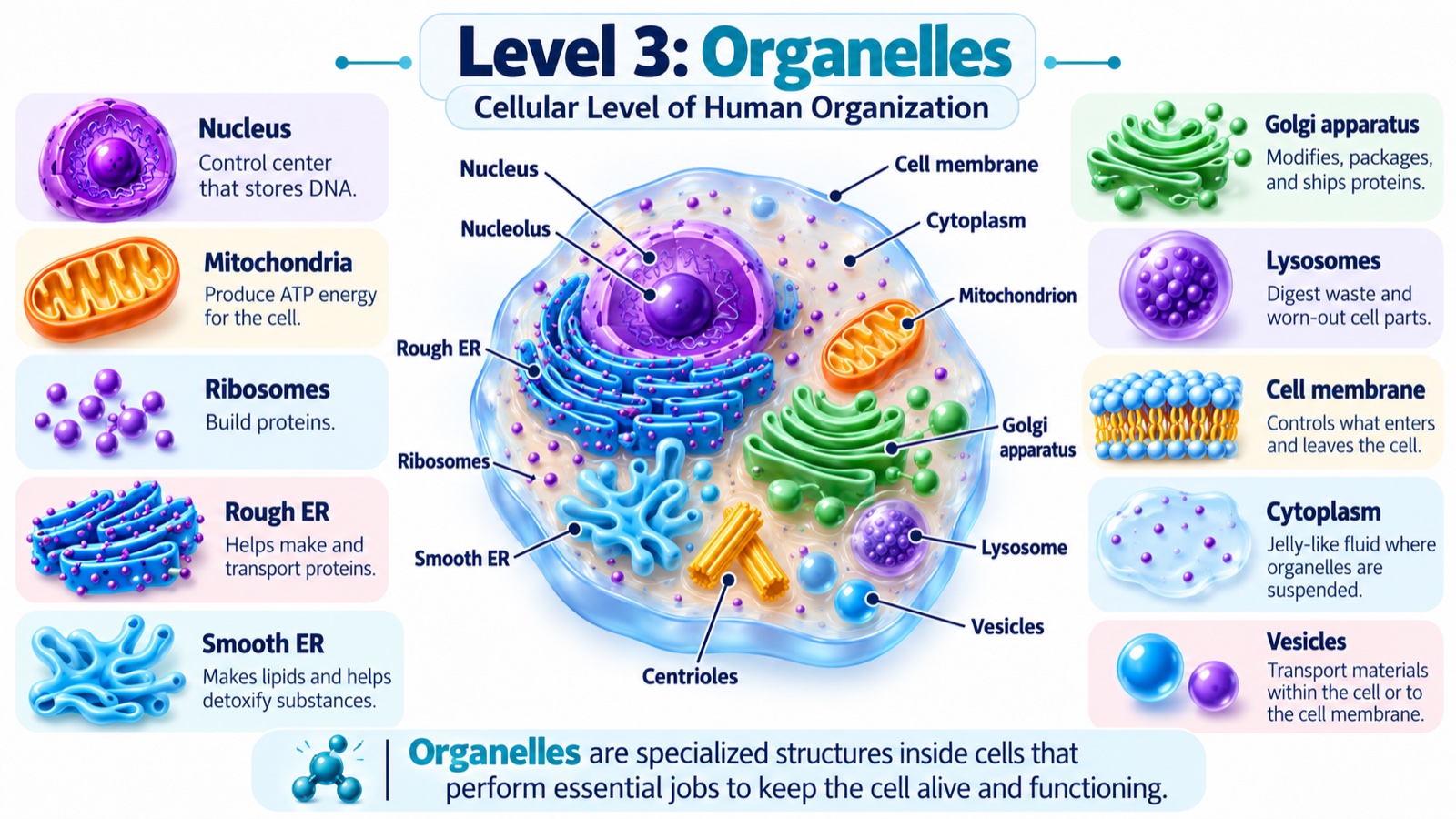
Organelles are specialized structures located inside cells.
Each organelle performs a particular job.
If a cell were a company:
- The nucleus would be management.
- The mitochondria would run the power plant.
- The ribosomes would manufacture products.
- The Golgi apparatus would handle packaging and shipping.
- The lysosomes would be the cleanup crew.
Suddenly cell biology feels slightly more familiar.
Major Organelles
The nucleus stores DNA and helps control cellular activity.
The nucleolus helps produce components needed to make ribosomes.
Mitochondria produce much of the ATP used by cells. They are often called the cell's powerhouses.
Ribosomes build proteins.
The rough endoplasmic reticulum contains ribosomes and helps produce and transport proteins.
The smooth endoplasmic reticulum participates in:
- Lipid production
- Detoxification
- Certain metabolic processes
The Golgi apparatus modifies, sorts, packages, and transports cellular products.
Lysosomes contain enzymes that help break down:
- Waste
- Damaged structures
- Worn-out cell components
The cell membrane controls what enters and leaves the cell.
The cytoplasm is the fluid environment where organelles are suspended and many chemical reactions occur.
Why Nurses Care
Cellular structures are involved in many disease processes.
For example:
- Hypoxia reduces ATP production.
- Toxins can damage cell membranes.
- Genetic disorders can alter protein production.
- Cancer involves abnormal regulation of cell growth and division.
Understanding organelles helps explain what is happening underneath many clinical conditions.
Key takeaway: Organelles are specialized structures inside cells that perform essential cellular functions.
Together, these structures form a complete cell.
Level 4: Cells
The smallest unit that is actually alive.
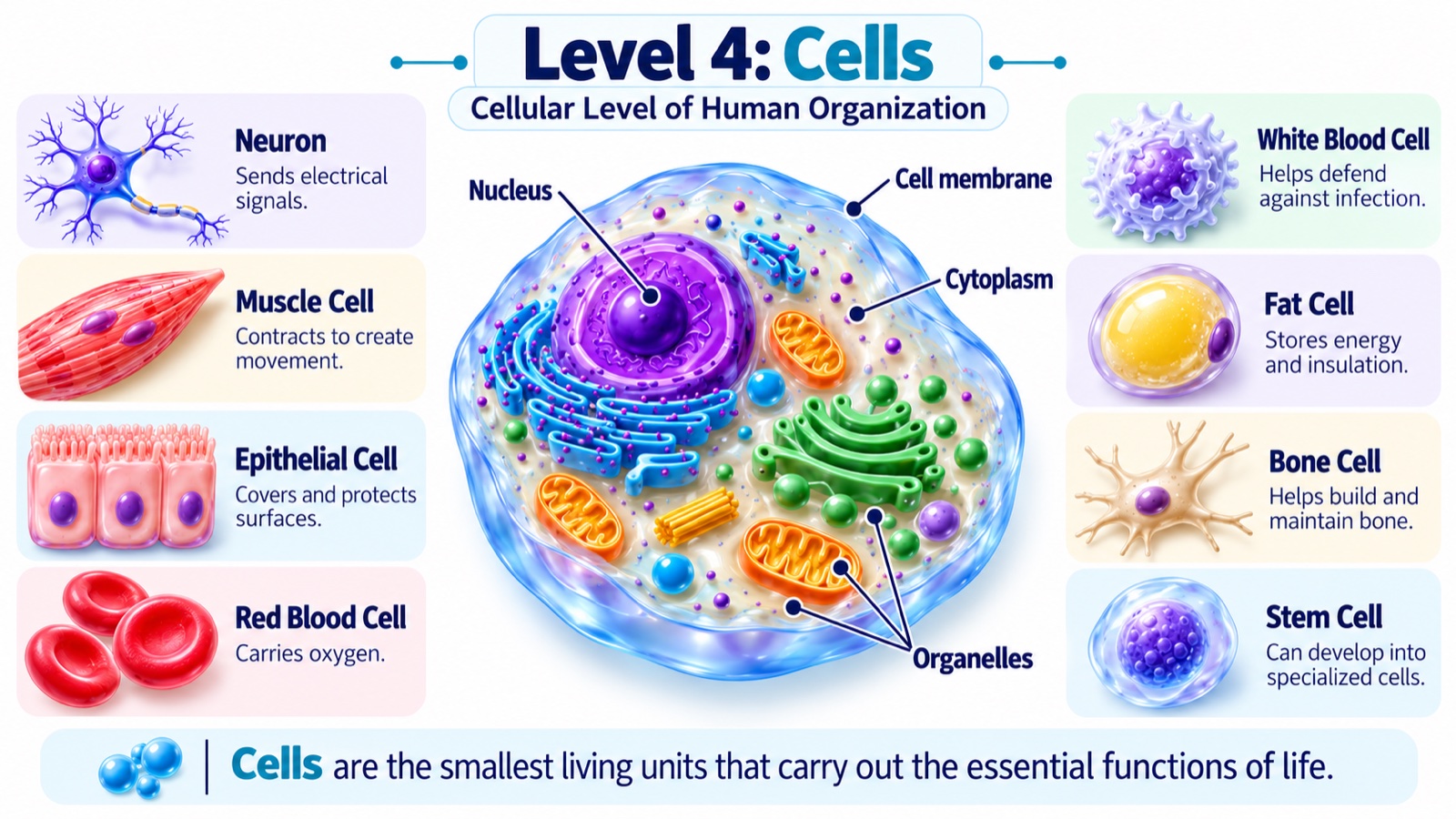
A cell is the basic structural and functional unit of life.
Cells can perform complex activities such as:
- Metabolism
- Communication
- Growth
- Reproduction
- Response to stimuli
Humans contain many specialized cell types because apparently one cell type was not enough paperwork.
Examples of Human Cells
Neurons transmit electrical and chemical signals.
Muscle cells contract and generate force.
Epithelial cells cover and protect surfaces.
Red blood cells transport oxygen.
White blood cells participate in immune defense.
Fat cells store energy and help provide insulation.
Bone cells help build and maintain bone.
Stem cells can develop into specialized cell types.
Structure Supports Function
Different cells look different because their structures match their jobs.
A neuron has long projections because it communicates across distances.
A muscle cell contains specialized proteins because it must contract.
A red blood cell has a shape that supports efficient gas transport.
This relationship is one of the most important principles in anatomy:
Structure supports function.
Why Nurses Care
Many diseases begin with cellular dysfunction.
Examples include:
- Hypoxia
- Infection
- Cancer
- Electrolyte imbalance
- Poor perfusion
- Cellular injury
Ultimately, keeping a patient alive depends on maintaining adequate oxygen, nutrients, circulation, and function at the cellular level.
Key takeaway: Cells are the smallest living units capable of carrying out essential life processes.
Groups of cells working together form tissues.
Level 5: Tissues
Cells form teams.
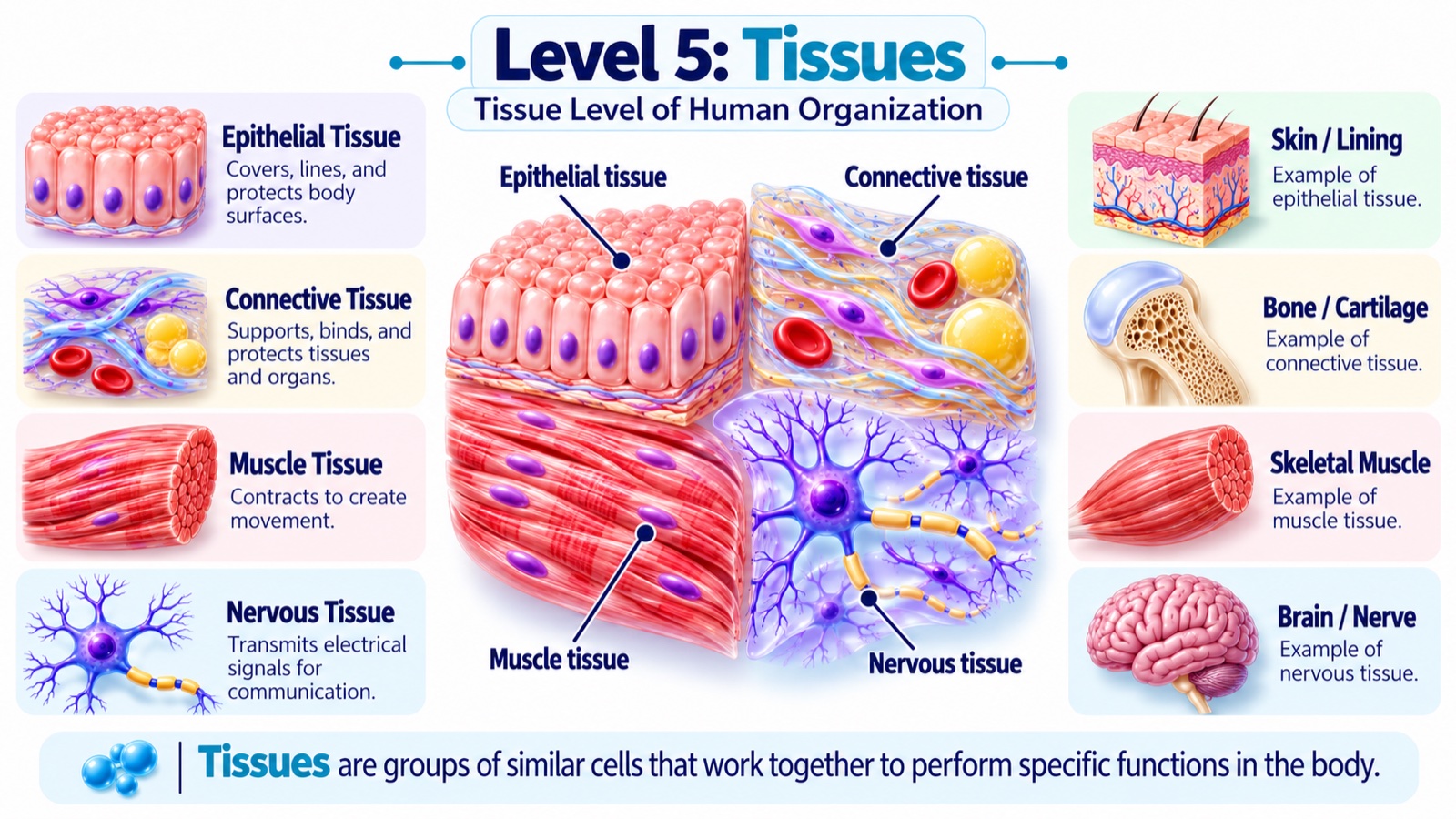
A tissue is a group of similar cells and supporting materials working together to perform related functions.
The human body contains four fundamental tissue types:
- Epithelial tissue
- Connective tissue
- Muscle tissue
- Nervous tissue
These four appear again and again throughout anatomy.
Epithelial Tissue
Epithelial tissue:
- Covers surfaces
- Lines cavities
- Lines organs
- Forms many glands
Functions may include:
- Protection
- Absorption
- Secretion
- Filtration
- Exchange
Examples include the lining of the digestive tract, respiratory tract, blood vessels, and skin surfaces.
Connective Tissue
Connective tissue supports, binds, protects, stores, and transports.
Examples include:
- Bone
- Cartilage
- Fat
- Tendons
- Ligaments
- Blood
Yes, blood is connective tissue.
Biology enjoys keeping students alert.
Muscle Tissue
Muscle tissue contracts to generate force.
There are three major types:
- Skeletal muscle
- Cardiac muscle
- Smooth muscle
These tissues allow:
- Body movement
- Heart contraction
- Movement of substances through internal organs
Nervous Tissue
Nervous tissue specializes in communication.
Neurons transmit electrical signals, while supporting cells help maintain the environment needed for nervous system function.
Why Nurses Care
Many common conditions involve tissue damage.
Examples:
- Pressure injuries affect skin and underlying tissues.
- Myocardial infarction damages cardiac muscle.
- Stroke damages nervous tissue.
- Fibrosis involves excessive connective tissue formation.
Key takeaway: Tissues are groups of cells that work together to perform specialized functions.
Multiple tissue types combine to form organs.
Level 6: Organs
Different tissues build something recognizable.
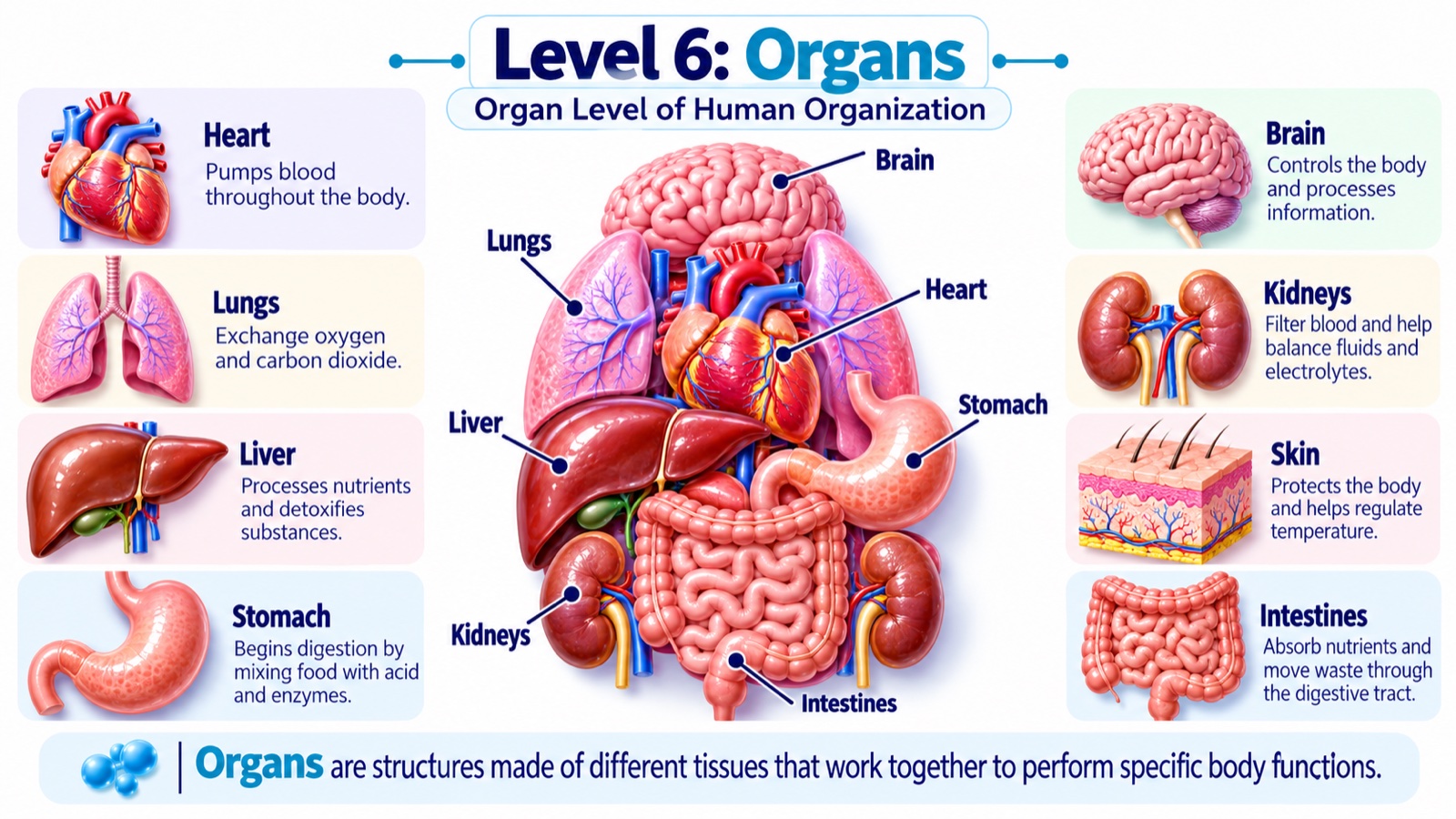
An organ is a structure made of two or more tissue types working together to perform specific functions.
Examples include:
- Heart
- Brain
- Lungs
- Liver
- Kidneys
- Stomach
- Intestines
- Skin
Take the heart as an example.
It contains:
- Cardiac muscle tissue
- Connective tissue
- Nervous tissue
- Epithelial tissue
The heart is therefore not just one giant muscle cell having a very productive day.
It is an organized structure containing several tissue types.
Major Organ Examples
Brain: Controls and coordinates body functions and processes information.
Heart: Pumps blood through the cardiovascular system.
Lungs: Exchange oxygen and carbon dioxide.
Liver: Processes nutrients and performs many metabolic and detoxification functions.
Stomach: Stores and begins the mechanical and chemical processing of food.
Kidneys: Help regulate:
- Fluid balance
- Electrolytes
- Acid-base balance
- Waste removal
Intestines: Help digest and absorb nutrients and move waste through the gastrointestinal tract.
Skin: The skin is also an organ.
It helps with:
- Protection
- Sensation
- Temperature regulation
- Fluid protection
Why Nurses Care
Many major nursing topics are organized around organs.
Examples include:
- Heart failure
- Pneumonia
- Kidney injury
- Liver failure
- Stroke
- Gastrointestinal bleeding
But organs do not work independently.
When one organ fails, other organs may be affected.
That brings us to organ systems.
Key takeaway: Organs are structures made of multiple tissues working together to perform specific functions.
Level 7: Organ Systems
Now the group project gets serious.
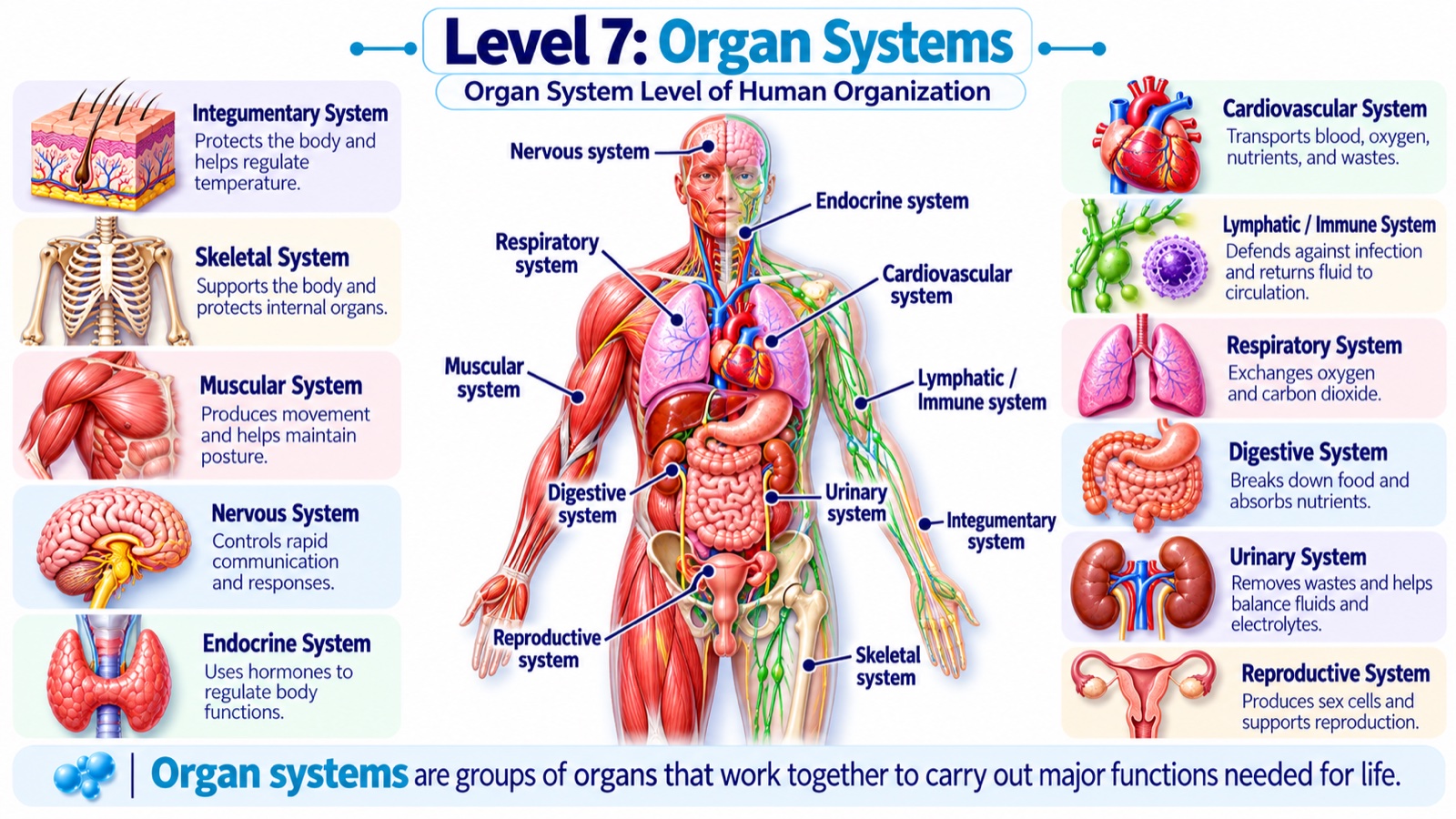
An organ system is a group of organs and related structures working together to accomplish major physiological functions.
Major human organ systems include:
- Integumentary system
- Skeletal system
- Muscular system
- Nervous system
- Endocrine system
- Cardiovascular system
- Lymphatic and immune system
- Respiratory system
- Digestive system
- Urinary system
- Reproductive system
How the Systems Work Together
The respiratory system brings oxygen into the body.
The cardiovascular system transports that oxygen through the blood.
The digestive system provides nutrients.
The endocrine system regulates many body processes through hormones.
The urinary system regulates fluid, electrolytes, and waste removal.
The nervous system coordinates rapid communication.
The musculoskeletal system supports movement.
The immune system protects against pathogens.
The integumentary system protects the body from the external environment.
No organ system is truly independent.
One system says:
“I have a problem.”
And the other systems unfortunately receive the group email.
Why Nurses Care
This is where clinical reasoning becomes especially important.
A patient with severe respiratory failure may eventually develop:
- Poor cardiac function
- Neurological changes
- Kidney injury
- Acid-base disturbances
That means nurses must think beyond one organ.
Instead of asking only:
“What does the heart do?”
Start asking:
“What happens to the rest of the patient when the heart cannot pump effectively?”
For example:
Heart → circulation → tissue perfusion → kidneys → brain → lungs → whole patient
That is the beginning of systems-based nursing reasoning.
Key takeaway: Organ systems are groups of organs working together to perform major functions required for life.
When all organ systems work together, they form the complete organism.
Level 8: Organism
Congratulations. We have assembled a human.
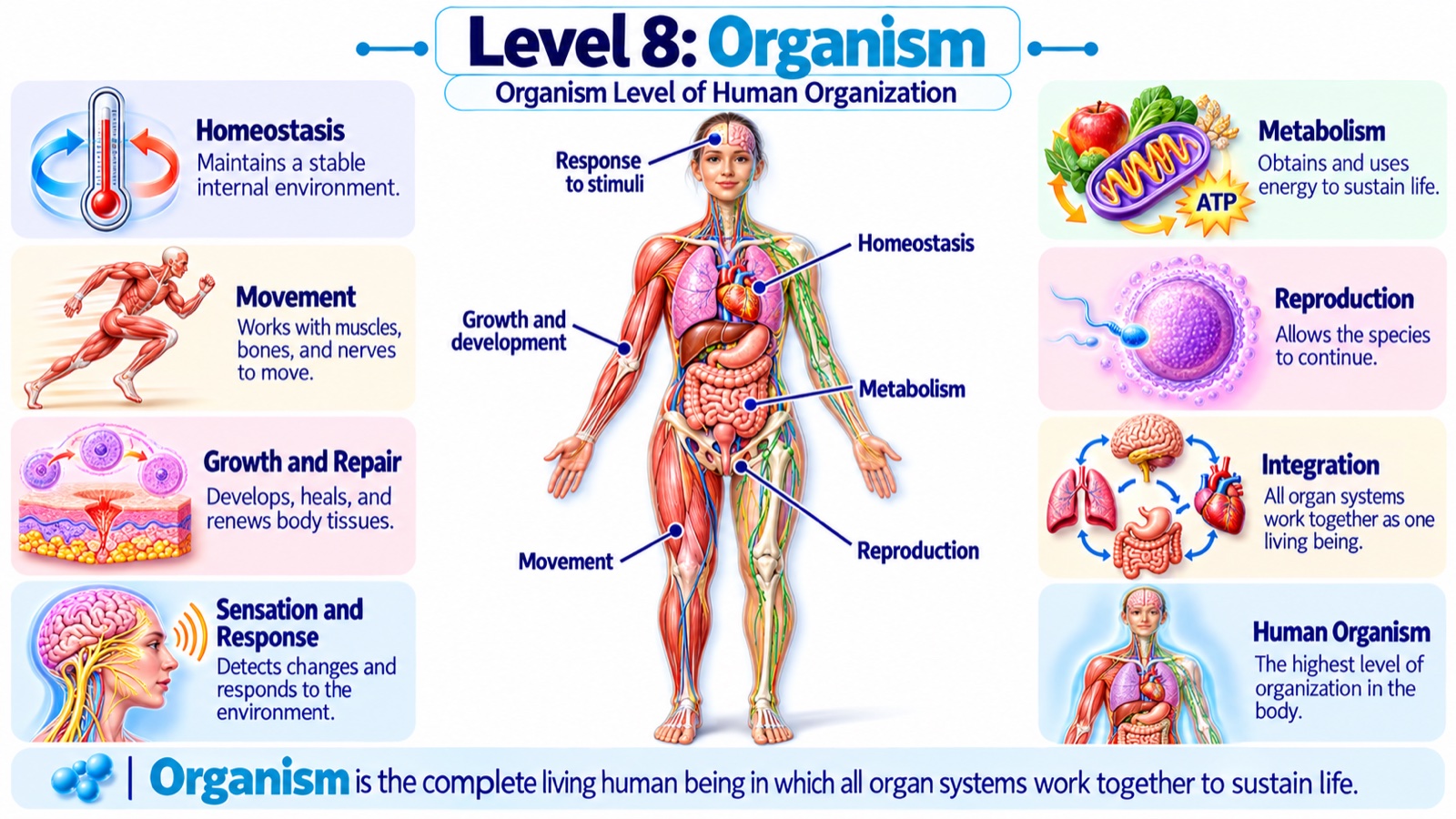
The organism level represents the complete living individual.
Every previous level operates together:
Atoms → Molecules → Organelles → Cells → Tissues → Organs → Organ Systems → Organism
At this level, the body must maintain essential characteristics of life, including:
- Metabolism
- Movement
- Growth
- Repair
- Response to stimuli
- Reproduction
- Homeostasis
Homeostasis: The Concept Connecting Everything
One of the most important ideas in anatomy, physiology, medicine, and nursing is homeostasis.
Homeostasis is the body's ability to maintain a relatively stable internal environment despite internal and external changes.
Examples include regulation of:
- Body temperature
- Blood glucose
- Blood pressure
- Oxygen
- Carbon dioxide
- Fluid balance
- Electrolytes
- pH
Your body is constantly making adjustments.
Your temperature changes.
You eat a meal.
You stand up.
You exercise.
You get stressed.
You sleep for four hours before an exam.
Your body then spends the rest of its time desperately trying to keep everything within acceptable limits.
Why Nurses Care
A large part of nursing involves watching whether the body is successfully maintaining homeostasis.
Nurses routinely monitor:
- Temperature
- Heart rate
- Respiratory rate
- Blood pressure
- Oxygen saturation
- Blood glucose
- Fluid intake and output
- Electrolytes
- Urine output
- Neurological status
- Laboratory values
When these begin to move outside expected ranges, they may indicate that the patient is losing physiological stability.
Key takeaway: The organism is the complete living human being in which all organ systems work together to sustain life.
Putting the Entire Human Body Hierarchy Together
Here is the complete sequence one more time:
Atoms → Molecules → Organelles → Cells → Tissues → Organs → Organ Systems → Organism
An easy way to think about it is:
Ingredients → Compounds → Machinery → Workers → Teams → Departments → Systems → You
Or in biological terms:
- Atoms combine to form molecules.
- Molecules help build organelles.
- Organelles operate inside cells.
- Cells organize into tissues.
- Tissues form organs.
- Organs work together in organ systems.
- Organ systems integrate to form the complete organism.
And somehow, trillions of microscopic components cooperate well enough for you to sit here studying how they cooperate.
Most days, anyway.
Nursing Connection: Why This Hierarchy Matters
Memorizing the eight levels is useful.
Understanding how they connect is much more important.
Consider potassium:
- Potassium ion
- Influences the electrical properties of the cell membrane
- Affects cardiac muscle cells
- Changes the behavior of cardiac muscle tissue
- Changes the function of the heart
- Affects the cardiovascular system
- Can affect the entire patient
This is exactly why nurses cannot think only at one level.
A microscopic chemical abnormality can eventually become a whole-body emergency.
That connection between:
molecule → cell → tissue → organ → system → patient
is one of the foundations of pathophysiology and clinical nursing.
Final Summary
| Level | Main Idea |
|---|---|
| Atoms | Basic chemical building blocks |
| Molecules | Bonded atoms that form biological substances |
| Organelles | Specialized structures inside cells |
| Cells | Smallest living units |
| Tissues | Groups of cells performing related functions |
| Organs | Multiple tissues forming functional structures |
| Organ Systems | Multiple organs working together |
| Organism | The complete living human being |
The human body may look overwhelmingly complicated at first.
But it follows a logical pattern:
small structures combine to create larger structures, and every level depends on the levels below it.
Once you understand that pattern, anatomy, physiology, pathophysiology, and even nursing assessment begin to connect much more naturally.
Next Step
Now that we understand the hierarchy of the human body, the next step is to go back to the beginning and study each level in greater depth.
We will start with the chemical level, including:
- Atoms
- Ions
- Electrolytes
- Chemical bonds
- Water
- Acids and bases
- pH
- Carbohydrates
- Lipids
- Proteins
- Nucleic acids
- ATP
Because before we can understand why a patient's potassium is causing cardiac problems, we first need to understand what potassium actually is.