Shopping Smart at the Farmers Market in March
A step-by-step guide to navigating March markets — from choosing the freshest produce to building balanced, budget-friendly meals.
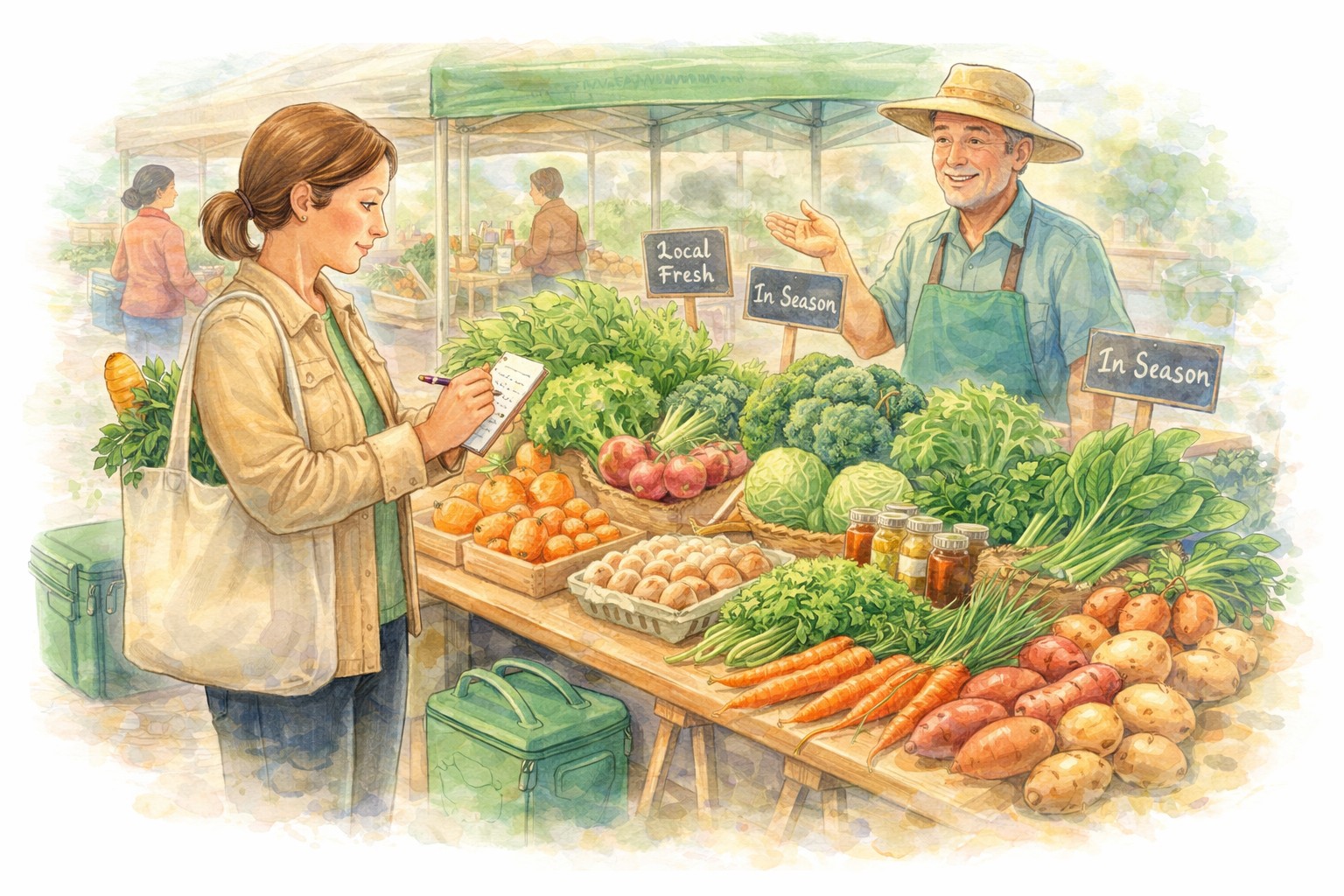
When you think of a farmers market in March, what comes to mind first? Maybe baskets of bright greens, local eggs, fresh herbs, and the feeling that everything there must be healthier and more wholesome than what you see at the supermarket. Or maybe you think the opposite: that farmers markets are charming, but expensive, and not the best place to stretch your grocery budget.
The truth is, both impressions can be partly right. A farmers market can absolutely be one of the best places to find fresh, flavorful, nutrient-dense food. At the same time, it is also easy to overspend if you shop without a plan, buy produce you do not know how to use, or assume that every item is automatically the best value.
March is a particularly interesting month to shop smart. It sits between winter and spring in much of the United States, which means some stalls are still full of storage crops and cold-weather greens, while others are starting to offer the first signs of spring. If you understand what to expect and how to choose wisely, a March farmers market can be a powerful place to buy healthy food without wasting money.
This guide walks through the mindset, what to look for, and practical strategies to help you shop in a more informed, budget-conscious, and nourishing way.
Why the Farmers Market Can Be a Great Place to Buy Healthy Food
One reason farmers markets feel so appealing is freshness. Produce sold there is often harvested closer to peak ripeness and travels a shorter distance than conventional produce shipped from far away. The USDA notes that shopping seasonally can help you find produce at its freshest and often at a better value. Fresh, in-season foods also tend to taste better, which makes it easier to actually eat the vegetables and fruits you buy.
Farmers markets can also help you learn more about your food. Unlike a typical grocery shelf, a farmers market gives you direct access to the grower or producer. That means you can ask practical questions such as:
- What is in season right now?
- How should I store this?
- What is the best way to cook it?
- Is this item sweeter, firmer, or better for soups, salads, or roasting?
That direct conversation can reduce waste. Instead of buying produce because it looks beautiful and then letting it wilt in the refrigerator, you can buy foods you know how to use and enjoy.
There is also a budget advantage if you shop strategically. USDA guidance points out that seasonal fruits and vegetables can help reduce food costs, especially when you buy what is abundant rather than chasing out-of-season items. Farmers markets are not automatically cheaper than supermarkets, but they can offer good value when you focus on foods that are truly in season and avoid impulse purchases.
What to Expect at a Farmers Market in March
March produce varies by region, so it is important not to assume that every market in every state will look the same. A March market in California or the Southeast may have a wider selection of tender spring vegetables than a market in the upper Midwest or Northeast. That said, there are some broad patterns that often show up in early spring markets across many areas.
Cold-weather greens and brassicas
March often brings a good supply of hardy vegetables such as:
- Kale
- Spinach
- Chard
- Collards
- Cabbage
- Broccoli or broccolini
- Brussels sprouts in some regions
These are nutrient-rich foods that provide fiber, folate, vitamin C, vitamin K, and a range of phytochemicals. If you want a strong health return for your grocery dollars, leafy greens and cruciferous vegetables are often excellent choices.
Storage crops and root vegetables
Many March markets still rely on winter-stored crops such as:
- Carrots
- Beets
- Potatoes
- Sweet potatoes
- Turnips
- Onions
- Garlic
- Winter squash
These foods keep well, which makes them especially practical for people trying to reduce waste. They are also versatile: they can be roasted, added to soups, mashed, or turned into easy meal bases for the week.
Early spring herbs and alliums
Depending on the region, you may also see:
- Green onions
- Chives
- Fresh parsley
- Cilantro
- Dill
- Leeks
These may not look like major purchases, but they can add a lot of flavor and freshness to simple home cooking. Using herbs and aromatics well can help you rely less on excess salt or heavy sauces.
Eggs, dairy, bread, beans, and preserved foods
At many farmers markets, produce is only part of the story. You may also find:
- Farm eggs
- Yogurt or cheese
- Fresh bread
- Dry beans or legumes
- Honey, jams, pickles, and sauces
These can be worthwhile purchases, but they are also where overspending can happen quickly. They often feel artisanal and special, which makes them tempting. The key is to decide which of these items truly fit your food budget and nutrition priorities before you arrive.
Common Shopping Mistakes and Their Disadvantages
To use your money wisely, it helps to know what usually goes wrong.
Mistake 1: Shopping with your eyes only
It is easy to buy the prettiest produce without asking whether you actually know how to cook it or whether it will fit your week. The disadvantage is obvious: wasted food and wasted money.
Mistake 2: Assuming local always means cheaper
Some items at farmers markets are competitively priced, especially when they are abundant and in season. Others are premium products. Shopping smart means comparing value, not assuming every item is automatically the best deal.
Mistake 3: Ignoring shelf life
Tender greens, herbs, and berries can spoil quickly. Root vegetables, cabbage, onions, and potatoes last much longer. If your week is busy, buying mostly delicate produce may not be the wisest use of your budget.
Mistake 4: Forgetting food safety
The USDA and FDA both emphasize produce safety, including proper handling of perishable foods, washing produce under running water, and paying attention to how items like meat, dairy, and eggs are stored at the market. Buying fresh food is wonderful, but only if it is handled and stored safely.
Mistake 5: Going without a plan
Without a rough meal plan or ingredient list, you are more likely to overbuy snacks, baked goods, or specialty products while missing the ingredients that could form actual healthy meals.
Smart Tips for Shopping at the Farmers Market in March
1. Walk the market first, then buy
Take one slow lap before you purchase anything. See which stalls have the best-looking greens, roots, herbs, or eggs. Prices, freshness, and variety can differ from table to table. This simple step helps you avoid buying too quickly and later realizing there was a better value a few rows over.
2. Shop with a weekly meal plan in mind
Think in terms of meals, not just produce. For example:
- Greens for sautés, soups, and omelets
- Root vegetables for roasting and grain bowls
- Herbs for sauces, salads, or soups
- Eggs for quick breakfasts or protein additions
A market plan is stronger when you know how each item will be used across several meals.
3. Focus on the "best value for nutrition" foods
If you are trying to maximize health without overspending, March favorites that often deliver good value include:
- Leafy greens
- Cabbage
- Carrots
- Potatoes and sweet potatoes
- Onions and garlic
- Dry beans or lentils if available
These foods tend to be nutrient-dense, flexible, and easy to use in multiple recipes.
4. Ask vendors what is truly in season right now
Do not guess. Ask:
- What is best this week?
- What is most abundant right now?
- What is the best value today?
- What will last all week?
This is one of the biggest advantages of a farmers market over a standard grocery store. Vendors usually know which crops are peaking, which are fading, and how to use them.
5. Balance quick-spoiling foods with long-keeping foods
A smart March basket might mix:
- One or two delicate items, like spinach or herbs
- Several sturdy items, like carrots, cabbage, onions, or potatoes
That way, you get freshness without risking a week of spoiled produce.
6. Buy produce that can multitask
Choose foods that work in multiple meals. For example:
- Spinach can go into eggs, soups, grain bowls, or pasta
- Carrots can be eaten raw, roasted, blended into soup, or shredded into salads
- Cabbage can be slawed, sautéed, roasted, or added to soups
Versatile foods make your money go farther.
7. Keep specialty treats intentional
Fresh bread, pastries, jam, and small-batch sauces can be wonderful, but they can also quietly eat up your grocery budget. Choose one or two special items if they truly matter to you, rather than adding them casually to every trip.
8. Think in "plate-building" terms
A healthy market basket usually includes:
- Vegetables and fruits
- A protein source, such as eggs, yogurt, beans, or cheese
- A carbohydrate source, such as potatoes, bread, or grains
- Flavor builders, such as onions, garlic, or herbs
If your basket contains all four categories, you are much more likely to turn it into balanced meals.
9. Bring your own bags, and if possible, a cooler bag
A cooler bag is especially useful if you are buying eggs, dairy, meat, or other perishable foods and will not go straight home. USDA food safety guidance encourages shoppers to keep perishable items cold and to pay attention to how vendors display them, especially meats and soft cheeses.
10. Wash produce properly at home
The FDA recommends washing fresh produce under running water before eating, cutting, or cooking. Soap or detergent should not be used on produce. Even if produce looks clean and fresh from the market, safe washing practices still matter.
11. Use assistance programs if they apply to you
Some farmers markets accept SNAP and other nutrition benefits, and Nutrition.gov notes that certain programs exist specifically to help low-income seniors and WIC participants access fresh produce at farmers markets. If you qualify, this can significantly improve both budget flexibility and food quality.
12. Do not confuse "farmers market" with "healthy" by default
A cookie from a farmers market is still a cookie. A very salty sauce is still salty. A sweetened jam is still sugar-rich. The market is a great place to buy healthy foods, but the same nutrition principles still apply.
The Bigger Picture: Why March Is a Great Time to Practice Smarter Shopping
March is a transition month. It invites a reset. It is early enough in the year to rethink food habits after winter, but not yet so abundant that every table is overflowing with spring and summer produce. That makes it a perfect time to sharpen your shopping skills.
A smart March farmers market strategy is not about buying the most food or the fanciest food. It is about:
- Choosing what is fresh and in season
- Knowing what you will actually cook and eat
- Buying foods that support real meals
- Balancing flavor, health, shelf life, and cost
When you use the market this way, it becomes more than a pleasant weekend outing. It becomes a practical tool for eating better and wasting less.
Final Encouragement
The next time you visit a farmers market in March, try going in with a little more structure and a little less impulse. Ask questions. Compare stalls. Choose a mix of sturdy basics and fresh seasonal highlights. Build your basket around foods that can become real, balanced meals.
Healthy eating does not come from buying the most beautiful produce or the most expensive local product. It comes from making wise, consistent choices that fit your body, your kitchen, and your budget.
A few smart habits at the farmers market can help you eat better all week. That is a return worth aiming for.
References
- Nutrition.gov. Farmers Markets. Available at: https://www.nutrition.gov/topics/shopping-cooking-and-meal-planning/farmers-markets
- USDA. Shopping at the Farmers Market with Food Safety in Mind. Updated August 6, 2024. Available at: https://www.fsis.usda.gov/news-events/news-press-releases/shopping-farmers-market-food-safety-mind
- USDA. Farmers Market Food Safety Tips. Updated October 29, 2021. Available at: https://www.usda.gov/about-usda/news/blog/farmers-market-food-safety-tips
- FDA. Selecting and Serving Produce Safely. Updated March 5, 2024. Available at: https://www.fda.gov/food/buy-store-serve-safe-food/selecting-and-serving-produce-safely
- USDA. How to Save More on Fruits and Vegetables. Updated May 29, 2020. Available at: https://www.usda.gov/about-usda/news/blog/how-save-more-fruits-and-vegetables
- USDA. Top Reasons to Shop at a Farmers Market. Updated July 2, 2012. Available at: https://www.usda.gov/about-usda/news/blog/top-reasons-shop-farmers-market
- USDA National Agricultural Library. Food Shopping and Meal Planning. Available at: https://www.nal.usda.gov/meal-planning-food-purchasing-and-cooking
- Nutrition.gov. Nutrition Programs for Seniors. Available at: https://www.nutrition.gov/topics/food-security-and-access/food-assistance-programs/nutrition-programs-seniors
- Nutrition.gov. WIC – Women, Infants, and Children. Available at: https://www.nutrition.gov/topics/food-security-and-access/food-assistance-programs/wic-women-infants-and-children
- University of Minnesota Extension. Exploring Markets for Local Food. Available at: https://extension.umn.edu/vital-connections/exploring-markets-local-food
- FDA. Food Safety Modernization Act (FSMA). Updated February 5, 2024. Available at: https://www.fda.gov/food/guidance-regulation-food-and-dietary-supplements/food-safety-modernization-act-fsma
Note: The information provided should not replace professional medical advice.