Smart Mushroom Shopping: A Friendly, Science-Backed Guide to Picking the Freshest Fungi
From white button to shiitake to maitake, here's how to spot fresh mushrooms, choose by variety, and store them for maximum flavor.
Mushrooms punch far above their weight in the nutrition world. They're low in calories yet rich in B vitamins (riboflavin, niacin, pantothenic acid), selenium, potassium, and unique antioxidants like ergothioneine and glutathione. When exposed to ultraviolet light (either during growing or post-harvest), many mushrooms can also provide vitamin D, handy in the shorter, darker days of fall and winter. Add their savory umami to the mix, and you've got a flavorful, functional ingredient that fits easily into weeknight cooking.
But great results start with great selection. This guide gives you practical, variety-specific tips for choosing fresh mushrooms at the grocery store or market, with real-world examples you can use on your very next trip. We'll finish with storage and prep pointers you can trust.
How to Spot Fresh Mushrooms
- Dry, not slimy. Caps and stems should look dry to the touch (not wet or sticky) with a matte to gentle sheen—sliminess signals microbial growth.
- Firm, not spongy. Fresh mushrooms feel dense and spring back when gently pressed. Limp or squishy patches mean age.
- Even color, intact surface. Avoid dark wet spots, heavy bruising, tears, or cracking at the cap edge (unless it's a naturally cracked variety).
- Pleasant, earthy aroma. A sharp sour or fishy smell is a no-go. Packaged mushrooms should not fog with heavy condensation.
- Tidy packaging. Clamshells should have ventilation; paper-wrapped packs should not feel damp. Excess moisture shortens shelf life.
Variety-by-Variety Selection Tips
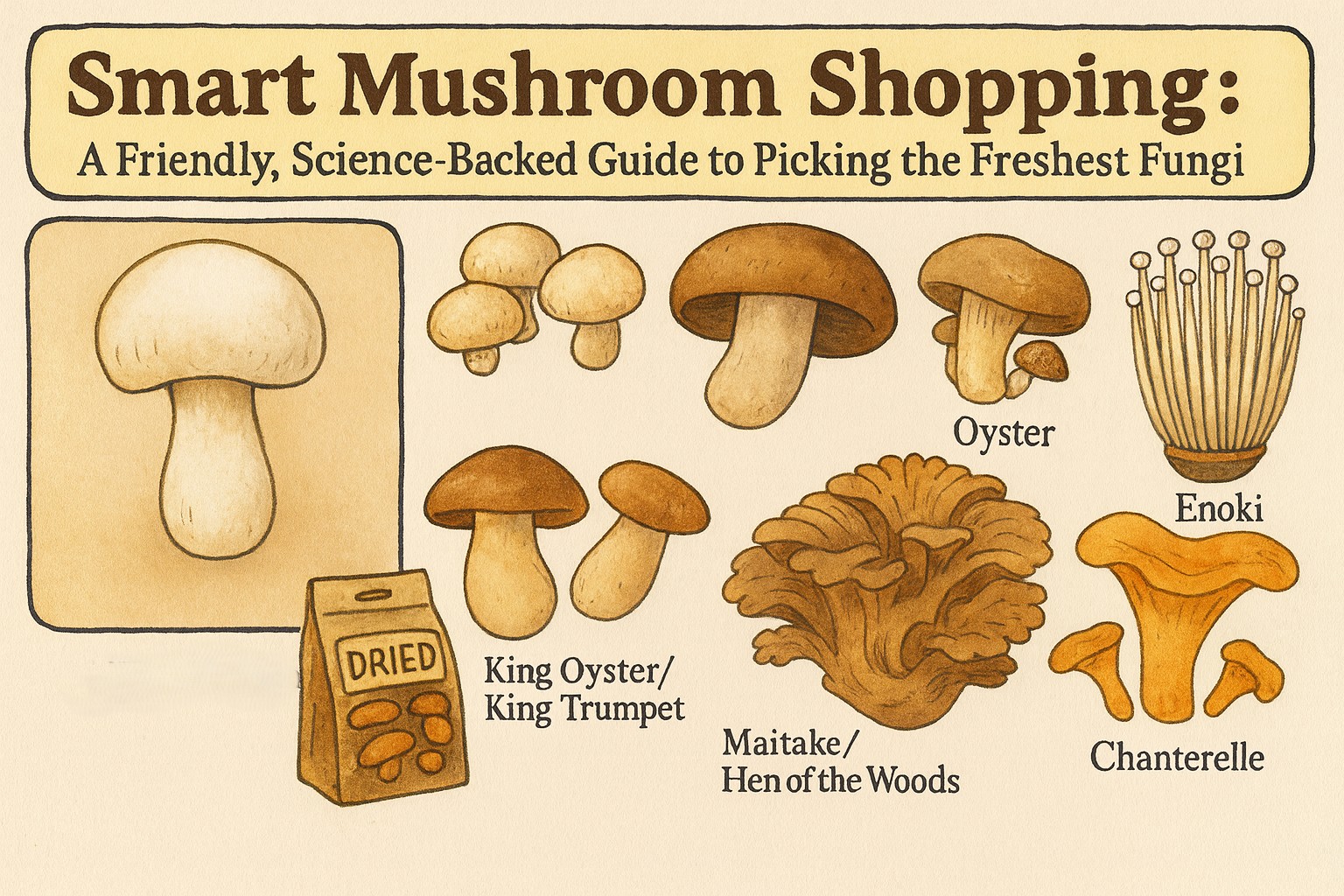
White Button, Crimini & Portobello (Agaricus bisporus)
- What to look for: For white button and crimini (baby bella), choose caps that are closed or just barely showing gills; stems should be firm and the surface dry and smooth. For portobello, look for wide, flat caps with exposed gills that are deep brown (not black) and not slimy.
- Why it matters: Closed caps indicate youth and a milder flavor; open gills mean a more robust, meaty taste but also a shorter shelf life. All three are the same species at different maturities.
- Real-life example: Two crimini packs: one with tight, closed caps and dry surfaces; another with several mushrooms showing dark, damp gills and condensation on the lid. Pick the first, condensation and gill exposure point to aging and faster spoilage.
Shiitake (Lentinula edodes)
- What to look for: Thick, umbrella-like caps with curled edges; dry, velvety surface; short, sturdy stems. Avoid cracked, brittle caps or sliminess.
- Why it matters: Firm, curled edges indicate freshness and concentrated flavor. Shiitake stems are fibrous—great for stock, but often removed for sautéing.
- Real-life example: At the loose bin, choose caps that feel dense and dry. Skip any with split caps that feel papery, those cook up tough and dry.
Oyster (Pleurotus species)
- What to look for: Tight clusters with gently curved caps; pale to dove-gray color; minimal yellowing. Stems should be tender, not woody. Avoid fishy smell.
- Why it matters: Oysters are delicate; yellowing and strong odor mean age. Tender stems and intact clusters cook evenly and sear beautifully.
- Real-life example: Two clusters: one neat, plump, and pale; one with frayed edges, yellow tinges, and lots of loose fragments at the bottom. Choose the plump, intact cluster.
King Oyster / King Trumpet (Pleurotus eryngii)
- What to look for: Thick, solid stems with small, tight caps; smooth, unblemished surface; very firm feel.
- Why it matters: These excel when sliced into "scallops" or steaks because their stems are meaty and uniform. Soft spots signal internal breakdown.
- Real-life example: In the package, gently press the stem through the film, and choose the one that feels dense like a zucchini, not spongy like a stale marshmallow.
Enoki (Flammulina filiformis)
- What to look for: Snow-white clusters with crisp, slender stems and tiny button caps; base should be clean and only slightly moist.
- Why it matters: Browning, sliminess, or a sour smell indicate bacterial growth—enoki are especially sensitive due to their thin stems and tight packing.
- Real-life example: Two packs: one bright white and dry-looking; one slightly tan with water droplets. Take the bright white, condensation plus discoloration shortens life.
Maitake / Hen of the Woods (Grifola frondosa)
- What to look for: Firm, tightly layered fronds; earthy aroma; no slimy patches between layers.
- Why it matters: The ruffled structure traps moisture, slime, develops first in crevices. A compact cluster roasts to crisp edges and tender cores.
- Real-life example: A small head that's dense and dry will outperform a huge, loose head with damp inner fronds.
Chanterelle (Cantharellus spp., when available)
- What to look for: Firm, golden caps; fruity, apricot-like aroma; dry, not sticky; intact false gills (ridges) that aren't crushed.
- Why it matters: Chanterelles absorb water easily—excess moisture leads to mushy cooking. Their delicate aroma fades with age.
- Real-life example: In a specialty market, choose the dry, fragrant chanterelles over the bag with visible moisture beads.
Dried Mushrooms (Porcini, Shiitake, Morel, etc.)
- What to look for: Whole or large slices (less dust), clean, and fragrant. Avoid packages with lots of powder, which suggests breakage and staleness. Check ingredient list for additives; unsulfured is preferable for sensitive individuals.
- Why it matters: Larger intact pieces rehydrate with better texture and concentrated flavor. Dried mushrooms are pantry MVPs for broths and sauces.
- Real-life example: Two porcini bags: choose the one with big slices and few crumbs, not the one that looks like sawdust.
12 Practical Tips You Can Use Today
- Buy what you'll cook within 3–5 days. Most fresh mushrooms are best within this window; enoki and chanterelles skew shorter.
- Choose paper over plastic at home. Store loose mushrooms in a paper bag (or in their vented pack) in the fridge to prevent condensation and slime.
- Don't wash ahead of time. Brush or wipe with a damp towel just before cooking. Mushrooms act like sponges; excess water = soggy sauté.
- Trim smartly. Remove only the dried stem ends (and shiitake stems for tenderness). Save trimmings for stock.
- Use high heat and space. For browning, spread mushrooms in a single layer; overcrowding steams them. High heat drives off moisture, then browns.
- Salt in stages. Early salting draws water; consider adding a pinch after initial moisture cooks off to encourage caramelization.
- Revive slightly tired mushrooms. Slice and dry-sauté to drive off moisture, then add fat; or roast to concentrate flavor. Discard any that are slimy or smelly.
- Leverage umami. A small amount of dried mushrooms or mushroom powder amplifies flavor in soups, grains, and veggie burgers.
- Mind vitamin D. If you want a vitamin D boost, look for packages labeled "UV-exposed" or "high vitamin D." Keep in mind D2 is light-sensitive—store properly.
- Rotate species. Different mushrooms offer different textures and phytonutrients; variety supports culinary interest and a broader nutrient profile.
- Check display conditions. Prefer shops with good turnover, cool displays, and minimal misting on mushrooms (misting fine for many greens, not for fungi).
- When in doubt, smell and touch. Your senses are reliable freshness tools—clean, earthy aroma and firm texture win.
Storage & Food Safety
- Refrigeration: Keep mushrooms refrigerated (ideally 34–40°F / 1–4°C). Paper bag or vented container prevents moisture buildup. Most keep 3–5 days; delicate varieties 1–3 days.
- Freezing: Cook first (sauté or steam) before freezing to preserve texture; freeze in portions for future soups and sauces.
- Cleaning: Brush or wipe. If very dirty, a quick rinse is acceptable, dry immediately on towels and cook promptly.
- Use-by sense: Sliminess, strong off-odors, or visible mold mean discard.
Why Mushrooms Deserve a Spot on Your Plate
Beyond flavor, mushrooms contribute nutrients many diets lack: B vitamins for energy metabolism; potassium for blood pressure control; selenium and ergothioneine for cellular antioxidant defense. They bring satisfying umami, helping some people enjoy lower-salt, more plant-forward meals. With smart shopping and storage, you'll get better texture, deeper flavor, and less waste, which makes mushrooms an easy, budget-friendly upgrade to your weekly menu.
On your next grocery run, practice a few of the aforementioned cues. And, pick a variety you haven't tried before. Small habit, big payoff. Happy mushroom hunting!
References
- USDA FoodData Central – Nutrient profiles for mushrooms: https://fdc.nal.usda.gov/
- NIH Office of Dietary Supplements (Vitamin D Fact Sheet) – UV-exposed mushrooms and vitamin D2: https://ods.od.nih.gov/factsheets/VitaminD-Consumer/
- U.S. FDA – Selecting and serving produce safely: https://www.fda.gov/food/buy-store-serve-safe-food/selecting-and-serving-produce-safely
Note: The information provided should not replace professional medical advice.