Natural Ways to Keep Bugs Away: Foods, Herbs, and Tips for a Bite-Free Summer
Garlic, mint, lemongrass, and more — here's the science behind foods and herbs that can help deter insects all summer long.
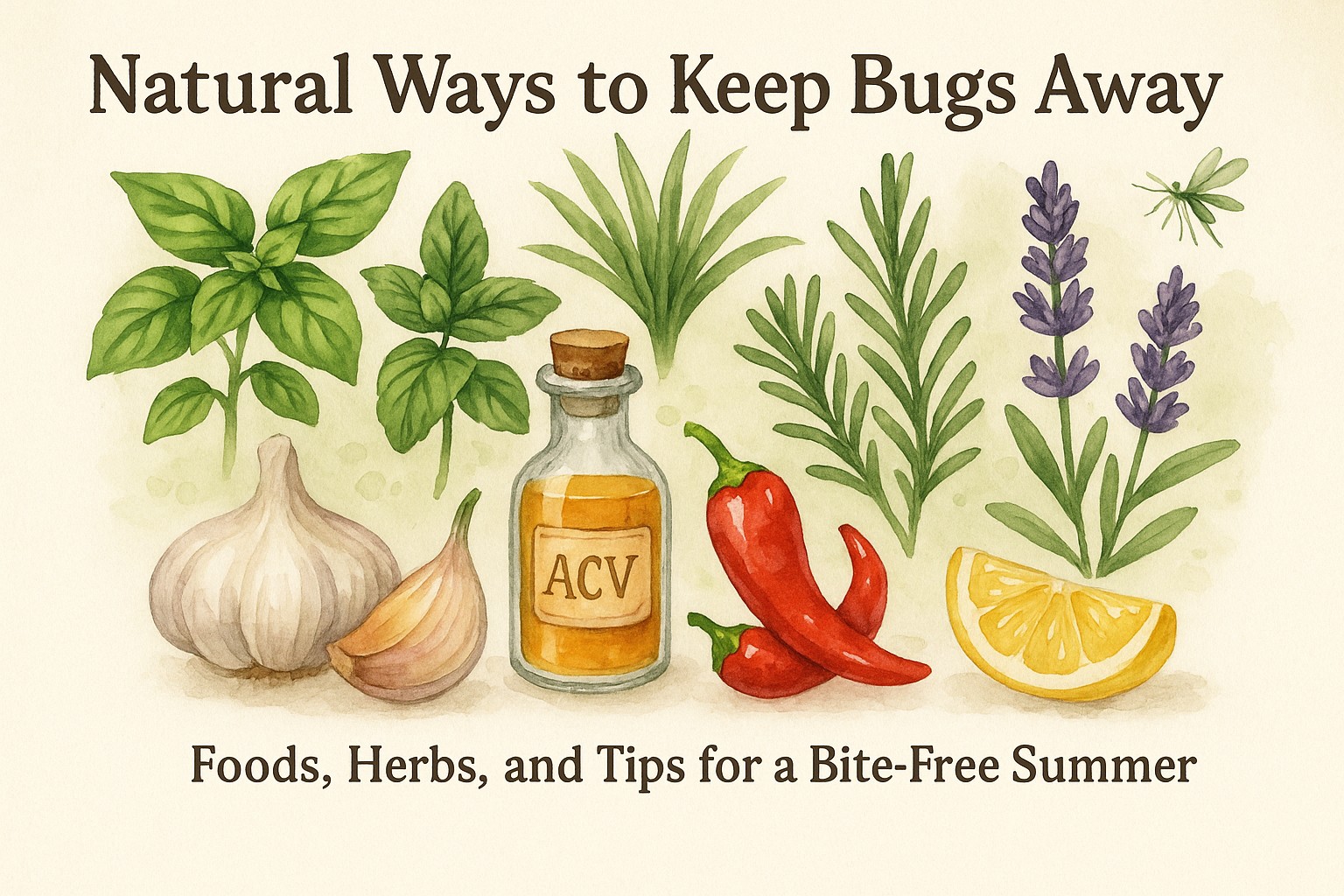
Summer brings sunny skies, outdoor dinners, and fresh garden blooms, but also an unwelcome wave of mosquitoes, flies, and other pesky insects. Before you reach for chemical sprays, consider this: some everyday foods, herbs, and drinks can naturally help keep bugs at bay.
In this article, we'll explore how your grocery list can double as your bug-repellent kit. You'll learn which foods and drinks may help make you less attractive to insects, the herbs and plants you can grow or use to keep bugs away, and practical wellness and lifestyle habits to reduce your chances of bites. We'll also take a look at how people in different climates, from tropical to desert to temperate, have used traditional methods to stay bug-free. Whether you're prepping a backyard barbecue or heading on a summer hike, these tips can help make your time outdoors more enjoyable.
Let's explore the science behind keeping bugs away the natural way!
Foods and Drinks That Help Repel Insects
When shopping at the grocery store or local farmers market, choosing high-quality ingredients can enhance their natural bug-repelling properties. Look for fresh, organic, and minimally processed options to get the most benefit. For example, organic garlic tends to have stronger aromatic oils, and raw, unfiltered apple cider vinegar preserves more beneficial compounds. Choose firm, glossy chili peppers without wrinkles, and store them in the fridge to retain their heat and flavor.
While these foods and drinks are widely believed to help deter insects, it's important to note that their impact on body scent, and thus on insect attraction, is largely anecdotal and not clinically definitive. However, many people report positive experiences, and several ingredients have properties known to be unappealing to bugs.
Garlic
Garlic is rich in sulfur compounds like allicin, which have antimicrobial properties and may alter body odor in a way that repels mosquitoes. Additionally, garlic supports immune health, making it a flavorful and functional ingredient in any summer diet.
- Eat it: Add to stir-fries, roasted vegetables, or salad dressings.
- Bonus: Garlic oil can be used in homemade bug-repellent sprays, but bear in mind that concentrated essential oils need to be properly diluted for skin application to avoid irritation.
Apple Cider Vinegar (ACV)
ACV contains acetic acid and other bioactive compounds that help regulate digestion and balance skin pH, potentially making the body less appealing to insects. Its strong aroma is also useful in attracting and trapping flies when paired with dish soap.
- Drink it: Mix 1 tablespoon with water as a daily tonic.
- Use it: Combine with a few drops of dish soap to trap fruit flies.
Spicy Foods (Chili, Cayenne, Jalapeños)
Capsaicin, the active compound in chili peppers, boosts metabolism and increases internal body heat, which may affect scent cues that attract mosquitoes. Spicy foods can also promote sweating, which helps the body naturally detoxify, though they should be consumed in moderation.
- Eat it: Include in tacos, salsas, or spicy soups.
- Note: Best for those who tolerate heat!
Herbs and Plants That Naturally Repel Bugs
Basil
Fragrant basil contains volatile oils like eugenol and citronellol, which are known for their insect-repelling properties. It also contains vitamin K and antioxidants, making it both protective and nutritious.
- Use: Grow in pots near patios or kitchens; add to pasta, salads, and sauces.
Mint (Peppermint, Spearmint)
Menthol in mint disrupts insect sensory receptors, keeping bugs like ants and mosquitoes at bay. Mint also aids digestion and adds a refreshing twist to both sweet and savory dishes.
- Use: Add fresh to tea, water, or scatter leaves near doors.
Lemongrass
Lemongrass is rich in citral and citronellal, natural oils that mask the scents insects are drawn to. It's also widely used to promote relaxation and support digestion in herbal medicine.
- Use: Brew into tea or grow it near entryways and seating areas.
Rosemary
Rosemary contains camphor and cineole, which are aromatic oils that repel insects. It also has antioxidant and anti-inflammatory benefits, making it useful both in cooking and in herbal home remedies.
- Use: Burn sprigs on the grill or add to grilled veggies and meats.
Lavender
Lavender's main compounds, linalool and linalyl acetate, are unpleasant to mosquitoes but soothing for humans. Beyond repelling bugs, lavender is well-known for reducing stress and promoting restful sleep.
- Use: Grow near windows, use dried lavender sachets, or diffuse essential oil.
Lifestyle Tips to Keep Bugs Away
Citrus Peels
The oils in citrus peels naturally repel bugs like mosquitoes and flies.
- Try: Rub lemon or orange peels on your arms or place them around your picnic setup.
Cover Sugary Foods and Drinks
Sweet scents attract bugs quickly.
- Tip: Use cup lids, food covers, or mason jars with mesh tops when dining outside.
Stay Cool and Dry
Mosquitoes are drawn to body heat and sweat.
- Tip: Wear breathable fabrics, stay in shaded areas, and rehydrate regularly.
Regional Wisdom: How People Around the World Stay Bug-Free
Different climates call for different bug-fighting tactics across the globe, and cultures have long embraced nature-based methods to fend off pests. Here are a few regional insights that blend climate, tradition, and natural know-how:
Tropical Regions
High humidity and warm temperatures make tropical areas a haven for mosquitoes and other insects.
- Neem Leaves (India, Southeast Asia): Used in teas or burned as incense to deter mosquitoes.
- Coconut Oil Blends: Mixed with essential oils like citronella or clove for natural skin protection.
- Mosquito Nets: Often infused with herbs or essential oils for added protection during sleep.
Desert Areas
Dry heat reduces mosquito populations, but biting flies and ants can be a nuisance.
- Smoke from Natural Herbs: In North Africa and the Middle East, burning herbs like myrrh or frankincense repels insects.
- Loose, Light Clothing: People wear full-coverage garments that keep skin protected and cool.
Temperate or Slightly Cooler Climates
Bugs tend to be more seasonal here, appearing in late spring and summer.
- Juniper or Pine Branches (Europe): Hung around doors or burned to deter bugs.
- Herb Gardens: Mint, sage, thyme, and lavender are grown not just for cooking, but also for keeping bugs away.
These region-specific traditions show how local wisdom and natural resources have been used for centuries to combat insects: often with ingredients that double as flavorful additions to everyday meals.
Friendly Bug-Repelling Foods And Herbs Chart
| Food/Herb | Repellent Properties | How to Use |
|---|---|---|
| Garlic | Allicin may alter scent to repel mosquitoes | Add to cooked dishes or use garlic oil spray |
| Apple Cider Vinegar | Strong aroma masks natural body scent | Mix with water as a drink or in fly traps |
| Chili Peppers | Capsaicin may alter scent; induces sweating | Cook in spicy dishes; use fresh |
| Basil | Eugenol and citronellol repel mosquitoes | Grow in pots; add to meals |
| Mint | Menthol disrupts insect receptors | Use in drinks or scatter leaves |
| Lemongrass | Citral and citronellal mask attractive scents | Brew as tea or plant near seating areas |
| Rosemary | Camphor and cineole act as repellents | Burn sprigs or use in grilling |
| Lavender | Linalool and linalyl acetate deter mosquitoes | Grow near windows or diffuse oil |
| Citrus Peels | Natural oils repel mosquitoes and flies | Rub on skin or scatter peels |
| Neem Leaves | Traditionally used in incense to deter bugs | Boil leaves in water or burn dried leaves |
Final Thoughts
With just a little planning and some flavorful ingredients, you can enjoy the great outdoors without becoming a feast for the bugs. From garlic-rich meals to fresh basil on your windowsill, nature has provided a delicious toolkit to help us keep pesky insects at bay.
Give some of these strategies a try and make your summer both delicious and bug-free!
References
- Debboun, Mustapha, Stephen P. Frances, and Daniel Strickman, eds. Insect repellents handbook. CRC Press, 2014.
- USDA Agricultural Research Service. "Coconut Oil Compounds Repel Insects Better than DEET." https://www.ars.usda.gov/news-events/news/research-news/2018/coconut-oil-compounds-repel-insects-better-than-deet/
- National Center for Complementary and Integrative Health (NCCIH). "Garlic." https://www.nccih.nih.gov/health/garlic
Note: The information provided should not replace professional medical advice.