The Grain Guide: How to Choose the Right Rice for Every Meal
Jasmine, basmati, brown, black, or short-grain — here's a variety-by-variety breakdown so you never pick the wrong rice again.
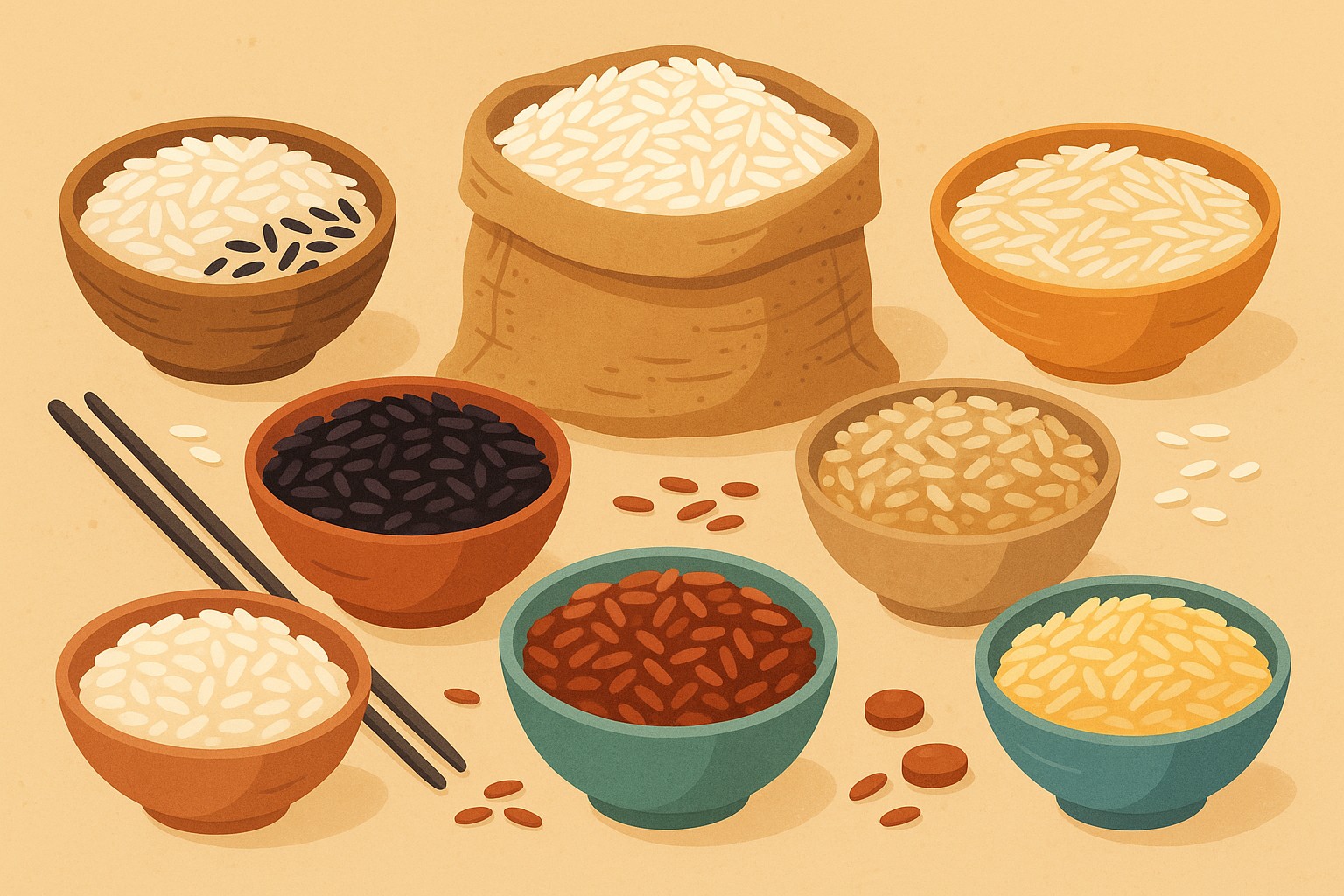
Have you ever stood in the rice aisle at the grocery store, overwhelmed by the choices: long grain, short grain, jasmine, basmati, brown, black, parboiled, sushi rice, and wondered which one to buy? You're not alone. Rice may seem simple, but choosing the right kind can make or break your dish.
This guide will walk you through the different types of rice, their ideal uses, and how to shop, store, and cook rice like a pro. Whether you're making sushi, curry, or a comforting bowl of congee, we've got you covered.
Understanding the Types of Rice
1. Long-Grain Rice
Stays fluffy and separate when cooked. Ideal for dishes like biryani, pilaf, and stir-fries.
2. Medium-Grain Rice
Tender and slightly sticky. Great for paella, risotto, and Korean bibimbap.
3. Short-Grain Rice
Sticky and clumpy. Best for sushi, rice balls, or Japanese meals.
4. Brown Rice
Whole grain with the bran and germ intact. Chewy texture and nutty flavor. Higher in fiber and nutrients.
5. Black and Red Rice
High in antioxidants like anthocyanins. Chewy and bold in flavor. Great in grain bowls or mixed dishes.
6. Parboiled Rice
Partially boiled in the husk to retain more nutrients. Firmer and less sticky. Good for casseroles and large batches.
7. Aromatic Rice (Jasmine & Basmati)
Jasmine (Thai) is soft and slightly sticky. Basmati (Indian/Pakistani) is dry, fluffy, and fragrant. Perfect for Southeast and South Asian cuisines.
Tips for Choosing Rice by Cuisine and Cooking Style
- For Indian or Middle Eastern Dishes: Use basmati rice for its long, separate grains and fragrant aroma.
- For Thai or Vietnamese Meals: Choose jasmine rice. It complements curries and stir-fry with its slightly sticky texture.
- For Japanese or Korean Cuisine: Go with short-grain or sushi rice. Its stickiness makes it easy to pick up with chopsticks.
- For Risotto or Paella: Arborio or bomba rice holds shape and absorbs flavor well without falling apart.
- For Fried Rice: Use cold, cooked long-grain rice like jasmine or basmati to avoid clumping.
- For Healthier Bowls: Opt for brown rice, red rice, or black rice for more fiber and antioxidants.
- For Congee or Porridge: Medium or short-grain rice breaks down better for a creamy texture.
- For Large Batches and Meal Prep: Parboiled rice stays firm longer and resists overcooking.
- Check Origin for Authenticity: Real basmati is grown in the Himalayan region; real jasmine in Thailand.
- Smell the Bag: If you're buying in bulk, quality aromatic rice should have a fresh, fragrant smell.
- Consider Cooking Equipment: If using a rice cooker, stick to varieties it supports, some allow special settings for brown or sushi rice.
How to Store Rice
- Uncooked white rice: Store in an airtight container in a cool, dry place for up to 2 years.
- Brown, black, and red rice: Store in the fridge or freezer to prevent rancidity due to natural oils.
- Cooked rice: Cool within 1 hour of cooking and refrigerate for up to 3–4 days. Freeze for longer storage.
Tips for Cooking Rice
- Rinse before cooking: Removes excess starch for fluffier grains.
- Use correct water ratio: Usually 2:1 for white rice, 2.5:1 for brown, but always check the package.
- Let it rest: After cooking, let rice sit covered for 10 minutes to finish steaming.
- Fluff with fork: Releases steam and separates grains.
- Use broth or coconut milk: Adds extra flavor and nutrients.
Final Thoughts
Choosing the right rice can elevate a dish from ordinary to outstanding. With so many options available, understanding the differences in texture, flavor, and nutrition helps you match the grain to your goal, whether it's a rich curry or a nourishing grain bowl. With these tips and techniques in mind, you'll head into the grocery store with confidence and cook meals that meet your cravings and your health goals.
Happy cooking! And may your rice always turn out just right!
References
- Harvard T.H. Chan School of Public Health. Whole Grains. https://www.hsph.harvard.edu/nutritionsource/what-should-you-eat/whole-grains/
- USDA FoodData Central. https://fdc.nal.usda.gov/
- International Rice Research Institute. https://www.irri.org/
Note: The information provided should not replace professional medical advice.