Spend Less, Eat Better: Real-Life Grocery Tips That Work
Side-by-side cost comparisons, 18+ practical tips, and strategies that help you eat healthier while spending less at the grocery store.

Maybe you've had a hectic workweek, a long to-do list at home, or you're just exhausted and need to grab something quick from the grocery store or farmers market. If this sounds familiar, you're not alone. Many people struggle to balance health goals with limited time and energy. But here's the good news: there are smart strategies that help you pick healthy foods and save money.
Why Smart Grocery Shopping Works
Grocery shopping with intention can positively impact both your health and your wallet. When you plan ahead, prioritize nutrient-rich whole foods, and skip last-minute impulse buys, you cut down on costs and fuel your body properly. Grocery stores and farmers markets offer a wide range of affordable, healthy ingredients, but without a plan, it's easy to overspend on processed, less nutritious options. By focusing on foods that deliver the most nutritional value for their price, you can build better habits and make the most of your grocery trips, even during the busiest weeks.
Real Costs: Smart Grocery Shopping vs. Rushed Buying
Here are ten real-world comparisons showing how smart planning at the store can keep both your budget and your health in check:
- Planned Meal Prep vs. Daily Grab-and-Go: Buying ingredients for three balanced meals (chicken, brown rice, frozen veggies) might cost $15 and feed you for three days. Grabbing pre-made hot bar meals every night can cost $9 each, totaling $27+ over three days.
- Buying Bulk vs. Single Servings: A 2 lb bag of oats costs around $3.50 and provides 30 servings. Instant oatmeal cups at $1.50 each total $45 for the same number of servings—a $41+ difference.
- Seasonal Produce vs. Out-of-Season or Packaged Produce: Strawberries in season can be $2/lb compared to $5.99/lb out of season. That $3 difference per pound adds up over multiple purchases.
- Store Brands vs. Name Brands: Store-brand canned beans may cost $0.89 versus $1.39 for name-brand. Replacing just 10 items with store brands can save $5+ per trip.
- Prepared Salads vs. DIY Salad Kit: A pre-made salad bowl costs $6. A DIY salad using greens, toppings, and dressing can make three servings for about $7 total.
- Protein Snack Packs vs. Whole Protein: Branded snack packs with cheese and nuts can run $2.50 each. A block of cheese and bag of nuts offer 10+ servings for $8–$10.
- Impulse Snacks vs. Planned Snacks: Grabbing chips, soda, and candy on the fly can add $10+ to your bill and offer little nutrition.
- Frozen Meals vs. Simple DIY: A frozen entree costs about $5. With the same amount, you can cook two servings of pasta with vegetables and sauce—healthier and more filling.
- Packaged Fruit Cups vs. Fresh Fruit: A 4-pack of fruit cups costs $3.49 for about two servings. That same amount could buy 5 bananas or 4 apples—five fresh servings with more fiber.
- Coffee Shop Breakfast vs. At-Home Options: A coffee and muffin might run you $6 at a café. For the same cost, you can buy eggs and whole grain bread for multiple homemade breakfasts.
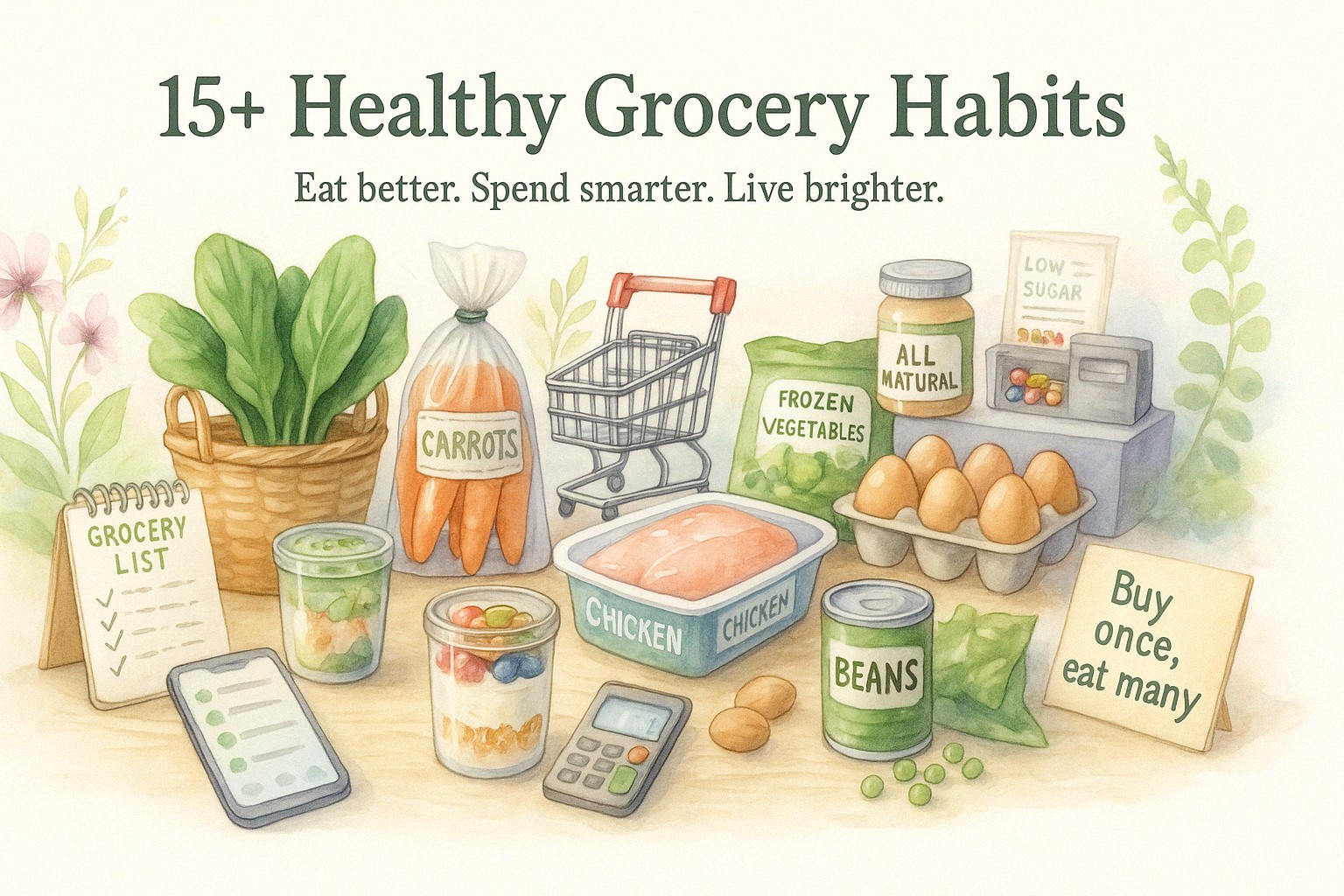
15+ Tips for Healthy, Money-Saving Grocery Shopping
- Stick to a list: Prevent impulse purchases with a written plan.
- Buy whole ingredients: Whole carrots, lettuce heads, and raw chicken are more affordable than pre-prepped versions.
- Shop the perimeter: You'll find fresh produce, dairy, and protein here. Center aisles often hold processed, pricier items.
- Compare unit prices: Use price per ounce or pound to identify true deals.
- Use coupons and sales: Stock up on discounted shelf-stable foods.
- Go frozen when needed: Frozen fruits and veggies are budget-friendly and nutrient-rich.
- Never shop hungry: You're more likely to make unhealthy, costly impulse buys.
- Choose store brands: Often identical in quality, but cheaper than name brands.
- Know 3 no-cook meals: Canned tuna salad, yogurt parfaits, and hummus wraps are lifesavers.
- Pick versatile proteins: Eggs, beans, and rotisserie chicken work in multiple meals.
- Prep your produce: Washed and cut fruits and veggies are easy to grab later.
- Read food labels: Look for low added sugar and sodium, plus good fiber and protein content.
- Track spending: Use apps or your phone calculator to stay in budget.
- Buy multi-use foods: Spinach, Greek yogurt, and brown rice can work across all meals.
- Ignore checkout lane temptations: High-cost snacks live here.
- Buy bulk smartly: Grains, beans, and nuts can last and save you money.
- Decode labels: Terms like "all-natural" or "fat-free" don't always mean healthy.
- Store food properly: Reduce waste by keeping food fresh longer.
Wrapping It Up
Even if you're short on time or energy, eating well is within reach. With smart shopping habits, you can stay healthy, full, and financially savvy. A little planning goes a long way in helping you avoid overpriced or less nutritious meals. Whether it's one day or the whole week, let your grocery cart do the work of building a better lifestyle.
Remember: wellness doesn't require perfection. It's about small, smart choices that add up to better health.
References
- Harvard T.H. Chan School of Public Health. (n.d.). Shopping List for a Healthy and Balanced Diet.
- USDA. (2021). Food Price Outlook. https://www.ers.usda.gov/data-products/food-price-outlook/
- Academy of Nutrition and Dietetics. (2020). Smart Shopping for Veggies and Fruits.
- CDC. (2023). Healthy Eating Tips. https://www.cdc.gov/nutrition/index.html
- Consumer Reports. (2022). Save Money on Groceries Without Sacrificing Nutrition.