Caring for a Teenager's Diet: Practical Tips for Healthy Growth and Strong Bonds
From growth spurts to peer pressure, here's a practical guide to supporting your teenager's nutrition — with real-life scenarios and solutions.
Have you ever wondered if your teenager is eating right for their busy, growing life? Are you a parent concerned about your child's nutrition? Or maybe you're a teenager yourself feeling unsure about how to eat well between school, sports, and social events? If so, you're not alone. And, you're in the right place! Understanding the essentials of teenage nutrition is crucial, and we're here to guide you through it with simple, actionable advice.
What Are the Most Important Factors to Consider About a Teenager's Diet?
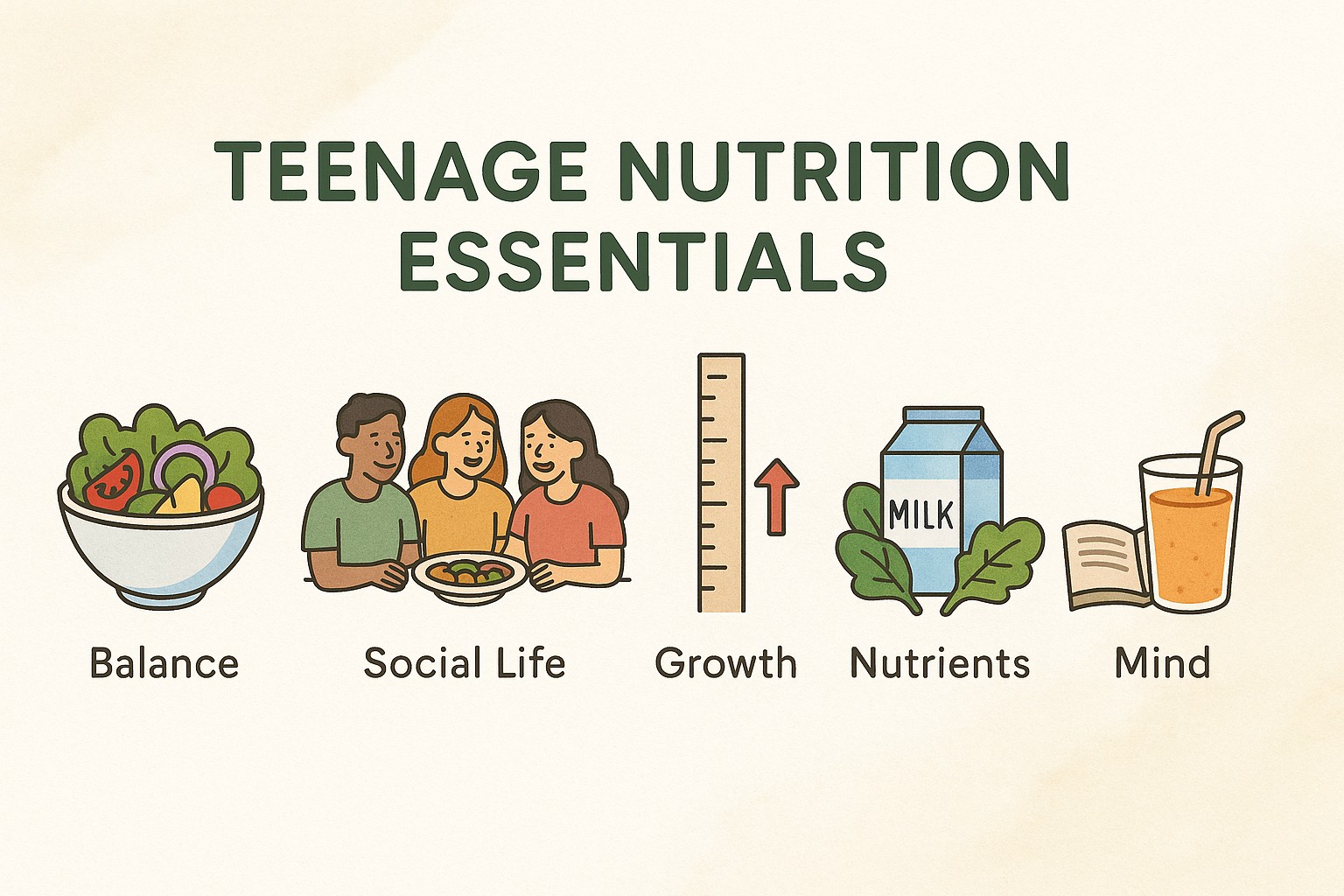
- Balanced Diet: Teenagers need a variety of nutrients to support rapid physical growth, brain development, and sustained energy levels.
- Eating Out and Peer Pressure: Social life becomes increasingly important during the teen years, often involving eating out and navigating peer-influenced food choices.
- Physical Changes: Growth spurts, hormonal shifts, and muscle development drive higher caloric and nutritional needs.
- Specific Nutrient Requirements: Teens require more calcium, iron, protein, and other essential nutrients to build strong bones, maintain energy, and support overall development.
- Mental and Emotional Well-being: Food choices can significantly influence mood, concentration, and academic performance.
How to Address These Factors: Easy Actions You Can Take
Balanced Diet: Encourage colorful, balanced meals—fruits, vegetables, whole grains, proteins, and healthy fats. Keep grab-and-go snacks like nuts, yogurt, and fruit easily accessible at home.
Eating Out and Peer Pressure: Focus on teaching moderation, not restriction. Empower teens to make smarter choices when dining out, like opting for grilled over fried foods, adding a side salad, or choosing water over sugary drinks — without feeling socially isolated.
Physical Changes: Normalize increased hunger during growth periods. Offer hearty, nutrient-rich meals and snacks featuring lean proteins and complex carbohydrates to fuel their changing bodies.
Specific Nutrient Requirements: Stock the kitchen with foods rich in calcium (dairy or fortified plant-based options), iron (lean meats, beans, spinach), and quality proteins. Simple meal prep can help ensure these nutrients are consistently included.
Mental and Emotional Well-being: Promote regular, balanced meals to stabilize blood sugar and mood. Encourage breakfast, even something quick like a smoothie or whole-grain toast, to set a positive tone for the day.
Real-Life Scenarios: Challenges and How They Were Solved
Balanced Diet Scenario: Sophia, a 15-year-old high school student, often skipped breakfast and relied on chips and cookies between classes. Her parents introduced quick breakfast options like smoothies and pre-packed boiled eggs, along with portable fruits such as bananas and apples. Gradually, Sophia adopted healthier habits, leading to better focus and energy throughout the school day.
Eating Out and Peer Pressure Scenario: Josh, a 16-year-old athlete, loved socializing at fast-food restaurants. His parents taught him how to navigate menus wisely. Josh started choosing grilled chicken sandwiches, ordering water instead of soda, and occasionally sharing fries rather than eating a full serving—maintaining both his health and social life.
Physical Changes Scenario: During a major growth spurt at 14, Emma frequently felt ravenous and reached for candy and chips. Her parents responded by creating a snack drawer filled with healthier options like mixed nuts, whole-grain crackers, cheese sticks, and dried fruit. Emma learned to better nourish her body through more satisfying snacks.
Specific Nutrient Requirements Scenario: Aaron, a 17-year-old, was diagnosed with mild anemia during a routine checkup. His family incorporated iron-rich foods such as beans, spinach, fortified cereals, and lean red meat into their meals. After a few months, Aaron's energy levels improved, and his iron counts returned to healthy levels.
Mental and Emotional Well-being Scenario: Lily, 15, frequently skipped lunch, leading to irritability and fatigue in the afternoons. Her parents encouraged her to pack simple, nutritious lunches like turkey wraps, veggie sticks, and yogurt cups. Eating regular meals helped stabilize her mood and improved her after-school activities.
Wrapping It Up: Building Health and Family Bonds Through Good Nutrition
Supporting a teenager's diet is about much more than just nutrients—it's about nurturing their growth, encouraging their dreams, and strengthening your family bond. By fostering healthy food habits and maintaining a positive, supportive environment around eating, families can build wellness routines that last a lifetime. Start with small, achievable changes, and you'll not only help your teen thrive but also create moments of connection and togetherness at the family table.
References
- https://www.myplate.gov/life-stages/teens
- Academy of Nutrition and Dietetics. (2020). Nutrition for Teens.
- American Academy of Pediatrics. (2021). Healthy Eating for Teens.
- Centers for Disease Control and Prevention (CDC). (2022). Childhood Nutrition Facts.
- National Institutes of Health (NIH) Office of Dietary Supplements. (2021). Nutrition During Adolescence.
- Harvard T.H. Chan School of Public Health. (n.d.). The Nutrition Source: Children and Teens.