Steady as the Seasons: How to Eat Well and Stay Calm Around the Autumn Equinox
Seasonal shopping, steady-energy plates, calm digital habits, and a one-week autumn menu — a gentle plan for the equinox and cooler nights.
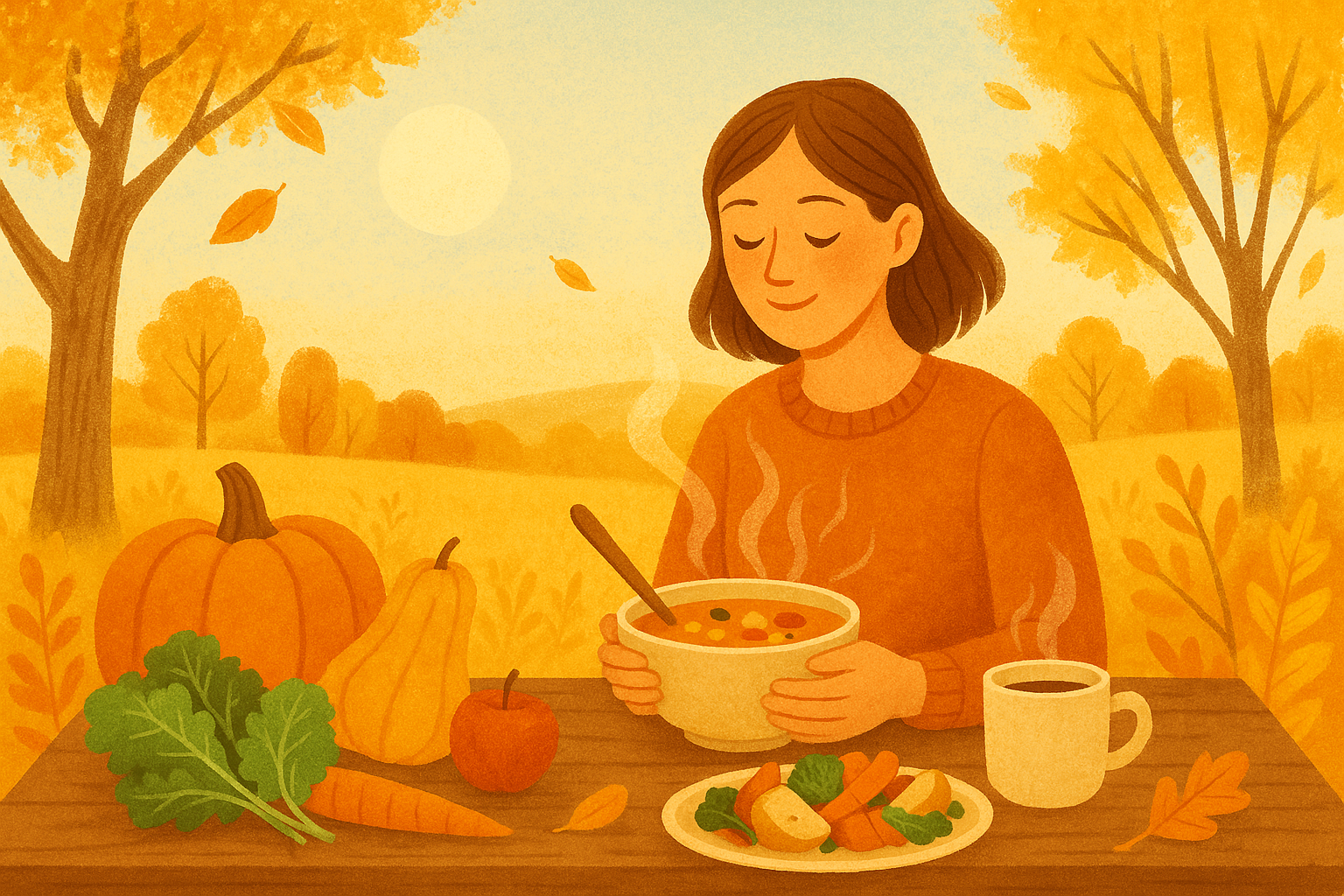
When the autumn equinox arrives, typically around September 22–23 in the Northern Hemisphere, day and night are nearly equal in length. From here, evenings grow cooler and earlier, appetites tilt toward warmth and comfort, and the harvest table changes color. It’s also arriving in a moment when many of us feel tugged by headlines, apps, and AI chatter: a fast, sometimes-frenzied current of information. This piece offers a gentle, practical plan for both: (1) what the seasonal shift means and how to shop and cook with it, and (2) how to keep a calm center when the world (and your feeds) feel extra busy.
What the Equinox Signals and Why the Timing Matters
Equal light, changing rhythms. The equinox is a **solar milestone, **roughly equal daylight and darkness, followed by steadily longer nights. Practically, you’ll likely notice cooler dawns and evenings, more stable afternoon temperatures, and the return of soups, roasts, and deeply flavored produce to markets. It’s an ideal time to reset routines: earlier dinners, warmer spices, and cooking methods that match the weather (roasting, braising).
Body clocks, earlier dark. As sunset creeps earlier, circadian cues nudge many people to feel sleepy sooner. That can be a gift: it’s easier to rebuild sleep consistency (and therefore appetite and mood). Shorter days also mean we’re indoors more, helpful for home-cooked meals, but a cue to plan movement and get morning light so energy doesn’t dip.
The “AI era” piece. Autumn’s quieter cadence pairs well with boundary-setting around screens. New tools (including AI) can be incredibly helpful for meal planning, shopping lists, and learning recipes, but constant novelty can become attention-splitting. Treat autumn like a lab for digital hygiene: shorter “check-in” windows, tech-free meals, and a weekly “deep focus” cook day. In other words, let the season help you slow the scroll and savor the bowl.
Smart, Seasonal Strategies for Food Selection and Eating
Shop the season (your plate will tell the weather story)
Autumn markets in many regions brim with squash, sweet potatoes, carrots, beets, broccoli, cabbage, kale, apples, pears, grapes, and late tomatoes. Buying seasonal often means better flavor, higher nutrient density, and lower cost. Use a seasonal produce guide to spot what’s peaking where you live.
How to do it:
- Build a weekly “core five”: 2 greens (kale or cabbage + broccoli), 2 roots (carrots, beets), 1 starch (winter squash or potatoes). Add one fruit-of-the-week for snacks and desserts.
- Pick color variety. Orange (beta-carotene), dark green (folate, vitamin K), purple/red (polyphenols) each add a different protective profile.
- If you want to prep once, roast a sheet-pan rainbow on Sunday; fold into grains, salads, wraps, and soups all week.
Eat for steady energy (cooler temps, longer nights)
High-fiber carbohydrates (beans, oats, barley, squashes), lean/plant proteins (fish, eggs, tofu, lentils), and healthy fats (olive oil, nuts, seeds) make an autumn plate both hearty and light. Fiber supports fullness and gut health; protein helps with repair and satiety; unsaturated fats support heart health.
How to do it:
- Use the Healthy Eating Plate idea at meals: ½ vegetables/fruit, ¼ whole grains or starchy veg, ¼ protein, with healthy oils and water/tea.
- Make soup season work for you: broth-based vegetable soups with beans/lentils are high-fiber, warming, and budget-friendly.
- Lean on fermented foods (yogurt, kefir, kimchi, sauerkraut) a few times per week to support a diverse gut microbiome.
Match cooking methods to the season
As temps drop, roasting, braising, and pressure-cooking shine: they intensify flavor without relying on heavy cream or sugar. Roasting carrots with olive oil and thyme, braising cabbage with apples and vinegar, or pressure-cooking beans for chili offer comfort together with nutrition.
How to do it:
- Roast a tray of squash cubes and onions; toss through the week with quinoa, goat cheese, and pepitas.
- Braise shredded cabbage with a splash of cider vinegar; serve with white beans and herbed olive oil.
- Pressure-cook lentils with tomato, garlic, and warm spices (cumin, smoked paprika) for speedy chili.
Practical swaps that feel like upgrades
- Swap refined grains for whole grains (barley, farro, brown rice) in soups and sides.
- Switch sugary desserts to baked fruit (apples/pears) with yogurt and nut crumble.
- Trade ultra-processed snacks for air-popped popcorn with olive oil and herbs, or roasted chickpeas.
Calm Skills for a Busy, AI-Noisy Season
Anchor your day with light, movement, and meals. Start mornings with natural light (a 10–20 minute walk if you can) to align your body clock. Add brief movement snacks (5–10 minutes) before lunch and late afternoon: mobility flows, squats, a fast stair climb. Keep regular meal timing, which stabilizes energy and reduces mindless snacking.
Keep the evening easy. Two hours before bed, dim screens and overhead lights; if you must use devices, use night modes and reduce blue light to protect melatonin rhythms. Keep caffeine to morning/early afternoon; consider a herbal tea wind-down. Aim for a consistent sleep window most nights.
Mind your media diet. Give AI/news exploration a container: e.g., two 20-minute blocks per day. Batch your informational tasks (planning, learning, experimenting) rather than grazing all day. Consider a tech-free dinner rule, and try “single-task cooking” a few times a week, no podcasts or videos, so your nervous system practices being un-busy.
Try micro-mindfulness you’ll actually do. A simple box-breath (inhale 4, hold 4, exhale 4, hold 4 repeat 4 times) before meals or after work helps transition from frantic to present. If you like structure, short, app-guided mindfulness or breathing practices (5–10 minutes) can reduce stress and improve attention over time.
Social warmth counts as regulation. Autumn gatherings, soups on the stove, board games, walking clubs, buffer stress. Aim for one planned social ritual weekly, even if brief. The combination of fiber-rich comfort food, warm spaces, and friendly conversation is physiologically calming.
Sample One-Week Autumn Menu
- Breakfasts:
- Cinnamon-pear overnight oats with walnuts; or
- Greek yogurt with roasted apples, pumpkin seeds, and a drizzle of honey.
- Lunches:
- Lentil-tomato chili with brown rice; or
- Kale salad with roasted squash, chickpeas, farro, and lemon-tahini.
- Dinners:
- Sheet-pan chicken (or tofu), carrots, and Brussels sprouts with rosemary; or
- Brothy white-bean soup with cabbage, olive oil, and whole-grain toast.
- Snacks/Extras:
- Grapes or apples + cheddar;
- Sauerkraut side with meals (2–3 tbsp);
- Air-popped popcorn with olive oil and smoked paprika.
A Gentle Wrap
The equinox reminds us that balance is not a place, it’s a practice. Let the season nudge you toward warm bowls, earlier nights, and kinder digital rhythms. Cook what’s colorful and close to the ground; eat with people you love; give your attention a few healthy boundaries. In a world of fast-moving tech and infinite feeds, the simplest rituals, light, food, rest, remain surprisingly powerful.
References
- Seasonal produce (what’s in season near you) USDA SNAP-Ed Seasonal Produce Guide https://snaped.fns.usda.gov/seasonal-produce-guide
- Healthy plate pattern for balanced meals Harvard T.H. Chan School of Public Health – The Healthy Eating Plate https://nutritionsource.hsph.harvard.edu/healthy-eating-plate/
- Fiber and long-term health Reynolds A et al. “Carbohydrate quality and human health: a series of systematic reviews and meta-analyses.” The Lancet (2019). https://www.thelancet.com/journals/lancet/article/PIIS0140-6736(18)31809-9/fulltext
- Evening light and screens Harvard Health Publishing – “Blue light has a dark side” https://www.health.harvard.edu/staying-healthy/blue-light-has-a-dark-side
- Physical activity recommendations U.S. Department of Health and Human Services – Physical Activity Guidelines (current) https://health.gov/our-work/nutrition-physical-activity/physical-activity-guidelines/current-guidelines
Note: The information provided should not replace professional medical advice.