Earth Day and Low-Carbon Eating: How Local Food Choices Heal the Planet and Your Health
What low-carbon eating means, why mindful local food choices matter, 12 planet-friendly tips, and the science behind eating for Earth Day and beyond.
Every April, World Earth Day encourages us to think big about the planet, but the truth is, even our smallest habits matter. One of the most powerful tools we have to fight climate change is already in our homes: the food we eat.
You might already know that cars and factories contribute to greenhouse gases, but did you know that food production accounts for over a quarter of global carbon emissions? The good news is: changing how and what we eat, without even going fully plant-based, can reduce our impact and nourish our health.
What Is Low-Carbon Eating, and Why Does It Matter?
Low-carbon eating means making food choices that produce fewer greenhouse gas emissions. It’s a dietary mindset that focuses on minimizing the environmental footprint of your meals by considering how food is grown, processed, transported, stored, and wasted.
In simple terms, low-carbon foods are those that require less energy and emit fewer pollutants throughout their lifecycle. This usually includes foods that are:
- Grown locally and in season (less transportation and storage required)
- Minimally processed (less industrial energy use)
- Waste-conscious (using up what we buy, composting scraps, and avoiding excess packaging)
- Lower on the food chain (such as vegetables, grains, legumes, eggs, and sustainably sourced fish or poultry)
Eating low-carbon doesn’t mean giving up your favorite meals. It’s about rethinking how you source ingredients and how much you waste.
Let’s break it down with a few simple scenarios:
Low-carbon eating means making food choices that produce fewer greenhouse gas emissions. These emissions come from growing, processing, transporting, and even storing our food.
Let’s break it down with a few simple scenarios:
- Scenario 1: You’re at the store and pick strawberries flown in from another continent, even though local berries are in season. Those imported berries used fossil fuels to travel thousands of miles.
- Scenario 2: You toss half a wilted salad you forgot in the fridge. That waste doesn’t just cost you money, it contributes to methane production in landfills.
- Scenario 3: You eat asparagus in spring from a nearby farm. It didn’t travel far, supported a local grower, and was picked when its nutrients were highest. That’s low-carbon and gut-happy eating in one!

How Mindful Eating Supports the Planet
Hey friend, can I share something that’s been on my mind lately? As someone who really values both good food and the future of this planet, I’ve been thinking a lot about how our daily choices, especially what we eat, can either help or hurt the Earth. And the truth is, even small food choices add up to something big!
Think about this: every time we pick produce that’s traveled thousands of miles, or grab overly packaged snacks without thinking twice, it puts strain on the environment. The emissions from transport, the plastic waste, the energy used in preserving and refrigerating long-distance goods – it all stacks up. But when you choose that fresh bunch of spinach from the farmers market, or those just-picked strawberries from the stand down the road? That’s not just a better meal. That’s a lower-emission, Earth-loving decision.
Here’s why it matters: agriculture contributes to climate change, but it also holds part of the solution. When you eat more mindfully, focusing on local, seasonal, and less-wasteful meals, you’re helping reduce demand for high-emission practices like air-freighting and monoculture farming. You’re also supporting smaller producers who often care more deeply about soil health, water use, and biodiversity.
And you know what else? That kind of mindset has ripple effects. When we stay curious about where our food comes from, we start asking better questions. We waste less. We connect more with our communities, with nature, even with our own health goals. It’s not just a diet, it’s a way of thinking, and it’s the kind of thinking our planet needs more of.
So the next time you’re deciding what to make for dinner, just pause for a second. Ask yourself: “Where did this come from? How was it grown? What kind of world am I supporting with this bite?” It’s not about being perfect. It’s about staying aware, and doing a little better when we can. And I promise, that kind of care goes a long way: for the planet, and for your own peace of mind.
Being intentional with your food choices is about more than nutrition – it’s a form of environmental activism. Local, seasonal foods are typically fresher, more nutrient-dense, and require less fuel to transport. When we avoid excess packaging, reduce waste, and support farmers near us, we’re voting with our forks for a healthier Earth.
Bonus: foods grown in healthier soil (like those from small regenerative farms) tend to contain more beneficial microbes, which may support a more diverse and balanced gut microbiome.
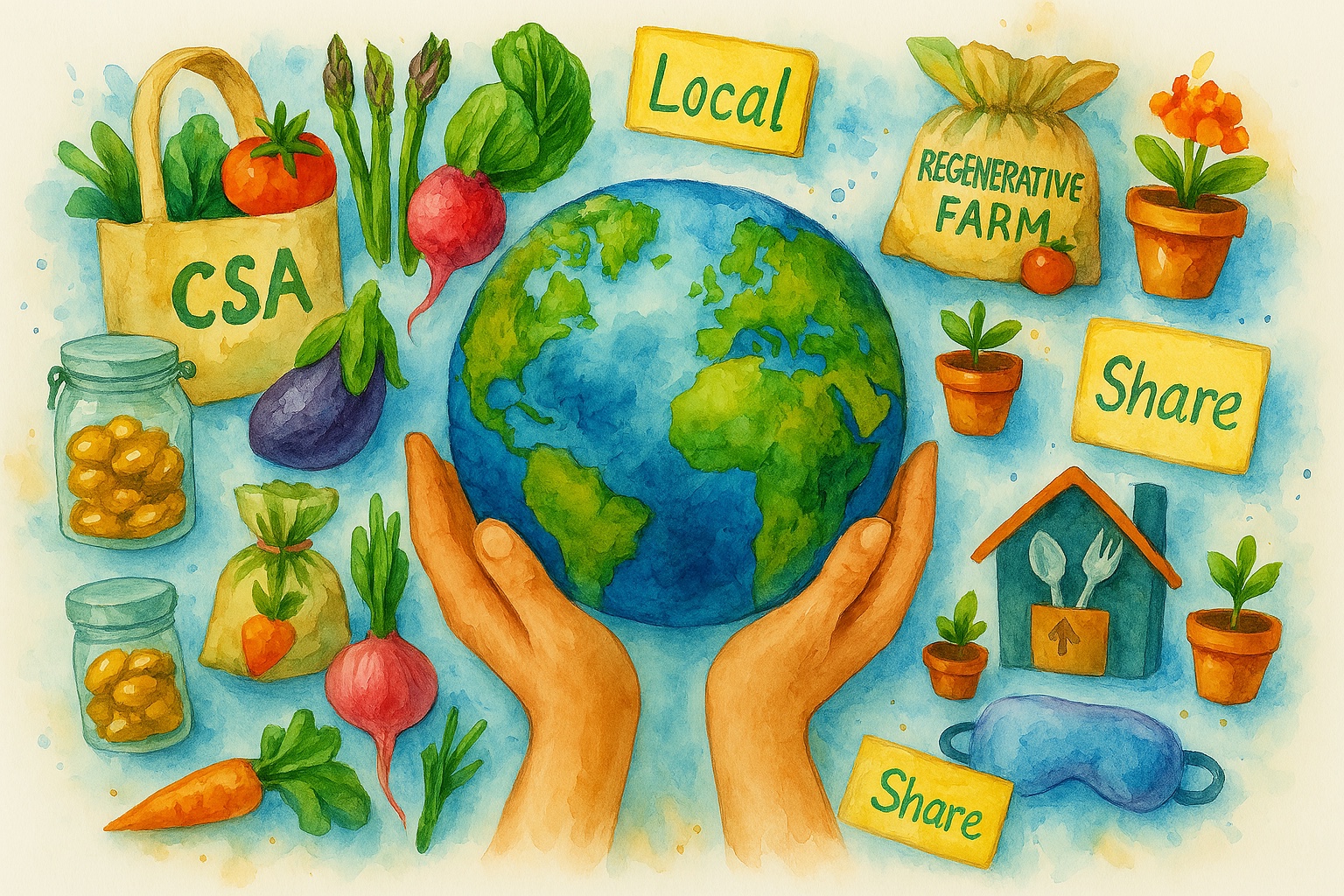
12 Simple Tips to Start Eating with the Earth in Mind
- Shop at farmers markets or join a CSA (Community Supported Agriculture) to support local growers.
- Buy produce that’s in season, it’s fresher, tastier, and typically lower carbon.
- Read labels for origin info, choose foods grown or produced near your region.
- Use what you buy, plan meals to avoid food waste.
- Store food properly to make it last longer and reduce spoilage.
- Compost scraps instead of sending them to landfills.
- Reduce your reliance on air-freighted foods, like berries in winter or imported green beans.
- Choose low-packaging or bulk items to cut down on plastic waste.
- Batch cook meals to save energy and reduce daily cooking emissions.
- Support sustainable or regenerative farms, which prioritize soil health and biodiversity.
- Try your hand at gardening, even a windowsill herb garden can lower your food footprint.
- Talk about it! Share your journey with friends and family to inspire change.
Join Us: Small Actions, Big Impact
This Earth Day, we’re inviting you to be part of the low-carbon food movement. You don’t need to overhaul your entire lifestyle, just stay curious, stay mindful, and start where you are. When we make informed choices with our food, we’re not just feeding ourselves, we’re nourishing the planet too.
Take one action this week. Then tell someone about it. Let’s make sustainability a shared story.
References
- Crippa, M., et al. (2021). “Food systems are responsible for a third of global anthropogenic GHG emissions.” Nature Food , 2(3), 198–209. https://doi.org/10.1038/s43016-021-00225-9
- Poore, J., & Nemecek, T. (2018). “Reducing food’s environmental impacts through producers and consumers.” Science , 360(6392), 987–992. https://doi.org/10.1126/science.aaq0216
- United Nations Food and Agriculture Organization (FAO). “The State of Food and Agriculture 2019: Moving forward on food loss and waste reduction.” http://www.fao.org/3/ca6030en/ca6030en.pdf
- Harvard T.H. Chan School of Public Health.
Take one action this week. Then tell someone about it. Let’s make sustainability a shared story.
Note: The information provided should not replace professional medical advice.