Spring Rolls for Tomb Sweeping Day and How This Tradition Traveled
Ingredient symbolism, nutrition, and global spring-roll traditions — from Qingming runbing and popiah to lumpia and gỏi cuốn.
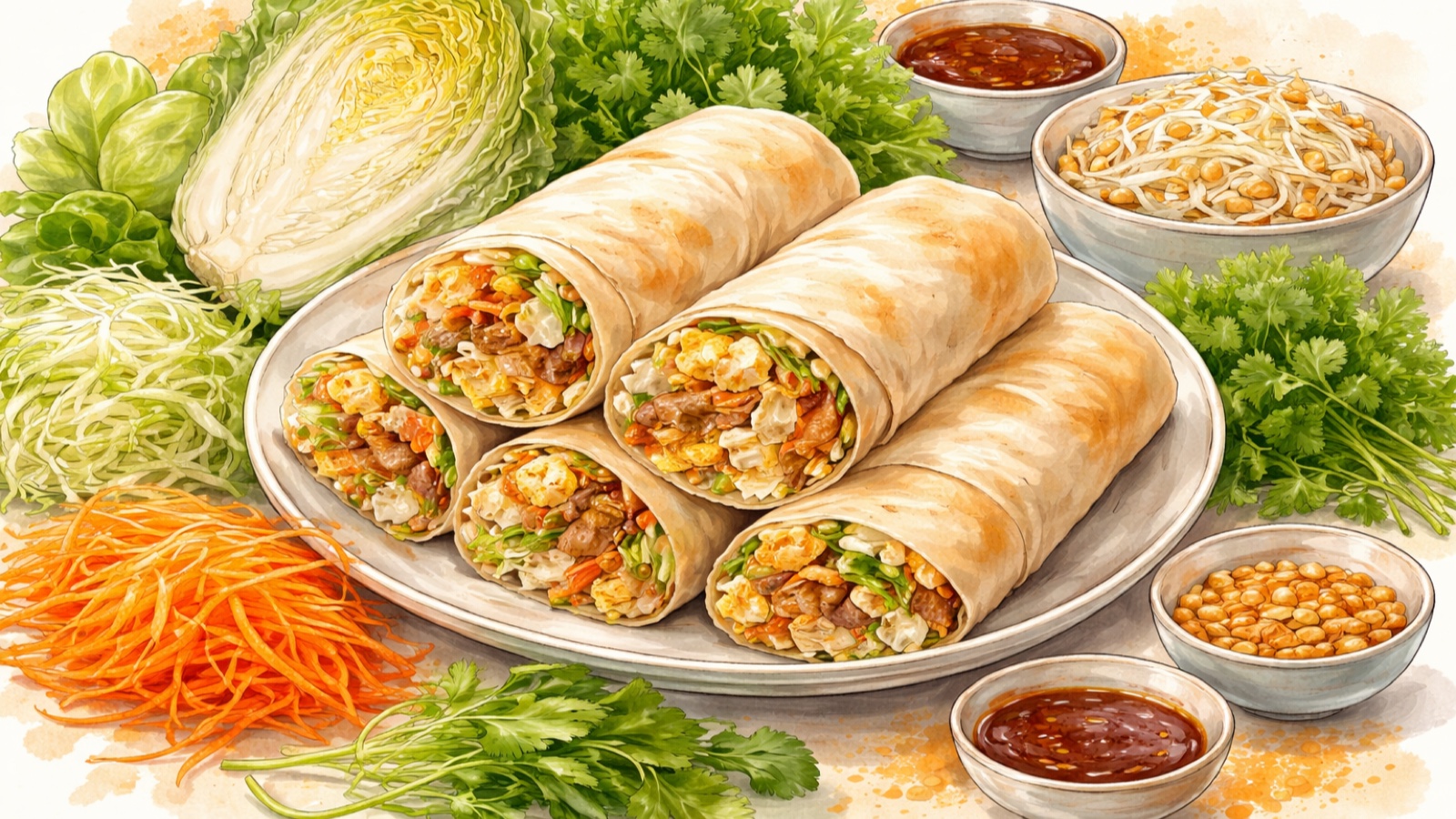
When Tomb Sweeping Day arrives, the atmosphere feels different from many other holidays. It is quieter, more reflective, and deeply tied to family memory. People visit ancestral graves, tidy the resting places of loved ones, make offerings, and gather again around familiar foods. In many Chinese communities, and especially in Fujian, Taiwan, and places shaped by Fujianese and Teochew food culture, one of the best-loved foods of this season is the spring roll, often in the form of a fresh spring roll or popiah-style wrap rather than only the deep-fried version many people first picture.
This seasonal roll is more than a convenient meal. It is a small edible bundle of spring produce, household memory, and regional identity. Depending on where you grew up, it may be called runbing, lun-pia, popiah, or simply a spring roll. Some families keep it fresh and soft, wrapping thin wheat crêpes around cooked vegetables, herbs, peanuts, egg, and meat. Others fry smaller rolls until crisp and golden. Across versions, the idea is similar: use a wrapper to gather many ingredients into one balanced bite.
What makes Tomb Sweeping Day spring rolls especially interesting is that each ingredient can carry both practical value and cultural meaning. Some symbolize abundance or renewal. Some reflect the spring season, when vegetables are tender and plentiful. Others exist because they add texture, flavor, or nutrition. This article walks through the ingredients commonly found in Tomb Sweeping Day spring rolls, explains what they usually symbolize, and highlights the nutrition they contribute. Then it looks at how related spring-roll traditions developed in other places around the world.
A note on tradition and variation
No single spring roll recipe represents every household. Families and regions differ. Some rolls are vegetarian. Some include pork, shrimp, or dried tofu. Some add sugar powder or peanut powder, while others lean more savory. The ideas below are based on commonly used ingredients and widely recognized cultural associations, especially in Chinese, Taiwanese, and Fujianese traditions.
How Spring Rolls are usually made
Thin Wheat Wrapper: The Structure That Holds Everything Together
The wrapper is the first thing you notice, because it turns many loose foods into a single, hand-held meal. In fresh Tomb Sweeping Day spring rolls, the wrapper is usually thin, soft, and flexible, more like a delicate crêpe than a crunchy shell. It is commonly made from wheat flour, water, and sometimes salt. In practical terms, the wrapper makes the spring roll portable and easy to share. Symbolically, it can be understood as the element that gathers the family table together, holding many ingredients in one place, much like the holiday brings generations together.
Nutritionally, the wrapper is mainly a carbohydrate source. It provides energy, though not much fiber unless whole-grain flour is used. Because fresh wrappers are usually thin, they do not dominate the roll, which helps the filling shine. This is one reason fresh spring rolls often feel lighter than deep-fried ones. If a family uses fried wrappers, the result will be crisper and richer, but also usually higher in fat.
Shredded Cabbage and Leafy Greens: The Spring Base
Cabbage, lettuce, mustard greens, or other leafy vegetables are often among the first ingredients layered into a fresh spring roll. These greens do important practical work. They add volume, moisture, and crunch, helping the roll feel full without relying only on meat or noodles. They also visually signal the season, because spring greens are tender, fresh, and abundant at this time of year.
Culturally, leafy greens are often associated with fresh starts, growth, and the arrival of spring. That association fits Tomb Sweeping Day very naturally. The holiday is connected with renewal, both in the landscape and in family memory. Nutritionally, leafy vegetables bring fiber, vitamin K, folate, vitamin C, and plant compounds that support a well-rounded diet. Cabbage in particular is widely used because it cooks down gently, blends well with stronger ingredients, and still contributes fiber and crunch.
Carrots: Color, Sweetness, and a Sense of Brightness
Carrots appear in many spring roll fillings because they are easy to shred, mildly sweet, and colorful. A fresh spring roll table can otherwise look pale and earthy, so carrots add a bright orange tone that makes the final roll more attractive. Their sweetness also softens stronger flavors like garlic, preserved turnip, or soy-based seasoning.
In symbolic terms, orange foods are often read as cheerful, lively, and prosperous, even when not all families speak about them in formal symbolic language. On a practical level, people often add carrots because they make the filling look more festive and balanced. Nutritionally, carrots are well known for beta-carotene, which the body can convert to vitamin A. They also provide fiber and a satisfying tender-crisp texture when lightly cooked.
Bean Sprouts: Freshness and Seasonal Lightness
Bean sprouts are a classic spring roll ingredient because they are inexpensive, juicy, and strongly associated with freshness. In a Tomb Sweeping Day spring roll, bean sprouts lighten the filling and prevent it from feeling too dense. They are especially useful when the roll includes richer ingredients such as pork, egg, or peanut powder.
Symbolically, sprouts are easy to connect with new growth and new beginnings, which makes them a natural fit for spring festivals and remembrance days tied to the changing season. Nutritionally, bean sprouts are low in calories but add water, a little fiber, and some vitamin C. Their main role is not heavy nutrition density but freshness, texture, and the feeling of renewal they bring to the roll.
Bamboo Shoots or Jicama: Crispness and Seasonal Character
In some regions, fresh spring rolls include bamboo shoots, while in others jicama or turnip is more common. Bamboo shoots are especially linked with spring, since many shoots are harvested when the weather warms. They add a gentle crunch and mild earthy sweetness that works well with mushrooms, pork, and tofu.
Bamboo shoots are often associated with the energy of springtime itself, because they literally emerge quickly from the ground during this season. Nutritionally, they are relatively low in calories and contribute fiber. Jicama, when used, adds more watery crunch and a subtly sweet freshness. Either way, this category of ingredient helps the spring roll taste seasonal rather than heavy.
Eggs: Gold Color and Richness in Small Amounts
Thin strips of scrambled egg are a familiar ingredient in many Tomb Sweeping Day spring rolls. They add a soft texture, a little richness, and a beautiful yellow color that stands out against greens and pale wrappers. Because eggs are usually sliced into fine strips, even a small amount goes a long way in the finished roll.
The yellow or golden tone often gives eggs a natural connection to wealth, blessing, or brightness, though in many homes they are included simply because they are traditional and make the roll taste complete. Nutritionally, eggs contribute protein, choline, vitamin B12, and fat, which help make a vegetable-heavy roll more filling. Since they are portioned in thin ribbons, they enrich the roll without making it too heavy.
Pork, Shrimp, or Other Proteins: Substance and Celebration
Some spring rolls are almost entirely vegetable-based, while others include pork, shrimp, dried shrimp, shredded chicken, or firm tofu. Protein ingredients give the roll more body and make it feel like a proper meal rather than just a snack. In family settings, they can also signal hospitality and care, because adding protein makes the dish feel more generous.
Culturally, meat or seafood may be read as signs of abundance or celebration, especially when compared with very simple everyday food. Nutritionally, protein ingredients increase satiety and bring iron, B vitamins, and other nutrients depending on the source. The healthiest balance usually comes when protein is used as one part of the roll, not the entire filling. In other words, a spring roll works well when protein supports the vegetables rather than replacing them.
Tofu, Dried Tofu, or Bean Curd: Plant Protein and Texture
Many households add tofu or dried bean curd strips. These ingredients are useful because they absorb seasoning well and bring a chewy, satisfying texture that works beautifully with crisp vegetables. In some vegetarian or Buddhist-influenced versions of the roll, tofu products can be the main protein source.
Symbolically, tofu is not always given a specific festival meaning, but it often fits the broader values of simplicity, balance, and nourishment. Nutritionally, tofu contributes plant protein, calcium in some forms, and a softer texture that rounds out the drier ingredients. Dried tofu is especially good in spring rolls because it holds shape and adds bite.
Peanut Powder, Crushed Peanuts, or Sesame: Fragrance and Richness
One of the most distinctive features of many fresh spring rolls in Taiwan and southern Chinese traditions is the addition of ground peanut powder, crushed peanuts, or sesame. This ingredient changes the roll immediately. It adds a fragrant roasted note, a little sweetness, and a nutty richness that makes the vegetables feel more luxurious.
Peanuts and sesame are often associated with abundance and fullness, partly because they are energy-dense and satisfying. Nutritionally, they contribute healthy fats, a little protein, vitamin E, and minerals such as magnesium. Since they are flavorful, a modest amount can make a big difference. This is also where families often personalize the roll most strongly, choosing sweeter or more savory nut mixtures depending on local habit.
Herbs, Cilantro, Garlic, and Aromatics: Fresh Lift and Identity
Fresh herbs, especially cilantro, along with garlic or scallion, bring spring rolls to life. Without them, the roll can taste muted. Aromatics create a bridge between all the other ingredients, helping the filling smell fresh, green, and vivid rather than flat.
Symbolically, herbs are often less formal than ingredients like fish or dumplings in holiday food culture, but they still support the larger seasonal theme of freshness and renewal. Nutritionally, herbs contribute small amounts of vitamins and plant compounds, though their biggest role is sensory. They make the spring roll smell like spring.
How Spring Roll Traditions Developed Around the World
The Tomb Sweeping Day spring roll has relatives in many places, especially where Chinese migration and local adaptation shaped food culture. In Teochew and Fujianese communities, fresh popiah-style rolls are closely tied to Qingming or springtime eating. In Taiwan, runbing remains strongly associated with Tomb Sweeping Day, though it is now enjoyed beyond the holiday as well. In Singapore and Malaysia, popiah developed into a beloved hawker food with local fillings and sauces. In Indonesia and the Philippines, related forms became known as lumpia, which can be fried or fresh and now belong fully to local cuisine. In Vietnam, fresh rolls such as gỏi cuốn developed their own identity, using rice paper and herbs more typical of Vietnamese foodways.
What changed from place to place? Usually three things: the wrapper, the fillings, and the seasoning. Wheat wrappers became rice paper in some areas. Bamboo shoots might be replaced by jicama, heart of palm, or cabbage. Sweet peanut powder might become sweet chili sauce, vinegar dip, or savory peanut sauce. Yet the core idea stayed recognizable: wrap a variety of textures and flavors into one balanced bite.
This development across countries is part of what makes spring rolls so interesting. They are traditional without being fixed. They carry memory, but they also adapt.
Why Spring Rolls Can Be a Balanced Holiday Food
Compared with many heavy festival foods, fresh spring rolls can be remarkably balanced. They usually combine a starch base, several vegetables, a little protein, herbs, and flavorful toppings in one portion. Their main health concerns depend on how they are made. If the roll is fresh, the main watch-outs are sodium from sauces and calories from too much peanut powder or fatty fillings. If the roll is deep-fried, oil absorption becomes a bigger factor.
A smart way to enjoy them is to keep the filling vegetable-forward, use sauces with care, and treat richer ingredients such as peanuts or pork as accents rather than the entire focus. This keeps the spirit of the roll intact while making the final meal feel lighter and more satisfying.
A Warm Closing for the Season
Spring rolls during Tomb Sweeping Day are more than a recipe. They are a lesson in how food can hold memory, seasonality, symbolism, and nourishment all at once. Every ingredient contributes something. Greens bring freshness, carrots bring color, sprouts suggest new growth, eggs bring richness, proteins give substance, and peanut powder adds fragrance and abundance.
Whether your family keeps the tradition exactly as your grandparents did or you make small changes for modern tastes, the spring roll still carries its deeper meaning. It is a gathered food for a day of gathering. It is a seasonal food for a season of renewal. And it is a reminder that even simple ingredients can become something deeply meaningful when shared.
References
- USDA FoodData Central. Nutrient data for ingredients such as cabbage, carrots, eggs, tofu, peanuts, wheat flour, bean sprouts, pork, and shrimp. https://fdc.nal.usda.gov/
- Encyclopaedia Britannica. Spring roll overview. https://www.britannica.com/topic/spring-roll
- Wikipedia. Lumpia. For broad historical spread of Fujianese spring-roll traditions into Indonesia and the Philippines. https://en.wikipedia.org/wiki/Lumpia
- Wikipedia. Teochew cuisine. For popiah as a Qingming-related fresh spring roll in Teochew food tradition. https://en.wikipedia.org/wiki/Teochew_cuisine
- Harvard T. H. Chan School of Public Health. Healthy Eating Plate. https://nutritionsource.hsph.harvard.edu/healthy-eating-plate/
Note: The information provided should not replace professional medical advice.