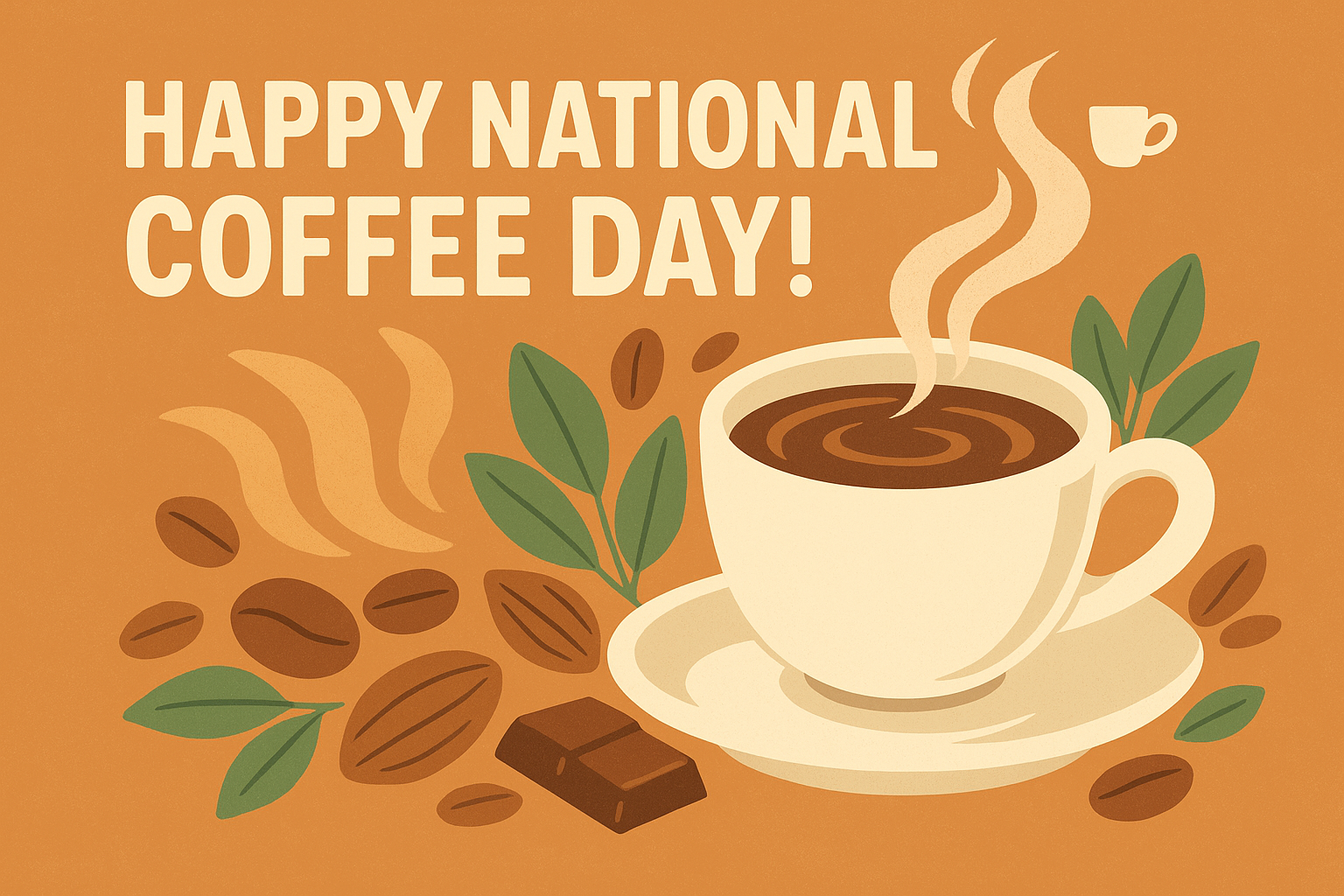
Happy National Coffee Day! ☕
Science-backed benefits, 14 global coffee traditions, six pro tips, and a quick FAQ — celebrate National Coffee Day with a smarter, more satisfying cup.
Do you drink coffee most mornings, or maybe you savor a single, perfect afternoon cup? Think about that first inhale: warm steam carrying roasty aromas, caramel, cocoa, toasted nuts, followed by a flavor that ranges from bright and citrusy to dark and chocolatey. But, did you know your daily brew can come with real, science-backed health benefits? Below, we’ll walk through what research says, how people enjoy coffee around the world, and simple tips to make your ritual both delicious and smart.
Coffee’s science-backed benefits
Large reviews in top medical journals consistently link moderate coffee intake with lower risk of several chronic conditions. A New England Journal of Medicine review concludes that about 3–5 cups/day (for most adults) is associated with reduced risk of type 2 diabetes, cardiovascular disease, Parkinson’s disease, and some liver diseases, without raising overall cancer risk; benefits appear for both caffeinated and decaf coffee, suggesting compounds beyond caffeine (like chlorogenic acids) matter, too.
An umbrella review of meta-analyses in BMJ found the largest risk reduction around 3–4 cups/day for outcomes such as all-cause mortality and cardiovascular mortality with coffee more likely to help than harm at typical intakes. As always, association is not equivalent with causation, but the pattern across many cohorts is reassuring.
Safety wise, U.S. guidance suggests up to ~400 mg caffeine/day (roughly 3–5 small cups, depending on brew) is not generally associated with adverse effects for most healthy adults. People vary widely in caffeine sensitivity, so listen to your body. Pregnant individuals are often advised to limit to <200 mg/day.
Two more nuance points:
- Heart rhythm: Contemporary evidence and expert guidance indicate usual amounts of caffeine are not linked to higher atrial fibrillation risk for most people; talk with your clinician if you have specific cardiac conditions.
- Temperature matters: The IARC finds no overall carcinogenic classification for coffee itself, but very hot beverages (not just coffee) may raise esophageal cancer risk, so let scalding drinks cool a bit before sipping.
How the world enjoys coffee
Coffee is a global language, spoken in wildly creative dialects. Here are some beloved preparations:
- Italy — Espresso & cappuccino: Short, intense shots; milk drinks like cappuccino are a morning staple.
- Turkey — Türk kahvesi: Finely ground coffee simmered in a cezve, served unfiltered and often sweetened, sometimes with cardamom.
- Ethiopia — Buna ceremony: Green beans are roasted, ground, and brewed in a jebena; a slow, social ritual that celebrates coffee’s birthplace.
- Greece — Frappé / Freddo: Shaken instant coffee foam (frappé) or espresso over ice (freddo espresso/cappuccino), summer essentials.
- France — Café au lait: Strong coffee with hot milk, often at breakfast with a tartine.
- Mexico — Café de olla: Cinnamon-spiced coffee traditionally brewed in a clay pot, lightly sweetened.
- Cuba — Cafecito / Colada: Sweet, punchy espresso with whipped sugar foam (espuma); the shared colada is communal culture in a cup.
- Vietnam — Cà phê sữa đá: Slow-dripped robusta over sweetened condensed milk and ice—silky, strong, and refreshing.
- Japan — Canned coffee & pour-over: Vending-machine cans are iconic, and meticulous pour-overs showcase clarity and precision.
- Australia/New Zealand — Flat white: A microfoam-topped espresso drink with velvety texture and balanced coffee-to-milk ratio.
- Nordics — Filter coffee & fika: Finland leads the world in per-capita consumption; fika in Sweden pairs coffee with pause and pastry.
- Brazil — Cafezinho: A small, strong, sweet cup offered as hospitality.
- Middle East — Arabic/Qahwa: Light-roasted, cardamom-fragrant brews, often served in small finjal cups during gatherings.
- United States — Third-wave everything: Single-origin pour-overs, cold brew, nitro, and a kaleidoscope of roasts and brew toys.
Whether it’s a lingering ceremony or a quick pick-me-up, each style reflects local climate, beans, water, and culture, which are proof that coffee is as much about community as chemistry.
Pro tips for enjoying coffee
1) Find your sweet spot (not too much, not too late). If you’re caffeine-sensitive, try smaller, earlier servings or half-caf/decaf. As a general safety guide, cap at ~400 mg/day (adjust down in pregnancy or per your clinician). Many sleep experts suggest avoiding caffeine 6–8 hours before bedtime. U.S. FDA – Caffeine
2) Heat, not scorch. Aim for brew water around 90–96°C (195–205°F) for extraction that’s flavorful without bitterness. Also, don’t drink coffee piping hot. Let it cool slightly to a comfortable sip to reduce burn risk and align with IARC guidance on very hot beverages.
3) Mind the add-ins. Much of coffee’s “health debate” is about sugar and cream, not the coffee itself. Try smaller pumps/scoops, alternate milk types, or lean into naturally sweet flavor notes (think Ethiopian naturals or Brazilian pulped naturals) before adding syrups. (This helps keep the cardiometabolic benefits seen in cohort studies.) NEJM review | BMJ umbrella review
4) Explore decaf & lighter roasts. Decaf retains many beneficial polyphenols and can be friendlier for afternoon enjoyment. Lighter roasts often showcase fruit and floral notes, while darker roasts tilt toward chocolate and spice—taste around and match your palate. NEJM review
5) Hydration still matters. Coffee contributes fluid, but **don’t let it crowd out water, **especially if you’re training or in hot weather. Pair each cup with a glass of water and you’ll feel better through the day.
6) Make it a moment. Borrow from fika or Ethiopia’s buna: slow down. Smell the bloom, notice the flavors (acidity, sweetness, body), and share a cup. Ritual reduces mindless refills and makes each one more satisfying.
Quick FAQ
Is coffee “good for you”? For most adults, moderate coffee appears more likely to help than harm, linked to lower risks of several chronic diseases in large observational studies, especially around 3–4 cups/day. Individual tolerance varies; chat with your clinician if you have specific conditions.
What about heart rhythm problems? Recent cardiology reporting emphasizes that typical amounts don’t seem to increase atrial fibrillation risk and may be neutral or even protective for some outcomes. Personalize with your care team.
Does brew method matter for health? It can for LDL cholesterol: paper filters trap more diterpenes (cafestol) than unfiltered methods (e.g., French press). If cholesterol is a concern, consider filtered brews more often.

Let’s celebrate National Coffee Day
So, do you drink coffee regularly? Can you picture that aroma and flavor already? Now that you also know the health story behind your cup, you’ve got even more reason to savor it. Try a new origin or brew method, explore a coffee tradition from another country, or simply take five quiet minutes with your favorite mug.
References
- van Dam RM, Hu FB. Coffee, Caffeine, and Health. N Engl J Med. 2020;383:369–378. https://www.nejm.org/doi/full/10.1056/NEJMra1816604
- Poole R, et al. Coffee consumption and health: umbrella review of meta-analyses. BMJ. 2017;359:j5024. https://www.bmj.com/content/359/bmj.j5024
- U.S. FDA. Spilling the Beans: How Much Caffeine is Too Much? https://www.fda.gov/consumers/consumer-updates/spilling-beans-how-much-caffeine-too-much
Note: The information provided should not replace professional medical advice.