Celebrate National Mango Day: Exploring Mango Varieties, Cultural Cuisines, and Modern Flavor Trends
Eleven mango varieties from Alphonso to Irwin, twelve global dishes, and modern flavor trends — your guide to savoring National Mango Day.
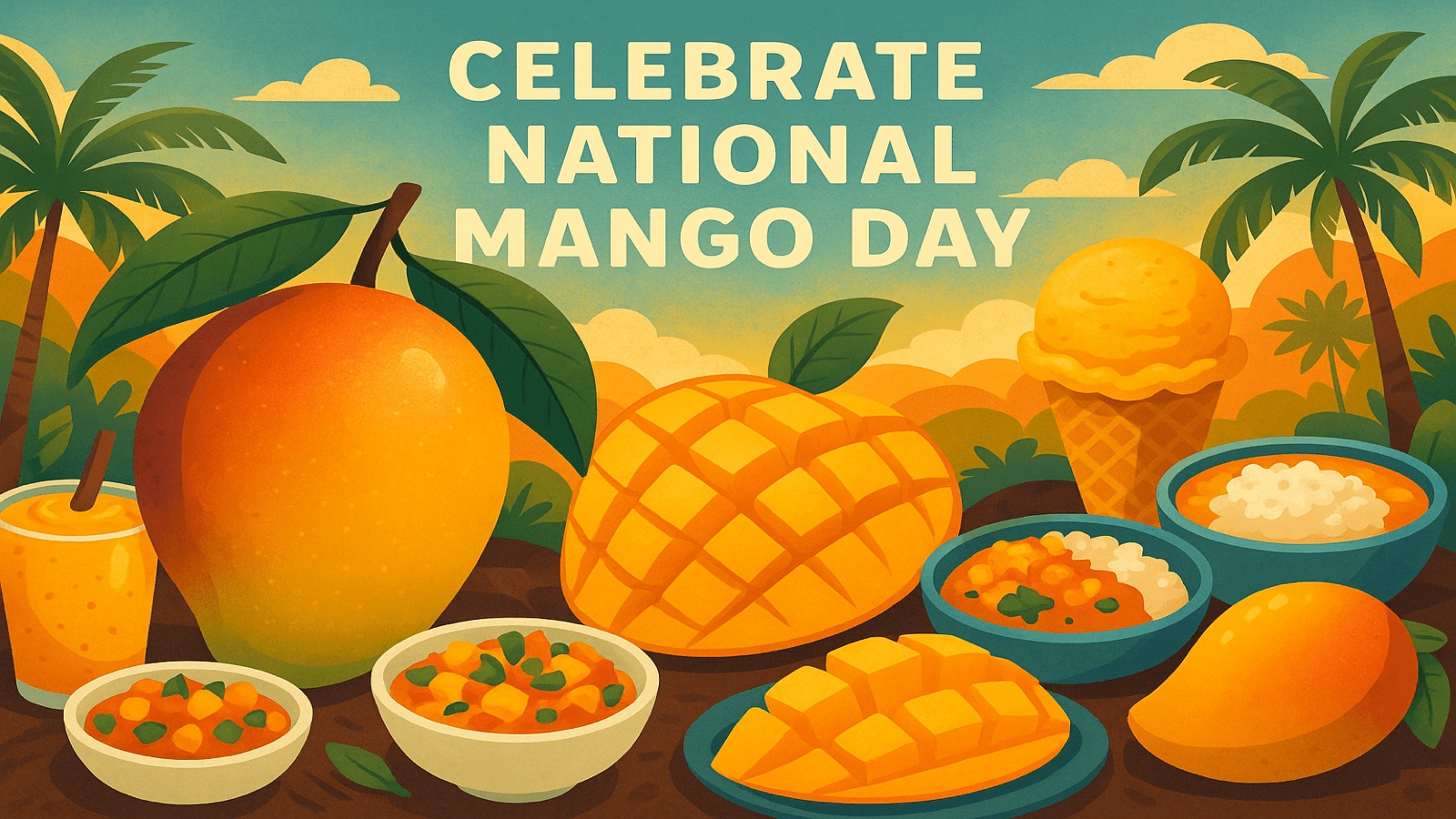
Mangoes, the golden, sun-kissed fruit, are more than just a tropical treat. Revered for their juicy sweetness and floral aroma, mangoes hold a special place in the hearts (and cuisines) of people all around the world. As National Mango Day approaches, there’s no better time to dive into the incredible diversity of mango varieties, how local climates and cultures shape their characteristics, and how this luscious fruit has inspired over a dozen beloved dishes. Whether you’re a fan of the classic Alphonso or curious about new culinary twists, this guide will help you savor mangoes in all their glory.
A Great Variety of Mango
-
Alphonso (India) Often hailed as the “King of Mangoes,” Alphonso comes from Maharashtra, India, and is known for its supremely sweet, saffron-colored flesh and rich aroma. The mango’s skin is thin, bright golden-yellow with a red blush. Upon slicing it open, the flesh is non-fibrous, creamy, and vibrant orange. Its taste balances honey-like sweetness with subtle citrus notes, and the aroma is intensely floral. Alphonso mangoes grow best in coastal climates and are harvested in late spring. Their popularity stems not only from their flavor but from cultural reverence used in traditional desserts like mango lassi and aamras.
-
Ataulfo (Mexico) Ataulfo mangoes, also called Honey or Champagne mangoes, are small, kidney-shaped, and bright yellow when ripe. Their flesh is buttery-smooth, almost custard-like, with minimal fiber. After slicing, you’ll notice a rich golden hue and a tropical scent with hints of pineapple and melon. Native to Mexico, the Ataulfo thrives in warm, dry areas and is exported globally. Its popularity is growing due to its portability, sweetness, and excellent texture for fresh eating, smoothies, and frozen treats.
-
Tommy Atkins (USA, Brazil, Mexico) The most widely exported mango in the U.S., Tommy Atkins is slightly oval with a greenish-red blush. Though its flesh is firm and fibrous, it holds up well in transport, making it popular for commercial use. The flavor is mild and slightly tangy. When cut, the mango reveals a golden-yellow interior and a light tropical scent. Originally bred in Florida, Tommy Atkins is a cultivar valued for durability more than taste. It’s common in salsas, chutneys, and grilling recipes.
-
Keitt (Florida, Vietnam, Australia) Keitt mangoes are large, green even when ripe, and have a juicy, tangy-sweet flavor. The skin is smooth with minimal blush, and inside, the flesh is firm, non-fibrous, and pale yellow. These mangoes are harvested later in the season and tend to have a higher water content. Keitt is often used in green mango salads, pickles, or eaten fresh for its refreshing bite. The tree’s ability to thrive in tropical and subtropical climates adds to its global cultivation.
-
Nam Dok Mai (Thailand) A Southeast Asian favorite, Nam Dok Mai is slender, slightly curved, and golden-yellow when ripe. Its flesh is extremely fragrant, soft, and syrupy-sweet, with zero fiber. Once sliced, it gives off an intoxicating floral perfume and a vivid yellow color. These mangoes are especially loved in Thai desserts such as mango sticky rice and smoothies. The variety is perfectly suited to Thailand’s humid climate and is gaining fans in tropical regions across the globe.
-
Kent (Peru, Mexico, Ecuador) Kent mangoes are medium to large in size, rounder in shape, with greenish skin and occasional red blush. Their juicy, fiberless flesh is deep orange, offering a sweet and slightly tangy flavor. Once sliced, the aroma is light and tropical. Kents are typically harvested in late winter and are ideal for juicing, purees, and desserts. They’re commonly found in South American markets and often frozen for export.
-
Haden (Florida, Caribbean) With its bright red and green skin and robust fragrance, Haden mangoes are a vibrant choice. Their yellow-orange flesh is fibrous, firm, and flavorful with a balanced sweetness and a hint of spice. Originally cultivated in Florida, Haden mangoes shaped the early commercial mango industry in the U.S. They’re ideal for eating fresh or in classic dishes like chutney and Caribbean stews.
-
Francis (Haiti) This uniquely shaped mango from Haiti is bright yellow with green overtones. Its flesh is soft, fibrous, and intensely sweet. When cut open, the aroma is fruity and tropical, and the inside is a golden-orange. Francis mangoes are often enjoyed fresh but also star in Caribbean fruit salads and spicy sauces. Their resilience in tropical climates makes them a staple in the region.
-
Amrapali (India) A hybrid of Dasheri and Neelum mangoes, Amrapali is compact with deep orange-red skin. Its pulp is exceptionally sweet and soft, though slightly fibrous. The aroma is rich and tangy, and the color after slicing is deep saffron. Popular in northern India, Amrapali mangoes are often used in juices, kulfi, and traditional Indian sweets.
-
Kensington Pride (Australia) Known as the most popular mango in Australia, Kensington Pride is medium-sized with a distinctive blush of pink over yellow skin. Its flesh is juicy, aromatic, and moderately fibrous with a sweet-tart balance. After cutting, the golden flesh releases a melon-like aroma. This variety is perfect for both savory and sweet recipes, from mango chutney to grilled seafood pairings.
-
Irwin (Taiwan)
Irwin mangoes are a beloved variety grown primarily in the southern regions of Taiwan, particularly in Tainan. Their signature red-blushed skin and smooth oval shape make them stand out in any fruit basket. When sliced, the flesh is deep golden-yellow, juicy, and entirely fiberless. The flavor is ultra-sweet with a hint of citrus tang, and the scent is richly tropical. These mangoes thrive in Taiwan’s subtropical climate, benefiting from volcanic soil, high humidity, and plenty of sunshine. Irwin mangoes are famously used in local desserts such as mango shaved ice (芒果冰) and creamy mango smoothies. Their balanced sweetness and beautiful appearance make them one of the most exported mangoes from Taiwan.
Global Cuisines That Celebrate Mango
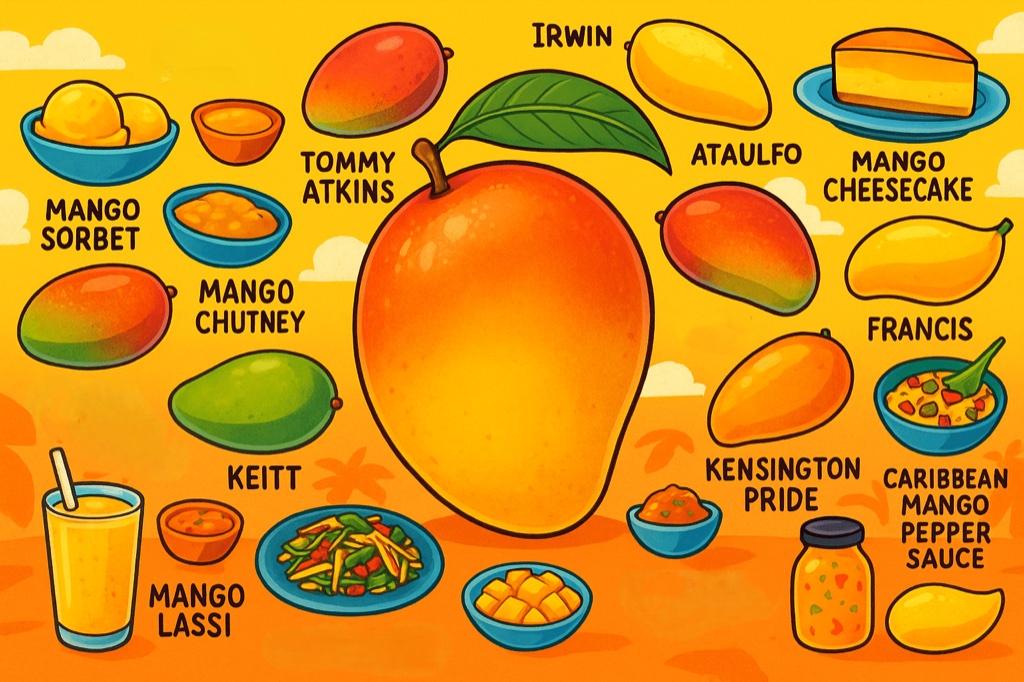
- Thai Mango Sticky Rice (Thailand)
- Aamras (India)
- Mango Salsa (Mexico/USA)
- Mango Lassi (India)
- Mango Chutney (UK/India)
- Mango Sorbet (Italy/France)
- Green Mango Salad (Thailand/Vietnam)
- Mango Cheesecake (USA/Global Fusion)
- Mango Curry (Sri Lanka)
- Mango Sago (Hong Kong)
- Dried Mango Snacks (Philippines)
- Caribbean Mango Pepper Sauce (Haiti/Jamaica)
These dishes highlight how mango is incorporated in sweet, savory, spicy, and tangy preparations, making it one of the most versatile fruits in world cuisine.
Modern Trends & Creative Uses of Mango
Mango has entered the modern kitchen in exciting ways: fermented mango sauces, mango kombucha, freeze-dried mango powder for baking, mango-infused beverages, and even savory mango granola. It’s also a rising star in plant-based and raw desserts thanks to its creamy texture and natural sugars.
From smoothie bowls to spicy ceviche toppings, chefs and home cooks alike are finding new ways to make mango a year-round staple. The variety of textures and flavors across mango types allows endless experimentation.
Modern Trends & Creative Uses of Mango
(1) https://www.hort.purdue.edu/newcrop/morton/mango_ars.html (2) https://www.mango.org/mango-varieties-availability/
Note: The information provided should not replace professional medical advice.