Crunch Time: The Smart Guide to When to Eat Trail Mix
When to snack on the trail, what to look for in your mix, and scenario-based picks for day hikes, hot days, altitude, and recovery — a National Trail Mix Day fueling guide.
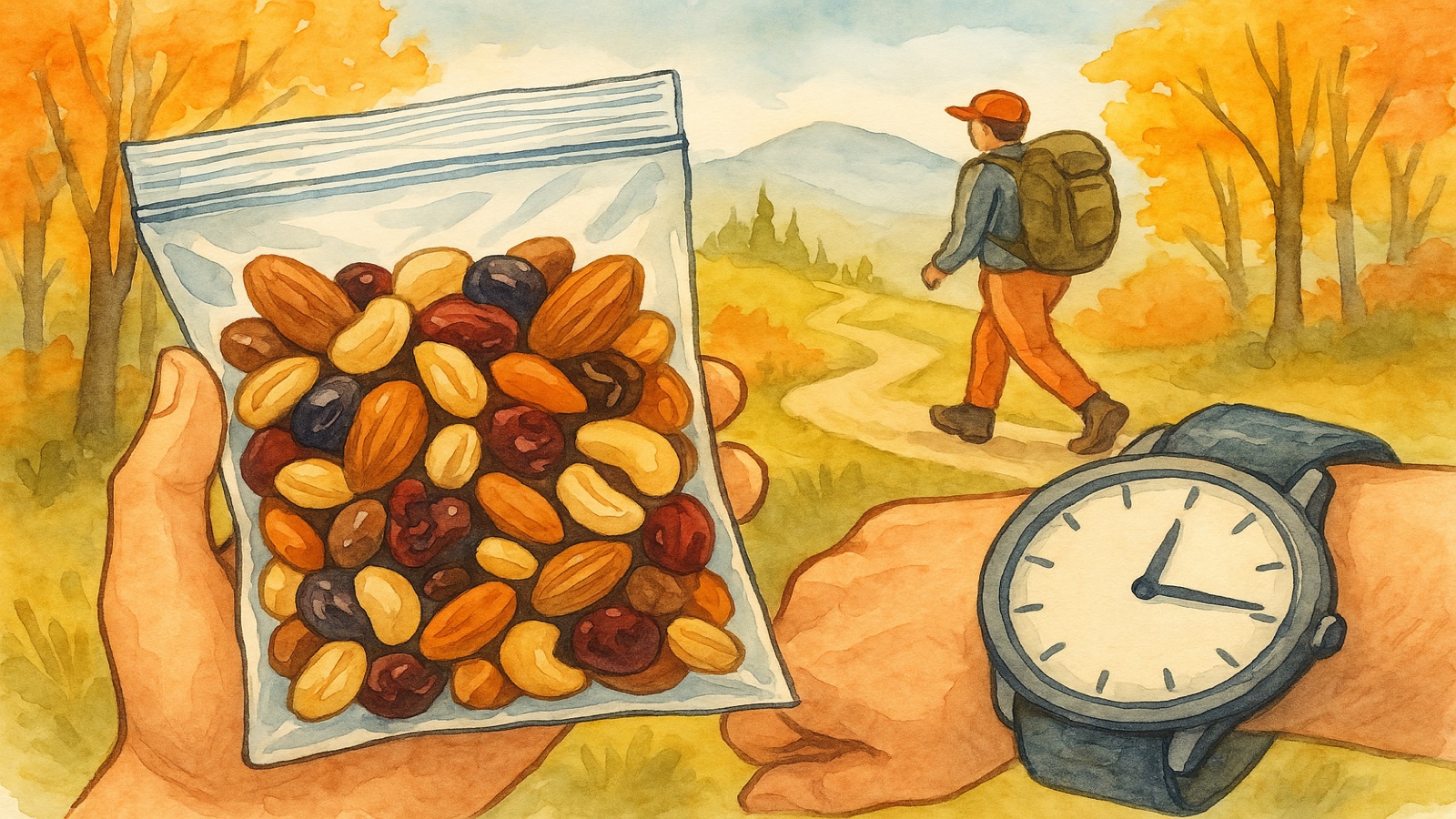
Trail mix isn’t just delicious, it’s strategic. On a hike, that handful of nuts, seeds, and fruit can be the difference between finishing strong and bonking on the switchbacks. In honor of National Trail Mix Day, here’s a fun, science-backed guide to the golden time to munch, what to consider before you snack, and how to pick the best mix for different trail scenarios.
When should hikers know it’s time for trail mix?
Watch the clock and your cues. For most day hikes, your body’s quick-access carbs (blood glucose and some liver glycogen) support the first hour or so of steady effort. Around 45–90 minutes in, especially on climbs, you’ll benefit from topping up. Don’t wait for a hard crash: eat before you feel wiped.
Green-light cues:
- Your pace feels harder than it should, or you’re getting a little irritable.
- Lightheadedness, “hollow” hunger, or a dip in concentration.
- You notice you’re breathing heavier on familiar terrain.
Simple rule of thumb: Have ~¼ cup (30–40 g) of trail mix every 45–60 minutes during moderate hikes; a bit sooner on steep or hot days. That roughly adds 150–200 kcal with a mix of carbs (quick energy), fats (steady release), and some protein (satiety). On long efforts (2–6 hours), small, regular bites beat one big meal (think “grazing to keep the engine purring”).
Why it works (science bit): During continuous exercise, muscles prefer a steady stream of carbohydrate. Sports nutrition guidelines recommend periodic carb intake for efforts >60 min to support performance and prevent fatigue; small amounts of fat and protein can help with fullness and flavor variety so you keep eating enough.
What should be considered when having trail mix?
Hydration first. Pair bites with sips. In temperate conditions, many hikers do well with a few big gulps every 15–20 minutes; in heat, plan more. Electrolytes are helpful if you’re a salty sweater (salt crust on clothes/skin) or hiking for several hours.
Portion control. Trail mix is energy-dense (that’s the point!). Stick to ¼ cup at a time, then reassess 30–45 minutes later. This avoids stomach slosh and keeps energy steady.
Macronutrient balance. Aim for a carb-forward blend when the goal is movement: dried fruit for fast fuel; nuts/seeds for sustained calories; a little dark chocolate or pretzels for morale and sodium. If you go too nut-heavy, you may feel full but under-fueled for climbing.
GI comfort. If you’re sensitive, choose lower-fiber fruits (e.g., golden raisins vs. super-dried figs), roasted (not raw) nuts, and avoid sugar alcohols that can cause cramping. Test your mix on a short hike before a big mission.
Environment & melt factor. Hot sun? Skip chocolate chips, use cacao nibs or yogurt-covered instead. Freezing temps? Fats stay hard: choose chopped mixes that are easy to chew with gloves.
Allergies & wildlife rules. Pack nut-free options if needed. In bear country, follow local food storage rules.
Scenario-based tips: how to choose the best trail mix
A) Easy day hike (1–3 hours, cool to mild):
- Goal: Light, quick energy; minimal fuss.
- Pick: 50% dried fruit (raisins, mango, cherries), 40% nuts (almonds, cashews), 10% “fun” (dark chocolate bits or pretzels).
- Why: More carbs to keep legs spinning; some fat for staying power.
B) Steep climbs or fast hiking (high output):
- Goal: Frequent top-ups without stomach heaviness.
- Pick: Higher-carb mix with chewier, low-fiber fruits (golden raisins, dried pineapple), a lighter nut (pistachios), plus salted pretzels for sodium.
- Why: Carbs are king when intensity rises; a bit of salt helps replace what you sweat out.
C) Long, hot day (4–8 hours; heat/humidity):
- Goal: Energy + electrolytes; melt-resistant.
- Pick: Dried banana, apricot, salty roasted peanuts, pumpkin seeds, toasted coconut flakes; add electrolyte chews or salted corn nuts.
- Why: Heat increases sweat sodium losses. Choose salty, crunchable items and skip melty chocolate. Sip fluids consistently.
D) Cold-weather hiking or snowshoeing:
- Goal: Dense calories you still want to eat.
- Pick: Higher-fat blend: macadamias, pecans, chocolate pieces, dried cranberries; small jerky bites for protein.
- Why: You burn more to stay warm—fat adds compact energy. Chocolate won’t melt; jerky boosts variety and satiety.
E) Family hike with kids:
- Goal: Fun, safe, bite-sized energy.
- Pick: Mini pretzels, dried apple rings (cut small), yogurt-covered raisins (cool weather), sunflower seeds; avoid whole nuts for small children.
- Why: Kid-friendly textures and flavors encourage steady nibbling; mind choking hazards for little hikers.
F) Nut-free or allergy-friendly:
- Goal: Safe carbs + seeds for crunch.
- Pick: Roasted pumpkin and sunflower seeds, dried fruit medley, toasted soy nuts or chickpea snacks, pretzel bites.
- Why: Seeds and legumes give crunch, minerals, and some protein without tree nuts/peanuts.
G) Vegan, low-added-sugar preference:
- Goal: Whole-food sweetness and micronutrients.
- Pick: Dates, figs, unsweetened cherries, raw almonds, cacao nibs, coconut chips; sprinkle cinnamon for flavor without sugar.
- Why: Natural sugars from fruit provide carbs; cacao nibs bring chocolatey bite and minerals sans added sugar.
H) Gluten-free:
- Goal: Avoid wheat while keeping variety.
- Pick: Dried fruit + nuts/seeds + GF pretzels or puffed rice/quinoa clusters.
- Why: Simple swaps keep crunch without gluten exposure.
I) Ultralight backpacking (calories per gram matter):
- Goal: Max calories, minimal weight.
- Pick: Macadamias, pecans, chocolate, coconut chips, dried mango; olive-oil roasted nuts for extra density.
- Why: High-fat items push energy density >6 kcal/g, saving weight while fueling long days.
J) Altitude hiking (reduced appetite):
- Goal: Easy-to-eat, flavorful bites.
- Pick: Tart dried fruits (apricot, pineapple), lightly salted cashews, ginger chews.
- Why: Bright flavors cut palate fatigue; small frequent bites help when appetite dips at elevation.
K) Post-hike recovery drive home:
- Goal: Refill carbs + a bit more protein.
- Pick: Finish remaining mix and add a protein-rich companion (chocolate milk, soy milk box, or a protein bar).
- Why: Carbs restore glycogen; ~20–30 g protein in the recovery window supports muscle repair.
Friendly, science-backed pointers
- Carb timing: For steady-state efforts over an hour, taking in small, regular carbs helps sustain performance (sports nutrition consensus).
- Hydration: Drink to thirst but consistently; in heat, many hikers do well aiming ~0.4–0.8 L/hour, adjusting for sweat rate.
- Sodium: If you salt-stain or cramp, include salty items (pretzels, salted nuts) and/or electrolyte tablets, especially on hot, long days.
- Practice first: Your gut is trainable, test your mix on shorter hikes to avoid surprises on big days.
Enjoy the Trail and the Mix!
Trail mix is more than a snack; it’s trail insurance: compact, tasty, and dependable. With smart timing, thoughtful portions, and a mix tailored to your adventure, you’ll hike happier and finish stronger. Pack a bag, set a snack timer if you need to, and celebrate National Trail Mix Day with crunchy confidence. Happy trails and happy snacking!
References
- American College of Sports Medicine (ACSM), Academy of Nutrition & Dietetics, Dietitians of Canada. Nutrition and Athletic Performance position stand.
- International Society of Sports Nutrition (ISSN). Position stand: Nutrient timing.
- Centers for Disease Control and Prevention (CDC). Guidance on hydration and heat safety.
- National Academies of Sciences, Engineering, and Medicine (NASEM). Dietary Reference Intakes for Sodium and Water.
Note: The information provided should not replace professional medical advice.