Super Bowl Snack Upgrades: Healthier and More Fun
Six snack-station upgrades, big-picture nutrition tips, and interactive game-day ideas — keep the classics while adding fiber, protein, and balance.
Game day food is supposed to be fun. The good news is you don’t have to “give up” chips, wings, pizza, or dessert to feel better afterward. You just need a few smart upgrades. Think of this as a flavor-first playbook: keep the classics, but add more fiber, protein, and color, trim the hidden sugar/sodium stacks, and make the snack table more interactive. Below are simple, realistic swaps that help everyone enjoy the spread and still wake up feeling good.
1. Chips and Dips
Typical pattern: Bottomless bowls of salty chips with heavy cheese dips or full-fat sour cream dips. Easy to overeat quickly without noticing.
Healthier, more fun approach:
- Make dips the star and chips the side.
Research-based guidance for snacking suggests using snacks as a chance to add nutrients, not just extra calories. Harvard’s Nutrition Source recommends snacks that include fiber, healthy fats, and some protein.
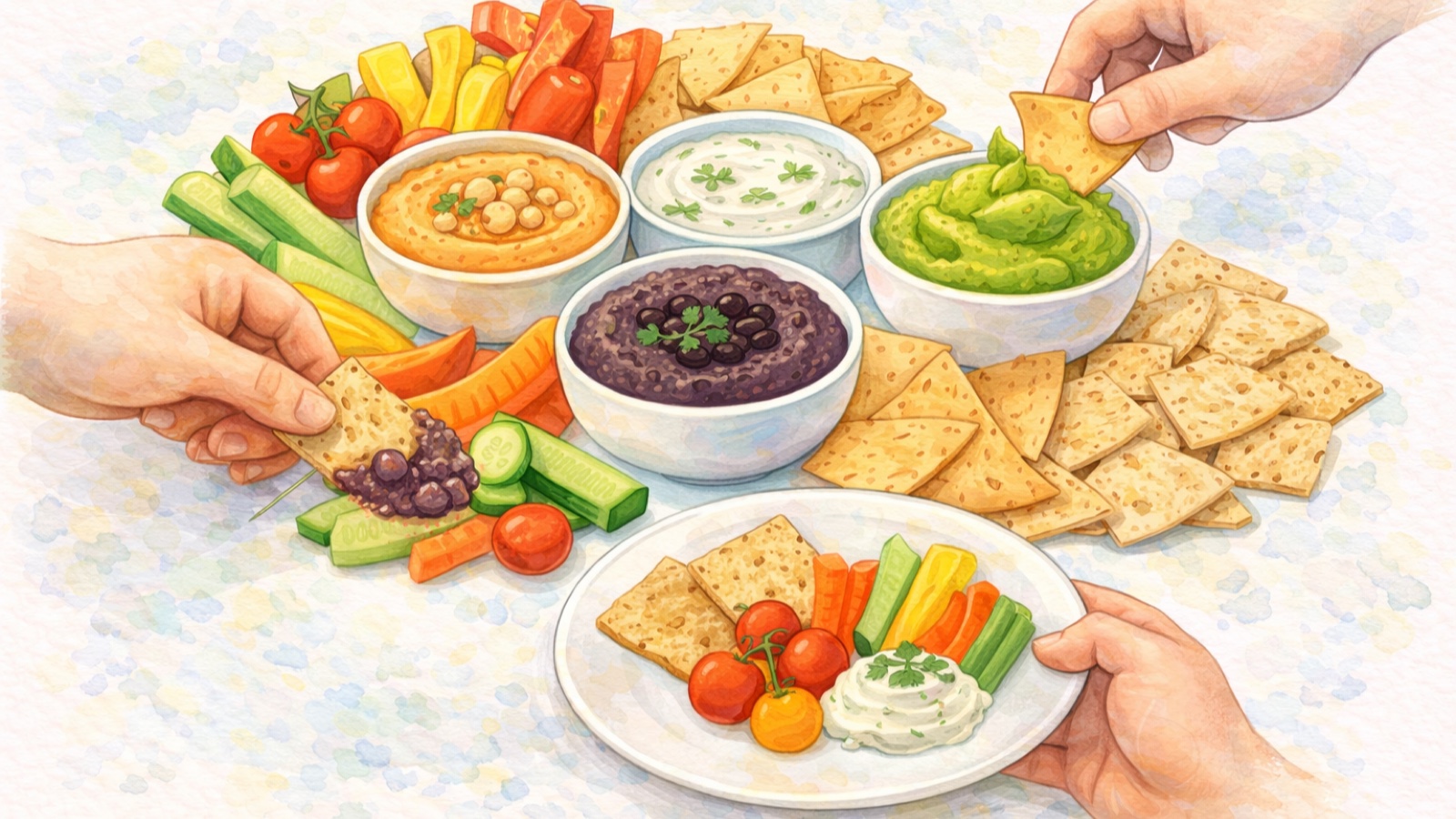
- Offer hummus, black bean dip, yogurt-based ranch, and guacamole.
- Surround them with sliced peppers, carrots, cucumbers, cherry tomatoes, and whole grain crackers.
- Use smarter chips.
- Choose baked tortilla chips or whole grain pita chips.
- Put out smaller bowls and refill as needed instead of one giant bowl that invites mindless eating.
- Turn it into a “build your own dip plate” activity.
- Give everyone a small plate and challenge them to build a colorful combo of veggies, a small handful of chips, and at least one bean or yogurt dip.
- This makes the table feel interactive and gently nudges people toward balance.
2. Chicken Wings and Fried Finger Foods
Typical pattern: Large trays of fried wings with skin-on, plenty of salt and butter-based sauces, plus fried sides.
Healthier, more fun approach:
- Bake or air-fry instead of deep-frying. Baking or air-frying reduces added fat from oil. Goal: keep the flavor but trim extra saturated fat, which the American Heart Association recommends limiting.
- Offer at least one “lighter” wing option.
- Skinless chicken drumettes or tenders baked with dry rubs or spice mixes.
- Sauces based on herbs, vinegar, and a small amount of oil instead of butter-heavy coatings.
- Add a crunchy veggie “defense line.”
- Make a large, attractive tray of celery, carrots, snap peas, and broccoli with yogurt ranch or hummus.
- Place it right next to the wings, not far away in a corner.
- Family/friend challenge idea: Run a “sauce taste-off” where guests rate different homemade sauces: a classic hot sauce, a citrus-herb version, and maybe a smoky paprika or garlic version. This shifts focus from quantity of wings to tasting and conversation.
3. Pizza and Sliders
Typical pattern: Thick-crust, meat-heavy pizzas and sliders on white buns with lots of cheese and processed meats.
Healthier, more fun approach:
- Go thinner and add plants.
- Opt for thin-crust pizzas to naturally reduce refined flour and calories per slice.
- Load up toppings like peppers, onions, mushrooms, spinach, tomatoes, or arugula.
- Keep at least one pizza with lean protein (like chicken) and extra vegetables.
- Use whole grain or small slider buns.
- Whole grain buns or smaller bun sizes help portion control and add fiber.
- Fill sliders with leaner proteins (turkey burger, bean patty, shredded chicken) plus lettuce, tomato, and pickles.
- Make a “build your own slider station.”
- Offer a tray of mini patties (some meat, some plant-based), a variety of toppings, and a mix of sauces.
- Encourage each person to build two different sliders, one classic and one “rainbow” with multiple vegetables.
Harvard’s Healthy Eating Plate suggests making at least half the plate fruits and vegetables, with whole grains and healthy proteins filling the rest. Using that idea, pizza and sliders become part of the plate, not the whole plate.
4. Cheese, Meat, and Snack Platters
Typical pattern: Large boards with processed meats (salami, pepperoni), multiple cheeses, white crackers, and perhaps a small bunch of grapes.
Healthier, more fun approach:
- Re-balance the board.
- Double or triple the amount of vegetables and fruit: grape tomatoes, cucumber slices, radishes, grapes, apple slices, orange segments.
- Include some nuts (unsalted or lightly salted) for healthy fats and protein.
- Upgrade the base.
- Swap at least half of the crackers for whole grain versions.
- Add slices of whole grain baguette.
- Use smaller cuts of cheese and meat.
- Cube or thinly slice cheeses and meats into smaller pieces to naturally reduce portion size and encourage variety instead of volume.
- The American Heart Association encourages limiting processed meats and choosing more plant-based or lean proteins over high-saturated-fat options.
- Turn it into a “team board” activity. Have kids or guests assemble mini “team flags” on toothpicks using grape tomatoes, cheese cubes, and cucumber slices. This keeps hands busy and adds fun to the veggie side of the board.
5. Sweets and Desserts
Typical pattern: Tray after tray of brownies, cookies, cupcakes, and candy.
Healthier, more fun approach:
- Shift from all-sweets to fruit-forward desserts.
- Include a platter of fresh fruit with yogurt dip. AHA has highlighted “apple nachos” (apple slices drizzled with a bit of nut butter and a light sprinkle of dark chocolate chips) as a Super Bowl-friendly sweet option.
- Offer small portions of richer desserts, not giant pieces.
- Use smaller serving sizes and more variety.
- Cut brownies into bite-size pieces.
- Offer a small bowl for candy rather than a large open dish.
- Game idea: Create a “sweet and fruit draft” where everyone picks one fruit option and one small treat. This keeps things fun while naturally setting limits.
6. Drinks
Typical pattern: Sugary sodas, alcoholic drinks, sweet iced teas, and sports drinks.
Sugary drinks add a significant amount of added sugar and calories without helping you feel full. Many guidelines recommend limiting added sugars to protect heart and metabolic health.
Healthier, more fun approach:
- Make water visible and appealing.
- Put a large pitcher of water in the center of the snack area, with slices of citrus, cucumber, or berries.
- Use fun glasses or team-colored straws.
- Offer unsweetened or low-sugar options.
- Unsweetened iced tea, sparkling water with a splash of 100 percent juice, or plain seltzer with lemon or lime.
- Set gentle “hydration rules.”
- For example, “One glass of water between every other drink.”
- The American Heart Association reminds fans during football season that staying hydrated can help control appetite and prevent confusing thirst with hunger.
Big-Picture Tips From a Nutrition Perspective
Beyond individual snack tweaks, a few high-level ideas can help you keep the day enjoyable and balanced:
- Build your plate, do not just graze from the table. Making an actual plate helps you see how much you are eating and makes it easier to aim for variety: some vegetables, a protein, a starch, and a small treat.
- Start with something colorful. Begin your first plate with vegetables, fruit, and lean protein. This follows the general pattern of filling at least half your plate with plants, which is supported by Harvard’s Healthy Eating Plate and similar guidance.
- Watch the sodium “stacking.” Processed snacks, cured meats, chips, and dips can quickly push sodium intake beyond recommended limits (less than 2,300 mg per day for most adults).
Balancing salty foods with unsalted nuts, fresh vegetables, and fruit lowers the overall load. 4. Eat because you enjoy it, not just because the game is long. Mindful snacking can reduce overeating. Harvard’s snacking guidance suggests thinking of snacks as planned, useful parts of the day instead of constant background eating. 5. Remember the bigger picture. One game will not make or break your health. What matters is using events like this to practice patterns that you can reuse: more plants on the table, slightly less salt and saturated fat, and more attention to how food makes you feel.
Final Encouragement: Enjoy the Game and Feel Good After
Super Bowl Sunday is meant to be fun. You can still have wings, dips, pizza, and dessert. The difference is in the balance: more vegetables and beans alongside the chips, more baked options and lean proteins alongside the wings and sliders, more water between drinks, and more shared, hands-on food activities that turn the snack table into part of the celebration.
Small adjustments add up over time. By nudging your game day spread toward real, minimally processed foods and better balance, you support your heart, your energy, and your long term health, while still enjoying every play.
References
- Harvard T.H. Chan School of Public Health. The Science of Snacking. The Nutrition Source. Available at: https://nutritionsource.hsph.harvard.edu/snacking/
- Harvard T.H. Chan School of Public Health. Healthy Eating Plate. Available at: https://nutritionsource.hsph.harvard.edu/healthy-eating-plate/
- FDA. Sodium in Your Diet. Updated March 5, 2024. Available at: https://www.fda.gov/food/nutrition-education-resources-materials/sodium-your-diet
- CDC. About Sodium and Health. Updated February 3, 2025. Available at: https://www.cdc.gov/salt/about/index.html
- CDC. Temporal Trends in Dietary Sodium Intake Among Adults. MMWR. 2021. Available at: https://www.cdc.gov/mmwr/volumes/70/wr/mm7042a4.htm
- American Heart Association. Have a Heart-Healthy Football Season. Updated September 24, 2024. Available at: https://www.heart.org/en/healthy-living/healthy-eating/eat-smart/nutrition-basics/have-a-heart-healthy-football-season
- American Heart Association. Shake up your Super Bowl party for a win-win mix of health and fun. February 4, 2025. Available at: https://www.heart.org/en/news/2025/02/04/shake-up-your-super-bowl-party-for-a-win-win-mix-of-health-and-fun
- American Heart Association. Healthy Snacks. Updated August 26, 2024. Available at: https://www.heart.org/en/healthy-living/healthy-eating/eat-smart/nutrition-basics/healthy-snacks
Note: The information provided should not replace professional medical advice.