Dessert Pairings That Feel Indulgent With Less Sugar: The “Acid + Fat + Aroma” Valentine’s Trick
Twelve formula tips, four simple pairings, and the acid + fat + aroma approach — Valentine’s desserts that feel indulgent with less added sugar.
Do you ever want dessert, especially on Valentine’s Day, but hesitate because you are worried about too much sugar? You are not alone. Many people love the comfort and romance of something sweet, but also want steady energy, better sleep, and fewer sugar crashes. The good news is that dessert does not have to be “all sugar or nothing.” With a few smart pairings, you can keep dessert indulgent while using less added sugar.
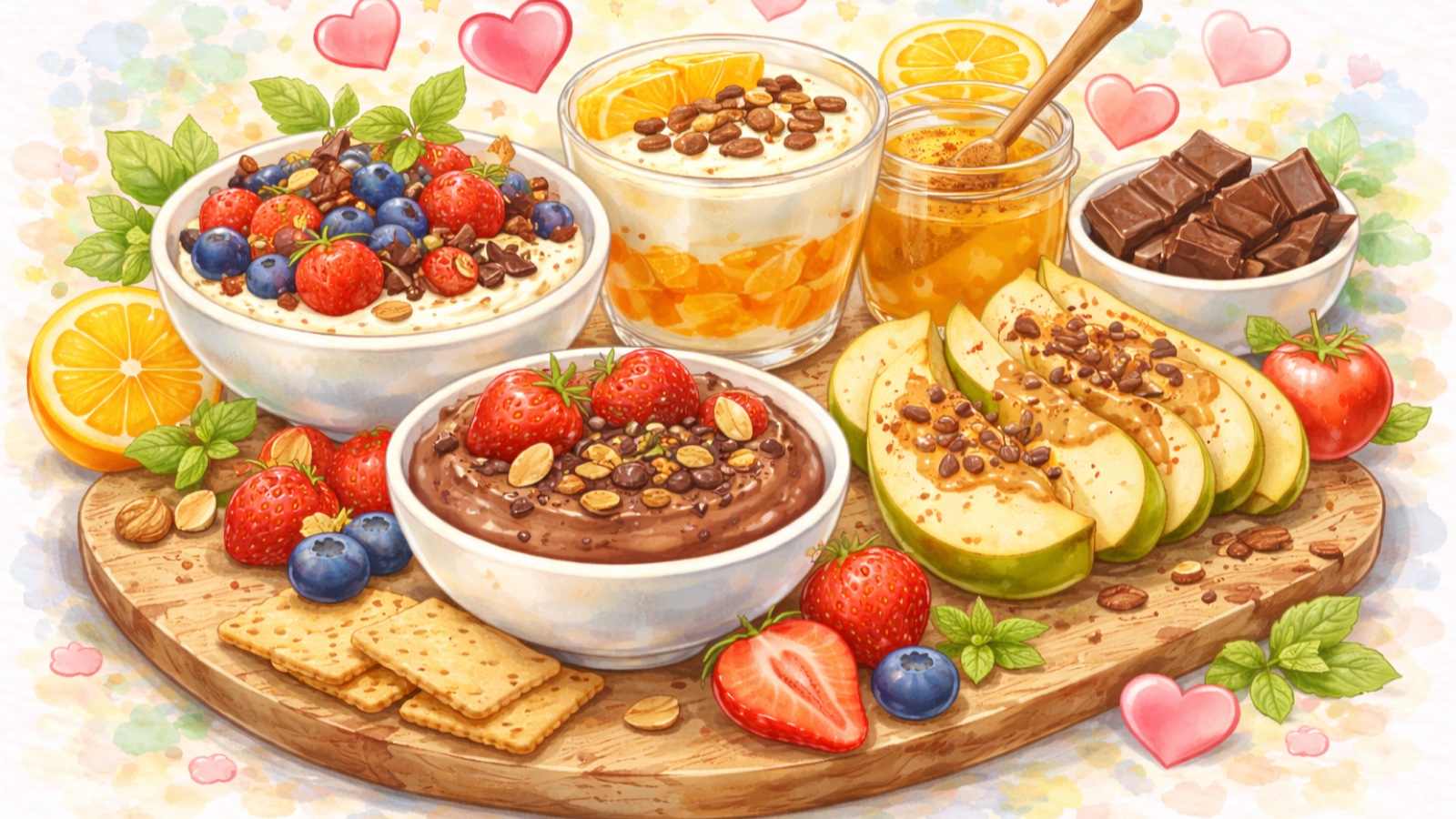
This article teaches a simple approach that works in real life: acid + fat + aroma. Think berries or citrus for brightness, yogurt or ricotta for creaminess, and dark chocolate shavings for deep flavor. When flavor intensity is high, you need less sugar to feel satisfied.
Why “Too Much Sugar” Is Worth Paying Attention To
Sugar is not a villain, but added sugars can add up quickly because they hide in drinks, sauces, snacks, and desserts. Major public health guidance recommends limiting added sugars because excess intake can crowd out nutrient-dense foods and make it harder to stay within overall calorie needs.
- The Dietary Guidelines for Americans recommends keeping added sugars below 10 percent of daily calories. For a 2,000 calorie pattern, that is about 50 grams of added sugars per day.
- The American Heart Association suggests a more conservative target: about 25 g per day for women and 36 g per day for men.
- The World Health Organization recommends reducing free sugars to less than 10 percent of total energy, and suggests aiming below 5 percent for additional benefits.
These limits are not meant to remove joy. They are meant to keep sweets in a zone where the overall diet still has room for fiber, protein, vitamins, and minerals.
The “Acid + Fat + Aroma” Idea
If you have ever tasted a strawberry and thought it seemed sweeter after a squeeze of lemon, you have already experienced how the brain integrates flavors. “Sweetness” is not only about sugar. It is also about contrast and perception.
Acid (berries, citrus, tart fruit)
- Acid brightens flavor and makes fruit taste more vivid. That brightness can make a dessert feel more complete even with less added sugar.
Fat and protein (yogurt, ricotta, nuts, nut butters)
- Creamy textures feel indulgent. Fat carries aroma and flavor, while protein helps a dessert feel more filling.
Aroma (vanilla, cocoa, cinnamon, citrus zest, toasted nuts)
- Smell is a powerful part of “sweet” experience. Research on sweetness perception describes how sweet-associated aromas can enhance sweetness perception with less sugar, sometimes called aroma sweetening.
Now let’s put it into practice.
The Valentine’s Day Dessert Formula
Below are practical tips. You can mix and match them to fit your taste, your pantry, and whether you want a plated dessert, a snack board, or something you can assemble in five minutes.
1) Start With Fruit That Has Natural “Sweet Impact”
Choose fruit that tastes naturally sweet and aromatic so you do not need to add much sugar. Berries, ripe oranges, mandarins, mango, and grapes are strong candidates. If berries are not sweet in season, roast them briefly or toss with a small squeeze of orange juice to amplify aroma.
2) Use Yogurt or Ricotta as the Creamy Base
Plain yogurt, Greek yogurt, skyr, and ricotta provide a rich mouthfeel that people associate with dessert. They also contribute protein and minerals like calcium. If plain yogurt tastes too tart at first, add vanilla and a few mashed berries before reaching for extra sugar.
3) Shave Dark Chocolate, Do Not Pour Chips
Instead of a handful of chocolate chips, try a few shavings of a higher cocoa chocolate bar. Dark chocolate provides intense cocoa aroma, and higher cocoa content typically means less sugar per gram compared with milk chocolate. The goal is not “as much chocolate as possible.” The goal is “enough chocolate to make the dessert feel special.”
4) Use Citrus Zest as a “Dessert Perfume”
Zest is mostly aroma. A small pinch of orange or lemon zest can make a yogurt bowl smell like a bakery pastry without adding sugar. This is an easy application of multi-sensory sweetness: when aroma is high, perceived sweetness can feel higher.
5) Add a Pinch of Salt to Make Sweetness Pop
A tiny pinch of salt can make chocolate and fruit taste brighter. The idea is not to make dessert salty, but to sharpen flavor edges so you need less sugar. If you are watching sodium, keep it very small and rely more on citrus or spices.
6) Toasted Nuts Make a Small Dessert Feel “Grown Up”
Toasted almonds, pistachios, walnuts, or hazelnuts add crunch, aroma, and healthy fats. Their roasted flavor pairs especially well with chocolate and berries. Because nuts are calorie-dense, use a sprinkle, not a pile.
7) Use Cinnamon, Vanilla, or Coffee to “Stretch” Sweetness
Cinnamon, vanilla, and coffee notes are strongly associated with desserts. A small amount can make a lower-sugar bowl feel more complete. Espresso powder with cocoa, or cinnamon with ricotta and pears, are high-impact flavor moves.
8) Choose “Two-Bite Portions” and Plate Them Nicely
Smaller portions can feel more satisfying when they are intentional. Use small bowls, plate fruit in a fan shape, add yogurt in a dollop, then finish with chocolate shavings and zest. The brain notices care and presentation, which supports satisfaction.
9) Build a “Dessert Board” Instead of One Big Dessert
For couples or family, assemble a board with berries, orange segments, yogurt dip, dark chocolate shards, toasted nuts, and a few whole-grain crackers. This encourages slower grazing and lets everyone choose what they love without a sugar-heavy centerpiece.
10) If You Want Sweetness, Use Fruit First, Then a Small Sweetener
Mash ripe banana into yogurt, blend dates into a small amount of cocoa yogurt dip, or add a drizzle of honey to a whole bowl rather than mixing sugar into the base. This keeps the sweet element visible and easier to control.
11) Time Dessert After a Balanced Meal When Possible
Dessert after dinner often lands better than dessert on an empty stomach. A meal with protein, fiber, and fat slows digestion, which can help smooth the post-dessert energy swing. If dessert is your snack, pair it with protein and fiber (yogurt plus fruit and nuts) rather than sugar alone.
12) Use Cocoa Powder for “Chocolate Mood” With Less Sugar
Unsweetened cocoa powder gives chocolate aroma and taste without the added sugar found in many chocolate confections. Whisk cocoa into yogurt with vanilla, then top with berries and a few dark chocolate shavings for a layered chocolate experience.
Four Simple Valentine Pairings
Pairing A: Berry Ricotta Bowl
Ricotta, mixed berries, lemon zest, dark chocolate shavings, pinch of salt.
Pairing B: Orange and Yogurt “Creamsicle” Cup
Greek yogurt, orange segments, orange zest, cocoa nibs or dark chocolate, cinnamon.
Pairing C: Strawberry Chocolate “Dip” Plate
Strawberries, thick yogurt dip (yogurt + vanilla + cocoa), toasted almonds.
Pairing D: Pear, Cinnamon, and Peanut Butter Crunch
Sliced pear, a thin peanut butter swipe, cinnamon, a few cacao nibs or chocolate shavings.
A Sweet, Balanced Valentine’s Finish
Valentine’s Day desserts do not need to be sugar bombs to feel romantic. Use the acid + fat + aroma approach: bright fruit, creamy protein-rich bases, and high-impact chocolate and spice. Choose smaller portions, plate with care, and let flavor intensity do the work that sugar often tries to do alone.
References
- American Heart Association. How Much Sugar Is Too Much? https://www.heart.org/en/healthy-living/healthy-eating/eat-smart/sugar/how-much-sugar-is-too-much
- U.S. Food and Drug Administration. Added Sugars on the Nutrition Facts Label (includes DGA 10% guidance). https://www.fda.gov/food/nutrition-facts-label/added-sugars-nutrition-facts-label
- Dietary Guidelines for Americans 2020-2025. Added Sugars Fact Sheet (10% limit and 50 g example). https://www.dietaryguidelines.gov/sites/default/files/2021-11/DGA_FactSheet_AddedSugars_2021-06_508c.pdf
- World Health Organization. Reducing free sugars intake in adults to reduce risk of NCDs. https://www.who.int/tools/elena/interventions/free-sugars-adults-ncds
- Zhao D, et al. Exploring aroma sweetening as an alternative to sugar reduction strategies in foods (review). Trends in Food Science and Technology. 2024. https://www.sciencedirect.com/science/article/abs/pii/S0924224424002784
- U.S. Department of Agriculture. FoodData Central (nutrition data for yogurt, ricotta, cocoa, chocolate, berries). https://fdc.nal.usda.gov/
Note: The information provided should not replace professional medical advice.