Eat Well, Give Well: Diet & Lifestyle Tips Before and After Donating Blood
Donating blood is a kind act that also asks something of your body. Learn the best foods, hydration strategies, and lifestyle tips to feel great before, during, and after giving.
A Refreshing Start
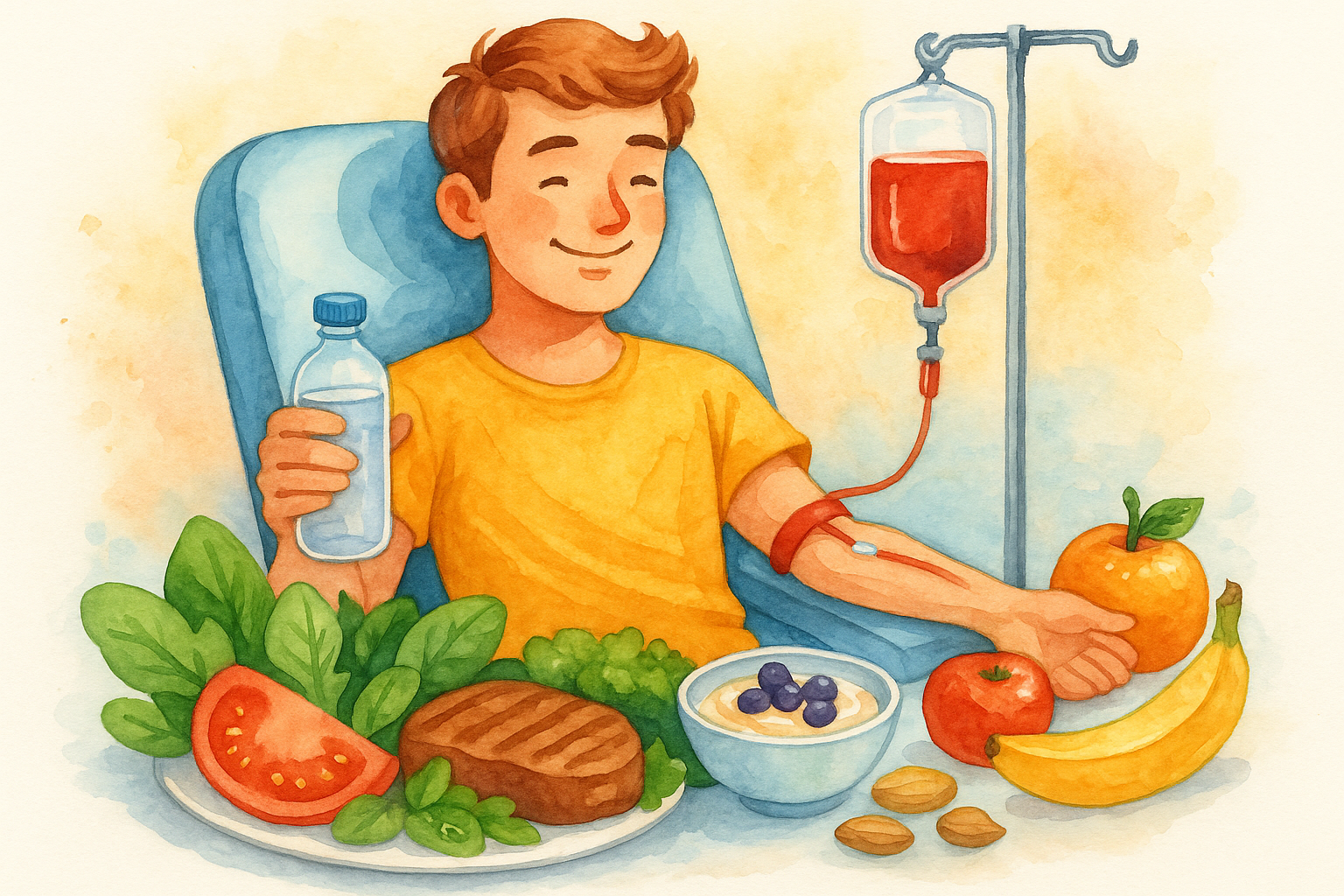
You've rolled up your sleeve, settled into that comfy reclining chair, and felt a quick pinch. Donating blood is a kind, selfless act, but, it's also a bit of a workout for your body. If you've ever felt lightheaded, sluggish, or just a little off afterward, you're not alone. The good news? With a few simple food and hydration strategies, you can feel great before, during, and after giving blood.
In this friendly guide, we'll walk you through why blood donation affects your energy and what to eat and drink to help your body bounce back. We'll also share a few lifestyle tips to help you prep and recover with ease. Whether this is your first donation or your tenth, there's something here to help you feel confident and cared for.
Why Blood Donation Affects Your Body
When you donate blood, your body says goodbye to about 500 milliliters (roughly one pint) of fluid, along with red blood cells and a bit of iron. It's all for a great cause, but your body needs a little support to restock the shelves.
Red blood cells are the oxygen carriers of your bloodstream, and they're loaded with hemoglobin: a protein powered by iron. After donation, your iron stores take a dip, and your blood volume drops a bit, which can leave you feeling tired or dizzy.
Supporting your body with smart hydration and nutrient-rich foods helps speed up the rebuild and keeps your energy stable.
What to Do Before Donating Blood
Fuel Up on Iron-Rich Foods
Start preparing a day or two before you donate. Focus on foods that boost your iron levels—especially if you're someone who naturally runs a bit low on iron (think: women, vegetarians, or teens).
Try these iron-packed foods:
- Lean red meat for highly absorbable heme iron
- Dark leafy greens like spinach or kale
- Beans, lentils, and tofu
- Iron-fortified cereals and grains
Add a Splash of Vitamin C
Vitamin C helps your body absorb non-heme iron (from plant foods) more effectively. Easy combos include:
- Bell peppers tossed into lentil salad
- Citrus fruit with your oatmeal
- Tomato slices on a chickpea sandwich
Drink Up!
Staying hydrated is key. Try to drink 8–10 cups of water the day before and at least 2–3 cups the morning of your donation.
Skip Heavy or Greasy Foods
Foods high in fat can interfere with blood testing and may reduce the quality of your donation. Stick with balanced, lighter meals.
Rest Up
Sleep helps your blood pressure stay stable and your body feel grounded. Aim for at least 7–8 hours the night before.
What to Do After Donating Blood
Rehydrate Right Away
Grab a bottle of water or a sports drink immediately after. Fluids help replenish the volume lost and keep you feeling alert.
Snack Smart
While juice and cookies are classic, consider bringing a snack that also supports recovery:
- Dried fruit and seed trail mix
- Whole grain toast with almond butter
- Greek yogurt with berries
Build a Replenishing Meal
Your next full meal should help your body build back red blood cells and boost energy. Great options include:
- Chicken and spinach salad with orange slices
- Beef stir-fry with broccoli and brown rice
- Lentil curry with sweet potatoes and kale
Don't Forget Protein
Protein helps your body heal and replenish. Include options like fish, eggs, dairy, beans, or tofu.
Take It Easy
Skip the gym for a day. A gentle walk or relaxing activity is great. Heavy lifting? Save it for tomorrow.
Keep an Eye on Your Body
If you start feeling off—think dizziness, lightheadedness, or extreme fatigue—take a break, hydrate, and eat something salty or sweet. If symptoms linger, reach out to a healthcare provider.
Quick FAQ
Can I drink coffee before donating? Yes, but balance it with water—caffeine can be dehydrating.
What's the best juice afterward? Orange juice is a favorite—it helps with iron absorption and gives you a quick sugar lift.
When can I donate again? Whole blood: every 56 days. Platelets: every 7 days (up to 24 times/year).
Can I eat right before donating? Absolutely! A balanced meal 1–2 hours beforehand helps prevent dizziness.
What if I feel faint after donating? Lie down with your feet elevated, sip some water, and have a salty snack.
Is it safe to exercise the same day? Light movement is okay, but skip the intense workouts for 24 hours.
Can menstruating people donate? Yes, but it's helpful to eat iron-rich foods before and after.
What if I'm vegetarian or vegan? Focus on plant-based iron sources like lentils, tofu, and fortified grains—and pair with vitamin C.
How do I know if I'm low on iron? Watch for fatigue, pale skin, or brittle nails. A ferritin test from your doctor can confirm it.
Can I donate if I didn't sleep well? It's better to be well-rested. Tiredness can make dizziness more likely.
Final Thoughts
Donating blood is a small act with a big impact and your body plays a major role in that generous gift. With just a bit of planning and care, you can feel great about what you've done and bounce back quickly.
Eat well, hydrate, get some rest, and be proud of your contribution. You're not just helping others, you're supporting your own well-being in the process.
References
- American Red Cross. "Tips for a Successful Donation." https://www.redcrossblood.org/donate-blood/dlp/iron-rich-food-guide.html
- National Institutes of Health (NIH) Office of Dietary Supplements. "Iron Fact Sheet for Consumers." https://ods.od.nih.gov/factsheets/Iron-Consumer/
- World Health Organization (WHO). "Blood Donor Selection: Guidelines on Assessing Donor Suitability for Blood Donation." https://www.who.int/publications/i/item/9789241548519
Note: The information provided should not replace professional medical advice.