Nourish Your Brain: A Friendly, Science‑Informed Guide to Food, Lifestyle, and Daily Habits
Your brain choreographs every moment of your life. Here's how everyday food choices, movement, sleep, and daily habits support cognitive health and protect against decline.
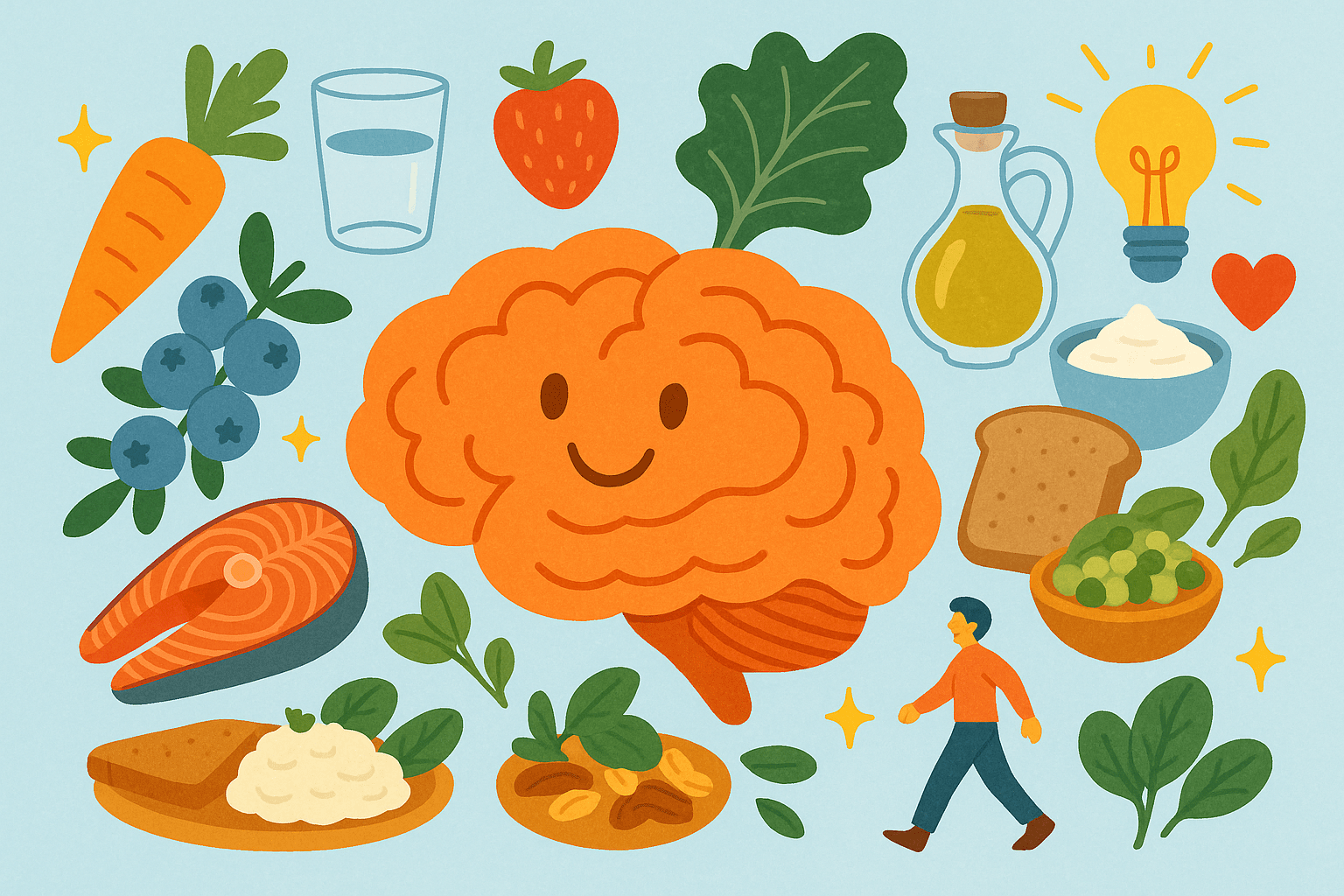
Your Brain, Your Powerhouse, Have You Thought About Feeding It Well?
Your brain choreographs every moment: memory, focus, creativity, movement, mood, sleep, and the sense of who you are. Yet many of us carefully plan meals for muscles or heart health and rarely ask, "Am I nourishing my brain?" If you've ever lost words on the tip of your tongue, felt foggy after a poor night's sleep, or wondered how to stay sharp for decades to come, this guide is for you. We'll explain why brain nourishment matters, highlight foods and daily habits that support cognitive health, and share practical tips you can start today.
Why Brain Nourishment Matters
The brain is just 2–3% of body weight but consumes ~20% of resting energy. Neurons demand steady fuel, antioxidants to buffer oxidative stress, and nutrients to build and repair membranes and signaling molecules. Across adulthood, lifestyle patterns, diet quality, movement, sleep, stress, social connection, shape brain structure and function. The good news: evidence suggests that combining healthy eating with regular physical activity and other habits can promote healthy brain aging and may lower risk for cognitive decline.
Two helpful ideas:
- Neuroplasticity: the brain adapts with practice, learning, and enriched environments.
- Neuroprotection: steady nutrition, vascular health, and anti‑inflammatory patterns help protect neurons and blood vessels that feed them.
Let's turn these into everyday choices.
Eat for Your Brain: Foods with the Strongest Evidence
Below are food groups repeatedly associated with better cognitive outcomes in observational studies and supported by clinical or mechanistic research. Think of them as building blocks to assemble most days.
1) Leafy Greens (spinach, kale, collards, arugula)
Leafy greens supply folate, vitamin K, lutein, nitrate, and polyphenols that support vascular function and may slow age‑related cognitive changes. In the MIND dietary pattern, a serving of leafy greens daily is a standout predictor of slower cognitive decline.
How to use: Add a handful to omelets, soups, grain bowls, or smoothies; sauté with olive oil and garlic.
2) Berries (blueberries, strawberries, blackberries)
Berries are rich in anthocyanins and other flavonoids that cross the blood‑brain barrier and may support neuronal signaling and antioxidant defenses. Higher berry intake has been associated with slower rates of cognitive decline in large cohorts.
How to use: Top yogurt or oatmeal; blend into smoothies; keep frozen berries on hand.
3) Extra‑Virgin Olive Oil and Nuts
Olive oil provides monounsaturated fat and polyphenols; nuts deliver healthy fats, fiber, magnesium, and vitamin E. Together they are central to Mediterranean and MIND patterns linked with better cognitive outcomes and cardiovascular health (which, in turn, supports brain health).
How to use: Make olive oil your default cooking and salad fat; include a small handful of walnuts or almonds most days.
4) Fatty Fish (salmon, sardines, trout, mackerel)
EPA and DHA (marine omega‑3s) are structural components of neuronal membranes and support anti‑inflammatory signaling. Regular fish intake is associated with better brain health in many studies.
How to use: Grill, bake, or steam fish 1-2 times weekly; include tinned options in salads or whole‑grain toast.
5) Whole Grains and Legumes
Intact or minimally processed grains (oats, barley, quinoa, brown rice) and legumes (beans, lentils, chickpeas) provide steady glucose, fiber for gut-brain axis support, and micronutrients (B‑vitamins, magnesium). Stable blood sugar supports attention and mood; fiber may modulate inflammation via gut microbes.
How to use: Build grain‑and‑bean bowls with vegetables and olive oil; swap refined grains for intact ones.
6) Colorful Vegetables (broccoli, carrots, peppers, beets)
A spectrum of polyphenols and carotenoids (e.g., lutein, beta‑carotene) supports antioxidant defenses and vascular health.
How to use: Aim for 2-3 colorful servings daily; roast pans of mixed vegetables for easy add‑ins.
7) Fermented and Probiotic Foods (yogurt, kefir, kimchi, sauerkraut)
The gut–brain axis links microbial metabolites with immune and neural pathways. Fermented foods can increase microbiome diversity and may lower inflammatory markers.
How to use: Choose plain yogurt/kefir; add small servings of fermented vegetables to meals.
8) Hydration (water, unsweetened tea, coffee in moderation)
Even mild dehydration can reduce attention and mood. Tea and coffee (1-3 cups/day for many adults) may offer polyphenols that support brain health, mind caffeine timing for sleep.
How to use: Keep a bottle nearby; front‑load fluids earlier in the day.
Gentle limits: ultra‑processed foods high in added sugar/salt, trans fats, and excessive alcohol, these patterns correlate with worse cardiometabolic and cognitive outcomes.
Live for Your Brain: Lifestyle Habits That Multiply the Benefits
Food works best alongside daily habits that enhance blood flow, reduce inflammation, and stimulate neural networks.
Move Most Days
Aerobic and resistance activity improve cerebral blood flow and insulin sensitivity, and are associated with reduced risk of cognitive decline. Even brisk walking 150+ minutes/week plus 2 days of strength work is beneficial.
Starter idea: 10-15 minutes of brisk walking after meals; 2 short strength sessions weekly (squats, rows, presses, hinges, carries).
Sleep on Purpose
During deep sleep, the brain's glymphatic system clears metabolic byproducts. Short or irregular sleep is linked with worse attention and memory.
Starter idea: Consistent sleep/wake times; wind‑down routine; avoid heavy meals and caffeine late in the day.
Train Your Attention & Learn New Things
Cognitively engaging activities (learning a language, music, strategy games) can strengthen networks and support cognitive reserve.
Starter idea: 15-30 minutes/day of deliberate practice in a mentally demanding skill.
Connect and De‑Stress
Chronic stress and isolation are associated with poorer cognitive outcomes. Social connection and stress‑reduction practices (breathing, nature time, mindfulness) support mood and attention.
Starter idea: Two meaningful social touches per day (call, walk, meal); 5 slow breaths before meals.
Practical Tips to Make It Easy
- Adopt a MIND‑style template. Most days: leafy greens + another veg; berries; nuts; whole grains/legumes; olive oil; fish 1-2×/week; poultry/eggs/tofu as needed.
- Build "brain bowls." Half vegetables; a quarter whole grains or beans; a quarter protein; drizzle olive oil; add nuts/seeds and herbs.
- Breakfast that lasts. Oats or whole‑grain toast + Greek yogurt/cottage cheese + berries + nuts.
- Swap smart snacks. Nuts + fruit; carrots/peppers + hummus; yogurt + cinnamon; a square of dark chocolate (70%+) after lunch.
- Cook once, eat twice. Batch‑roast vegetables and cook a pot of beans/grains on Sundays.
- Fish made simple. Keep canned salmon/sardines for quick lunches; add mustard, lemon, herbs.
- Color code your cart. Aim for 3-4 colors of produce each shop.
- Protect sleep. Caffeine before noon; finish dinner 2–3 hours before bed; dim lights and screens.
- Move after meals. A 10-15 minute walk supports glucose control and post‑meal focus.
- Mind alcohol. If you drink, do so moderately and with food; on many nights, choose tea or sparkling water.
Sample One‑Day Brain‑Forward Menu
- Breakfast: Olive‑oil sautéed spinach and tomatoes with two eggs; whole‑grain toast; blueberries; coffee or tea.
- Lunch: Quinoa‑chickpea bowl with roasted broccoli and carrots, arugula, olives, and lemon‑olive‑oil dressing; plain yogurt.
- Snack: A small handful of walnuts and an apple; green tea.
- Dinner: Baked salmon (or tofu) with farro and a big mixed‑greens salad (olive oil + herbs); a square of dark chocolate.
- Evening: Chamomile or lemon balm tea; brief stretch and breath work before bed.
Re‑Emphasizing the Why: Benefits You Can Feel Now and Later
Brain nourishment isn't a single supplement or a perfect day of eating, it's a pattern. When you build meals around leafy greens, berries, whole grains, legumes, nuts, olive oil, and fish; move your body most days; protect your sleep; and keep learning and connecting, you support the biology of attention, memory, and mood today while stacking the odds for a clearer, more capable tomorrow. Start with one change, berries at breakfast, a 10‑minute post‑dinner walk, olive oil instead of butter, and expand from there. Your future brain will thank you.
References
- Morris, M.C., et al. "MIND diet associated with reduced incidence of Alzheimer's disease." Alzheimer's & Dementia. 2015;11(9):1007–1014. https://doi.org/10.1016/j.jalz.2014.11.009
- World Health Organization (WHO). "Risk reduction of cognitive decline and dementia: WHO guidelines." 2019. https://www.who.int/publications/i/item/9789241550543
- Harvard T.H. Chan School of Public Health. "The MIND Diet." https://www.hsph.harvard.edu/nutritionsource/mind-diet/
- Erickson, K.I., et al. "Exercise training increases size of hippocampus and improves memory." PNAS. 2011;108(7):3017–3022. https://doi.org/10.1073/pnas.1015950108
- Xie, L., et al. "Sleep drives metabolite clearance from the adult brain." Science. 2013;342(6156):373–377. https://doi.org/10.1126/science.1241224
- National Academies Press. "Dietary Reference Intakes for Thiamin, Riboflavin, Niacin, Vitamin B6, Folate, Vitamin B12, Pantothenic Acid, Biotin, and Choline." https://nap.nationalacademies.org/catalog/6015
- NASEM / National Library of Medicine. "Mediterranean Diet and Cognitive Function: Evidence Summary." https://medlineplus.gov/ency/article/002399.htm
Note: The information provided should not replace professional medical advice.