The New U.S. Dietary Guidelines & Your Mind: Can Better Eating Support Better Mental Health?
Can following the 2025–2030 Dietary Guidelines for Americans also support your mood, attention, resilience, and long-term brain health? The evidence might surprise you.
Have You Ever Wondered If a Government "Food Guide" Can Actually Lift Your Mood?
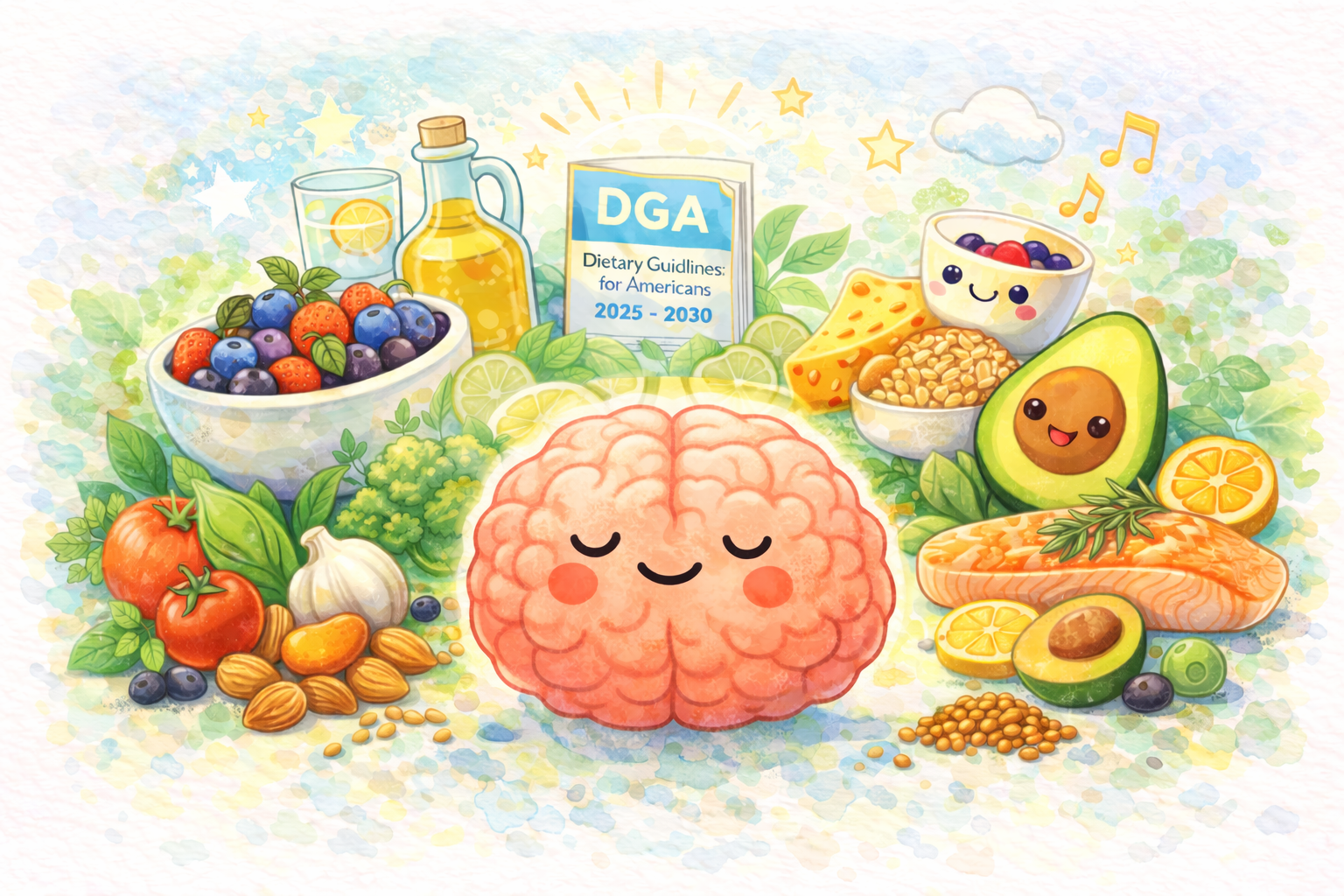
Stressful days, restless nights, focus that fades by mid‑afternoon. You might already think of the Dietary Guidelines for Americans (DGA, 2025 – 2030) as a playbook for weight, heart health, or diabetes risk. But here's a bigger question: Can following the new Guidelines also support your mental well‑being, your mood, attention, resilience, and long‑term brain health? This article walks through what's new in the DGA, what science says about diet and the mind, how these guidelines can translate to calmer days and clearer thinking, and exactly how to put them on your plate.
What Do the New Guidelines Say - and How Might They Touch Mental Health?
The 2025 – 2030 DGA doubles down on a simple message: prioritize whole, nutrient‑dense foods and cut back on highly processed items, added sugars, and refined grains. In practical terms, that looks like:
- Vegetables & fruits across colors and seasons (especially leafy greens and berries)
- Whole grains (oats, barley, quinoa, brown rice) over refined
- Protein foods with an emphasis on fish, beans/lentils, yogurt/fermented dairy, nuts/seeds, eggs, and lean poultry
- Healthy fats, led by extra‑virgin olive oil, nuts, and seeds
- Less of: sugar‑sweetened beverages, sweets/desserts, salty or sugary packaged snacks, and ultra‑refined convenience foods
Why this matters for the mind: these foods collectively stabilize blood sugar, reduce chronic low‑grade inflammation, support a healthy gut microbiome, and protect blood vessels – all mechanisms increasingly linked with mood, cognition, and brain aging.
Bottom line: The new DGA's food pattern aligns closely with Mediterranean/MIND‑style eating, which has the best evidence base for cognitive support and potential mood benefits.
Does Eating This Way Sooth Mood or Support Mental Health? What Does the Evidence Say?
While food is not a treatment for clinical conditions on its own, research suggests that dietary patterns consistent with the DGA can help people feel and function better and may reduce long‑term cognitive risk.
- Depression symptoms: In the randomized SMILES trial, adults with major depression who received a structured Mediterranean‑style dietary intervention had greater reductions in depression scores than a social‑support control over 12 weeks. The diet emphasized vegetables, fruits, whole grains, legumes, fish, and olive oil while cutting ultra‑processed foods.
- Prevention of depressive symptoms: Multiple cohort studies and recent meta‑analyses associate higher overall diet quality (Mediterranean‑like patterns) with lower risk of developing depression.
- Cognition & brain aging: NIH‑supported research links adherence to the MIND diet (Mediterranean + DASH features, with a special nudge for leafy greens and berries) to slower cognitive decline and lower risk of cognitive impairment over time.
Why it may work:
- Vascular health: What's good for the heart is good for the brain – healthy vessels deliver oxygen and nutrients.
- Inflammation & oxidative stress: Polyphenols (berries, olive oil, colorful veg) and omega‑3s (fish) can lower inflammatory signals and oxidative stress that are implicated in mood and neurodegeneration.
- Gut – brain axis: Fiber‑ and fermented‑food‑rich diets foster microbial diversity; short‑chain fatty acids and other metabolites may modulate stress responses and inflammation.
- Glycemic steadiness: Balanced meals help avoid glucose highs/lows that can worsen fatigue, jitteriness, and brain fog.
Takeaway: No single food "fixes" mood, but whole‑pattern shifts – the very ones promoted by the DGA – are consistently linked with better mental and cognitive outcomes.
Through What Pathways Could the DGA Affect Both Physical and Mental Health?
- Blood sugar regulation: Fewer added sugars/refined carbs + more fiber/protein = steadier energy and fewer mood swings.
- Lipid & blood‑pressure improvements: Olive oil, nuts, fish, and produce patterns help lipids and blood pressure – key for brain perfusion.
- Micronutrient sufficiency: Leafy greens (folate), nuts/seeds (magnesium, vitamin E), seafood (iodine, selenium, vitamin D, B12), and legumes (B‑vitamins) support neurotransmitter synthesis and neural maintenance.
- Sleep and circadian support: Caffeine timing and evening eating patterns influence sleep; consistent sleep strengthens mood regulation and memory consolidation.
- Weight and metabolic health: Gradual shifts toward whole foods can reduce visceral adiposity and insulin resistance – both linked with inflammation and poorer mood/cognition.
How Should People Properly Accommodate the Guidelines in Daily Life?
Build a DGA‑Aligned, Brain‑Forward Plate (Most Days)
- Half vegetables (include a leafy green): spinach, kale, arugula, broccoli, peppers.
- Quarter protein: fish 1 – 2×/week; otherwise beans/lentils, tofu/tempeh, eggs, yogurt, or lean poultry.
- Quarter intact whole grains or legumes: oats, barley, quinoa, brown rice, farro; beans/lentils often stand in for grains.
- Healthy fat: extra‑virgin olive oil as default cooking fat; a small handful of nuts/seeds.
- Fruit: a cup of berries or a piece of fruit daily.
Practice "Mood‑Steady" Meal Mechanics
- Front‑load fiber & protein at breakfast (e.g., oats + Greek yogurt + berries + walnuts).
- Food order when possible: veg/protein first, starch last – this sequence can flatten post‑meal glucose peaks.
- Post‑meal movement: 10 – 15 minutes of walking improves glucose handling and eases afternoon slump.
Hydration & Caffeine Wisdom
- Choose water, unsweetened tea, or coffee; mind caffeine timing (ideally before noon) to protect sleep.
- Swap sugary beverages for sparkling water with citrus or unsweetened iced tea.
Lean into Fermented & Fiber‑Rich Foods
- One small serving of yogurt/kefir or fermented vegetables most days supports the gut – brain axis.
- Aim for 25 – 38 g/day of fiber from plants (vegetables, legumes, intact grains, nuts/seeds, fruit).
Make It Practical (and Affordable)
- Batch‑cook beans/grains and roast vegetables on weekends.
- Keep tinned fish, frozen vegetables/berries, eggs, oats, olive oil, and beans on hand for fast dinners.
- Use herbs/spices, citrus, and olive oil to replace heavy sauces and excess salt.
- Cultural comfort counts: Adapt traditional dishes – more veg/legumes, smaller refined‑starch portions, grill/bake instead of deep‑fry.
A One‑Day "Mind & Body" Menu (Adjust as Needed)
- Breakfast: Olive‑oil scrambled eggs with spinach and tomatoes; whole‑grain toast; blueberries; coffee or tea.
- Lunch: Lentil‑quinoa bowl with roasted broccoli and carrots, arugula, olives, and lemon – olive‑oil dressing; plain yogurt.
- Snack: Apple + a small handful of almonds; green tea.
- Dinner: Baked salmon (or tofu) with farro and a big mixed‑greens salad (olive oil + herbs); a square of dark chocolate.
- Evening: Chamomile or lemon balm tea; brief stretch and breathwork before bed.
Safety & personalization: If you have medical conditions (e.g., diabetes, kidney disease, GI disorders) or take specific medications, tailor these ideas with your clinician or a registered dietitian.
Quick Tips to Stay Consistent (So the Benefits Show Up)
- Shop by a short list: leafy greens, berries, colorful veg, beans/lentils, oats or quinoa, yogurt/kefir, eggs, olive oil, nuts, tinned fish.
- Cook once, eat twice: tonight's salmon becomes tomorrow's salmon‑and‑white‑bean salad.
- Snack with structure: pair protein or fat + produce (yogurt + berries; hummus + peppers; nuts + apple).
- Mind sweets and drinks: make desserts occasional and skip liquid sugar – it's the fastest route to energy/mood swings.
- Guard sleep: finish dinner 2 – 3 hours before bed; dim lights; keep caffeine to morning.
- Walk after meals: stack a 10‑minute stroll onto lunch or dinner.
- Start small: one change per week beat grand overhauls – consistency is the superpower.
Summary: Food for Body and Mind - One Pattern, Many Wins
The 2025 – 2030 Dietary Guidelines urge a shift toward whole, minimally processed foods, and away from added sugars and ultra‑refined products. That same pattern is tied – by clinical trials and long‑term studies to steadier mood, sharper thinking, and healthier brain aging, likely through better vascular health, lower inflammation, a more resilient gut-brain axis, and stable glucose. There's no magic bullet, but there is a clear direction of travel: build meals around vegetables (especially leafy greens), fruit (especially berries), legumes, intact grains, nuts/seeds, fish, and olive oil; trim ultra‑processed foods and sugary drinks; move after meals; and protect your sleep. Your body will thank you, and your mind may feel the difference.
References
- U.S. Departments of Agriculture & Health and Human Services. Dietary Guidelines for Americans, 2025 – 2030. Overview and PDF access via DietaryGuidelines.gov. https://www.dietaryguidelines.gov/ and PDF: https://cdn.realfood.gov/DGA.pdf
- Harvard T.H. Chan School of Public Health – The Nutrition Source. "Dietary Guidelines for Americans 2025 – 2030: Progress on added sugar, protein hype, saturated fat contradictions." https://nutritionsource.hsph.harvard.edu/2026/01/09/dietary-guidelines-for-americans-2025-2030/
- Jacka FN, et al. "A randomised controlled trial of dietary improvement for adults with major depression (the SMILES trial)." BMC Medicine. 2017;15:23. https://link.springer.com/article/10.1186/s12916-017-0791-y
- NIH – National Institute on Aging (NIA). "Healthful diet linked to reduced risk of cognitive decline." https://www.nih.gov/news-events/nih-research-matters/healthful-diet-linked-reduced-risk-cognitive-decline
- Frontiers in Nutrition (2025). "Mediterranean diet adherence and depressive symptoms: a systematic review/meta‑analysis." https://www.frontiersin.org/journals/nutrition/articles/10.3389/fnut.2025.1692981/full
Note: The information provided should not replace professional medical advice.