The Healthy Snack Trap: When Packaged Snacks Are Truly Helpful
Many snacks marketed as healthy are only healthy under specific circumstances. Learn how to spot the traps and build a smarter snacking system.
Those "Healthy" Snack Labels Feel Reassuring, But Are They Always True?
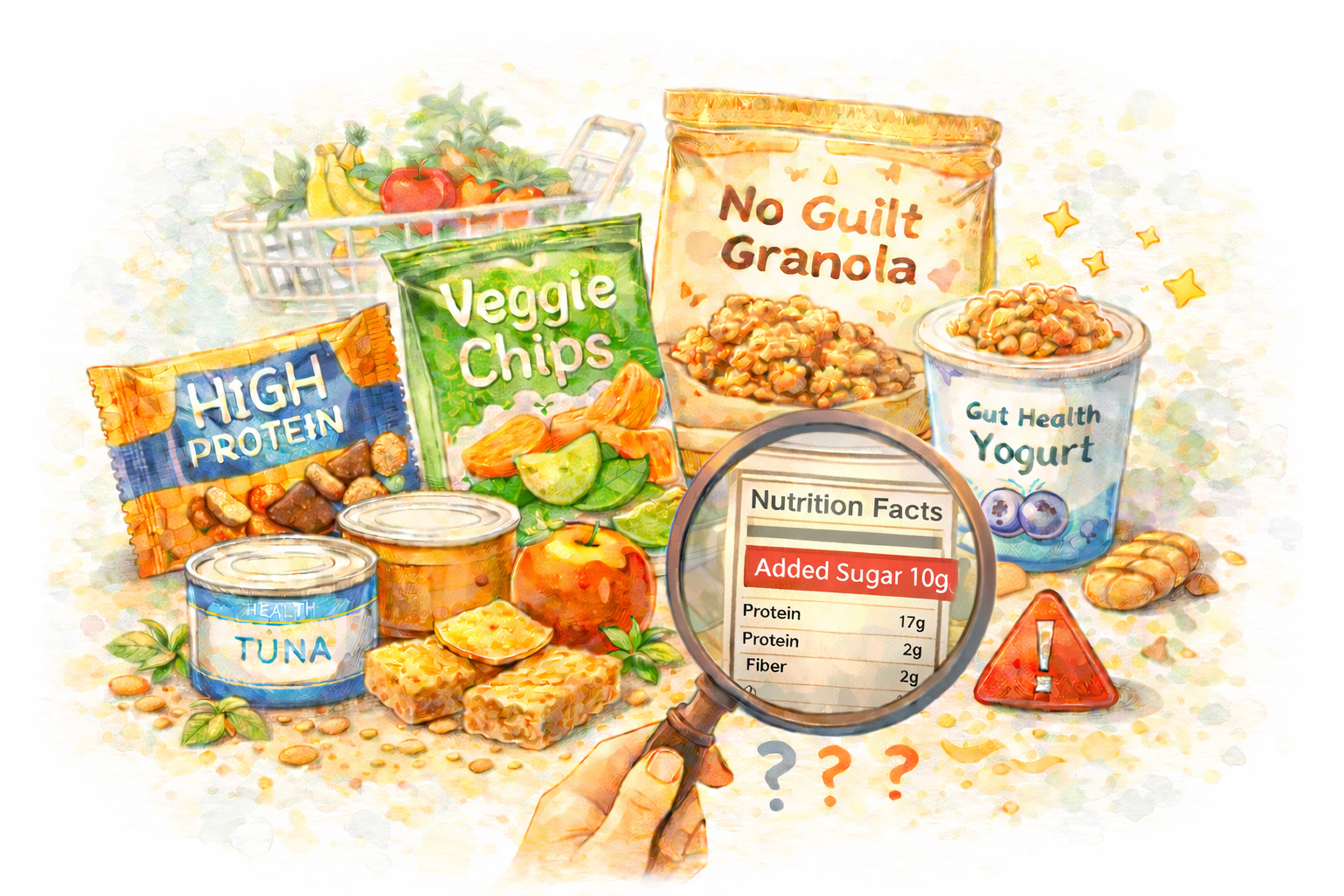
You have 10 minutes between meetings. You are hungry, a little stressed, and the snack aisle looks like it was designed for exactly this moment. Bars promise "high protein." Chips claim "veggie-packed." Yogurts shout "gut health." Granola clusters say "natural," "clean," or "no guilt."
Here is the uncomfortable truth: many snacks marketed as healthy are only healthy under specific circumstances. Sometimes they are genuinely convenient tools for steady energy, better nutrition, and mood support. Other times, they are ultra-processed, sugar-forward, and portion-engineered in ways that can nudge blood sugar, appetite, and sleep in the wrong direction.
This article walks through the questions in order:
- Under what circumstances are snacks actually healthy?
- Do they support physical and mental health – and how?
- If you want to use packaged snacks, how do you accommodate them wisely into daily eating?
- What is the logical takeaway?
1) Under What Circumstances Are Snacks Healthy?
A snack is "healthy" when it serves a purpose your body actually needs, not when it simply has a health halo. The most common healthy purposes are:
A. Bridging a long gap between meals
If you routinely go 5-6 hours between meals, a snack can prevent a blood sugar dip that leads to overeating later. In this case, a snack is like a stabilizer.
B. Supporting training or physically demanding work
If you are active – walking a lot, exercising, working on your feet – you may need extra energy and protein. A snack can help you meet needs without forcing meals to be huge.
C. Meeting a nutrition goal that is hard to hit otherwise
Examples:
- More protein to support muscle maintenance.
- More fiber for gut health and cholesterol.
- More calcium or vitamin D if your diet is low.
D. Preventing impulse eating under stress
If you know you tend to grab sweets when stressed, a planned, satisfying snack can reduce decision fatigue and keep you steady.
E. Improving sleep by preventing late-night hunger
For some people, a small structured snack earlier in the evening can prevent a bigger, sleep-disrupting binge later. The key is timing and composition.
A snack is usually not "healthy" if it is simply constant grazing, a substitute for meals that would otherwise provide vegetables and protein, or a routine response to boredom rather than hunger.
2) The "Healthy Snack" Traps You See on the Market
Trap 1: The sugar swap disguised as "natural"
Many bars, granolas, and smoothies look wholesome but contain concentrated sweeteners (honey, agave, brown rice syrup, cane sugar, fruit juice concentrate). Your body still processes these as added sugars. The label may say "natural," but your glucose response may look like dessert.
What to look for:
- Added sugars on the Nutrition Facts label.
- Multiple sweeteners listed in ingredients.
Trap 2: "High protein" without balance
A snack can be high-protein yet still be low-quality if it is built on isolates plus sweeteners and emulsifiers. Protein can help satiety, but it is not a free pass.
What to look for:
- Protein plus fiber and minimal added sugar.
- Real-food protein sources (nuts, seeds, dairy, legumes) when possible.
Trap 3: "Low fat" that increases appetite
Low-fat products often compensate with added sugar or starch. Fat is not the enemy; it is part of satiety and hormone function. Ultra-low-fat snacks may leave you hungry again quickly.
Trap 4: "Gluten-free" or "keto" as a health halo
These terms can be medically necessary for some people (celiac disease), but they are not automatically healthier. Many gluten-free snacks are refined starch blends. Many keto snacks use sugar alcohols that can trigger GI distress.
Trap 5: Portion distortion
Snack packs can look reasonable but are engineered for "one more handful." Even "healthy" nuts or trail mix can become excess calories if the portion is large and mindless.
Trap 6: Ultra-processed convenience with a wellness story
Ultra-processed foods can be designed to be hyper-palatable and easy to overeat. Even if macros look okay, the overall processing pattern may matter for appetite regulation and long-term health.
3) Do These Snacks Support Physical and Mental Health - And How?
Physical health: when snacks help
A snack supports physical health when it improves dietary quality and metabolic stability:
- Steadier blood sugar: A snack with fiber + protein + healthy fat can reduce the risk of a sharp glucose spike and crash.
- Better nutrient coverage: Snacks can add missing nutrients (protein, calcium, omega-3s, fiber).
- Weight and heart support: Choosing minimally processed snacks is associated with better cardiometabolic outcomes than frequent ultra-processed snack patterns.
Mental health: the realistic role of snacks
Snacks do not replace therapy, sleep, or medical care, but food choices can influence mental wellbeing through several pathways:
- Blood sugar and mood stability: Rapid glucose spikes and drops can feel like anxiety, irritability, or brain fog. More stable fuel supports steadier mood.
- Gut-brain axis: Fiber and fermented foods support gut microbes that produce metabolites linked to inflammation and brain signaling.
- Micronutrients: Magnesium, folate, B12, iron, zinc, and omega-3 fats are involved in neurotransmitter function and brain maintenance.
- Sleep quality: Late-day caffeine, high sugar, or heavy snacks can disrupt sleep; poor sleep then worsens emotional regulation.
So yes, snacks can support both physical and mental health, but only when they strengthen the foundations: stable energy, nutrient sufficiency, and sleep-friendly routines.
4) When Packaged Snacks Are Actually a Good Idea
Packaged snacks can be useful when they meet real constraints: travel, busy workdays, caregiving, commuting, or medical needs. The key is choosing items that resemble real food in structure and ingredients.
Practical "green flags":
- Minimal added sugar — Aim for low added sugar most days. The Dietary Guidelines for Americans recommend limiting added sugars to less than 10% of daily calories.
- Meaningful fiber — Many adults fall short on fiber. Snacks that provide 3-5 g fiber (or more) can be helpful.
- Protein that fits your needs — For many adults, 10-20 g protein in a snack can be useful if meals are widely spaced or if you are building muscle.
- Short ingredient list you recognize — Not every additive is harmful, but long lists often signal ultra-processing.
- Sodium that matches context — If you sweat a lot, moderate sodium may be fine. If you have hypertension, sodium-heavy snacks can work against you.
- Portion transparency — If you know you tend to keep eating, choose single-serve packs or pre-portion at home.
5) How to Accommodate Snacks into Daily Eating If You Want to Try Them
Step 1: Decide why you are snacking
Ask: Am I hungry, tired, stressed, bored, or procrastinating? If hunger is real, snack. If it is stress, consider a 2-minute reset first (water, a short walk, breathing) then decide.
Step 2: Choose a snack template, not a brand
Use one of these templates, then pick the best market option you can find.
Template A: Protein + fruit
- Greek yogurt + berries
- Cottage cheese + pineapple
- Unsweetened kefir + banana
Template B: Fiber + healthy fat
- Apple + peanut butter
- Carrots + hummus
- Chia pudding
Template C: Crunchy but steady
- Roasted chickpeas
- Edamame
- Nuts portioned to a small handful
Template D: Savory and satisfying
- Whole-grain crackers + tuna
- Hard-boiled eggs + cucumber
Step 3: Time it right
- Best snack windows: mid-morning or mid-afternoon.
- If you snack late at night, choose something small and sleep-friendly (low sugar, not spicy, not caffeinated).
Step 4: Watch the "healthy snack stack"
A common trap is adding snacks on top of full meals. If snacks become daily, adjust meal size or meal composition.
Step 5: Pair snacks with a micro-habit
If the goal is mental and metabolic stability, stack your snack with a tiny behavior:
- Snack + 10-minute walk
- Snack + hydration
- Snack + posture reset
Step 6: Use labels correctly
- Check serving size first.
- Check added sugars.
- Check fiber.
- Check protein.
- Scan ingredients for multiple sweeteners and "phos-" additives if kidney health is a concern.
6) A Warm, Logical Summary
Healthy snacks are not defined by marketing language. They are defined by context and composition.
- Snacks are healthy when they bridge long meal gaps, support activity, fill nutrient gaps, or prevent impulsive overeating.
- They support physical and mental health best when they stabilize blood sugar, reduce inflammatory ultra-processed patterns, and protect sleep.
- The healthiest "market snacks" look like real food: lower added sugar, meaningful fiber, adequate protein, reasonable sodium, and a short ingredient list.
- The most powerful strategy is not finding the perfect snack, but building a repeatable snack system: choose your reason, pick a template, time it well, and keep portions honest.
If you want to try packaged snacks, do it with intention. Let snacks support your life, not replace meals or disguise a sugar habit.
References
- U.S. Department of Agriculture and U.S. Department of Health and Human Services. Dietary Guidelines for Americans, 2020-2025. Added sugars guidance and healthy dietary patterns. https://www.dietaryguidelines.gov/
- Hall KD, et al. Ultra-Processed Diets Cause Excess Calorie Intake and Weight Gain: An Inpatient Randomized Controlled Trial. Cell Metabolism. 2019;30(1):67-77.e3. https://doi.org/10.1016/j.cmet.2019.05.008
- American Heart Association. Added Sugars. https://www.heart.org/en/healthy-living/healthy-eating/eat-smart/sugar/added-sugars
- Harvard T.H. Chan School of Public Health – The Nutrition Source. Carbohydrates and Blood Sugar; Fiber. https://www.hsph.harvard.edu/nutritionsource/carbohydrates/carbohydrates-and-blood-sugar/
- NIH Office of Dietary Supplements. Magnesium, Vitamin B12, Iron, Zinc fact sheets (micronutrients referenced). https://ods.od.nih.gov/factsheets/list-all/
Note: The information provided should not replace professional medical advice.