Eat, Move, and Protect Your Spine: A Friendly Guide to Preventing (and Coping With) a Herniated Intervertebral Disc
What's on your plate—and how you sit, lift, or sleep—can raise or lower your disc risk. Discover spine-supportive foods, daily posture habits, and recovery adjustments.
Do You Know How to Eat and Move for Disc Health?
Do your back and hips feel stiff after sitting? Do long drives or phone scrolling leave your neck tight? Have you ever wondered whether what's on your plate, and how you sit, lift, or sleep, could raise or lower your risk of a herniated intervertebral disc? If you're asking, "What should I eat to keep my discs resilient?" or "If I already have a disc issue, how should I adjust meals and daily habits?" this guide is for you.
Below you'll find: (1) foods and nutrients that support discs and the tissues around them; (2) everyday actions and postures that protect your spine; (3) simple adjustments if you already have a disc problem; and (4) trusted references to explore more. Use this to spark a smart conversation with your clinician or physical therapist!
Food First: What to Eat to Support Intervertebral Discs
Your intervertebral discs are mostly water held in a collagen‑proteoglycan matrix. They rely on diffusion (not blood vessels) to get nutrients, so what you eat, your hydration, and your movement all matter. Focus on whole, minimally processed foods that lower inflammation, supply raw materials for connective tissue, and support a healthy body weight.
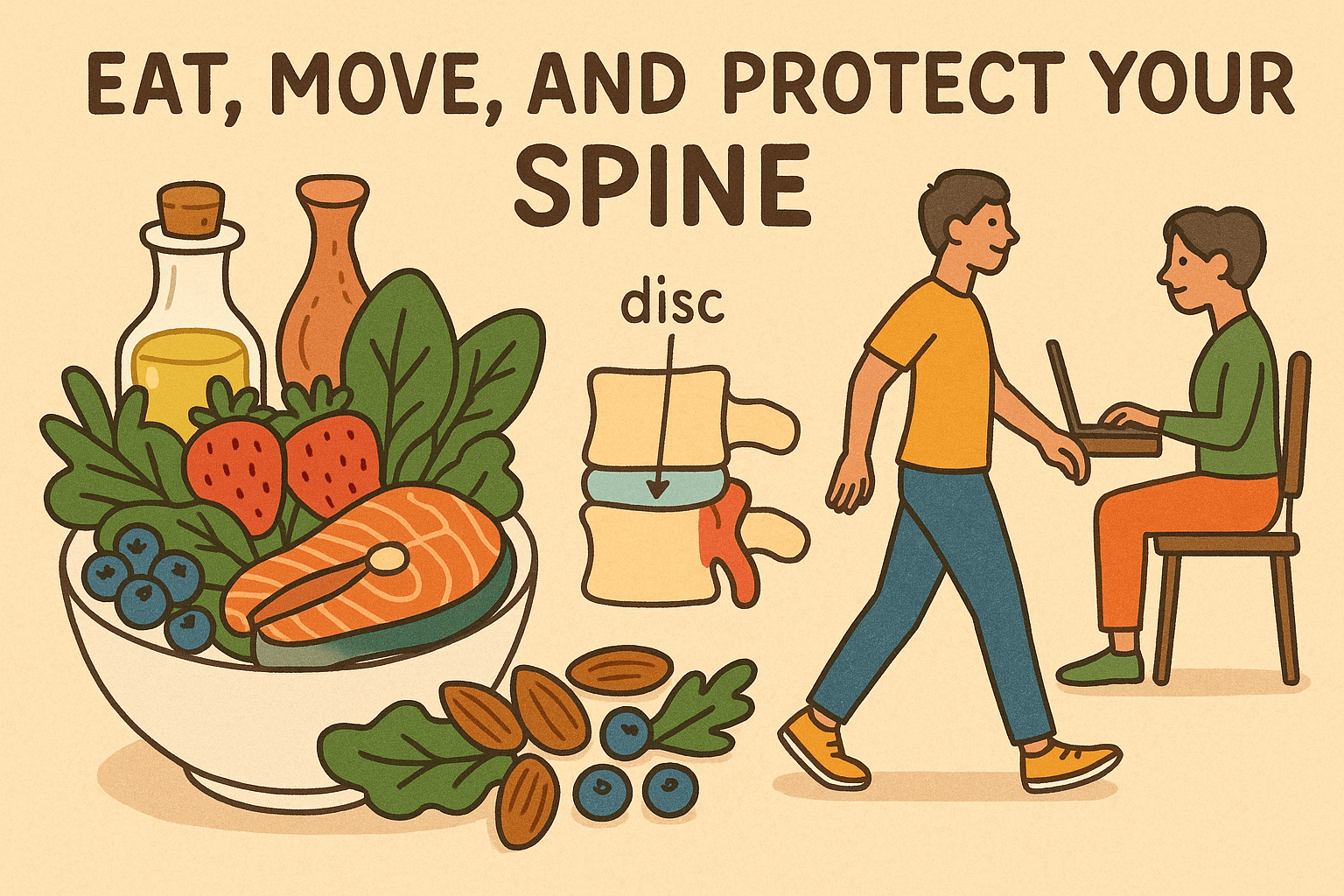
1) Deep‑colored berries (blueberries, blackberries, strawberries). Rich in anthocyanins and vitamin C, berries help counter chronic, low‑grade inflammation and oxidative stress that can affect disc and joint tissues. Vitamin C is also crucial for collagen cross‑linking. Add a cup to breakfast or blend into a kefir smoothie for extra protein and probiotics.
2) Leafy greens & crucifers (spinach, kale, arugula, broccoli). Provide folate, vitamin K, magnesium, and sulforaphane precursors that upregulate cellular antioxidant defenses. Magnesium supports muscle relaxation, which can reduce protective spasms around painful segments. Lightly steam or sauté; pair with olive oil to improve absorption of fat‑soluble nutrients.
3) Omega‑3 rich fish (salmon, sardines, trout, mackerel). EPA and DHA help resolve inflammation and may reduce neck/back pain intensity in some studies. Grilled, baked, or tinned options 2–3 times weekly make it practical; keep sodium moderate if using canned fish.
4) Extra‑virgin olive oil & nuts (walnuts, almonds). The polyphenols in olive oil and the alpha‑linolenic acid (ALA) in walnuts support a lower‑inflammation dietary pattern associated with better musculoskeletal outcomes. Use EVOO as your default cooking and salad oil; have a small handful of nuts as a snack.
5) High‑quality protein (eggs, poultry, tofu/tempeh, Greek yogurt, legumes). Protein supplies amino acids for repair of annulus fibrosus (collagen) and surrounding muscles. Distribute 20–30 g protein across meals to support turnover without excess calories.
6) Collagen builders (vitamin C sources + gelatin/collagen). If you use collagen or gelatin, pair with vitamin‑C‑rich foods (citrus, kiwi, peppers) to support collagen synthesis. A simple habit: add berries and a squeeze of lemon to a collagen yogurt bowl.
7) Hydrating plants & fluids (water, herbal teas, cucumbers, watermelon). Disc cores (nucleus pulposus) are water‑loving; hydration supports disc height across the day. Sip fluids regularly; include produce with high water content, especially in hot weather.
8) Whole grains & legumes (oats, barley, lentils, beans). Fiber improves insulin sensitivity and weight management. It is important because higher body weight increases mechanical load on discs and is linked with sciatica risk. Choose intact grains and rinse canned beans to reduce sodium.
9) Spices with anti‑inflammatory potential (turmeric with black pepper, ginger). Curcumin and gingerols have evidence for modest relief of osteo‑muscular discomfort for some people. Use in curries, golden milk, or ginger tea alongside a generally anti‑inflammatory diet.
10) Fermented foods (kefir, yogurt, kimchi, sauerkraut). A healthier gut microbiome may modulate systemic inflammation. Start with small portions if you're new to fermented foods.
11) Vitamin D & calcium partners (fatty fish, fortified dairy/plant milks, egg yolks). Vitamin D supports muscle function and bone health, helping the vertebrae and surrounding tissues share loads efficiently. Ask your clinician about testing if you get limited sun.
12) What to limit: refined sugars, ultra‑processed snacks, and excess alcohol, which tend to worsen inflammation, weight gain, and sleep, all of which can aggravate back problems.
Everyday Actions & Postures That Protect Your Discs
Sit smarter. Hips slightly higher than knees, feet flat, back supported, and shoulders relaxed. Change position every 20–30 minutes: set a gentle timer to stand, stretch, or walk for one minute.
Lift like a pro. Keep loads close, hinge at the hips with a neutral spine, brace the core (gentle abdominal tension), and use legs to rise. Avoid twisting while lifting, pivot your feet instead.
Micro‑breaks for movers. If your job is physical, rotate tasks, alternate sides, and insert 30–60 second micro‑breaks to reduce cumulative strain.
Strengthen your support system. Aim 2–3 non‑consecutive days weekly of resistance training that includes: hip hinges (e.g., deadlift pattern with light weights), glute bridges, bird‑dogs, side planks, and rows. Strong hips and core reduce shear forces on lumbar discs.
Walk, then walk some more. Low‑impact, rhythmic movement enhances disc nutrition via diffusion and helps manage weight and mood. Even 10–15 minutes after meals helps.
Sleep setup. Side‑sleepers: place a pillow between knees to keep hips stacked. Back‑sleepers: small pillow under knees reduces lumbar extension. Choose a medium‑firm mattress if comfortable for you.
Carry well. Use a backpack with two straps instead of a one‑shoulder bag. Distribute weight; keep daily loads light.
Phone posture. Bring the screen up to eye level; avoid prolonged neck flexion. Try voice notes or stand to text.
Footwear and ground time. Supportive shoes that fit your activity and foot mechanics matter. For long standing, use an anti‑fatigue mat and shift weight between feet.
If You Already Have a Herniated Disc: Eating and Lifestyle Tweaks
Dial in anti‑inflammatory eating. Keep the "Food First" list central. Build plates with half vegetables, a quarter protein, and a quarter high‑fiber carbs. Prioritize fish 2–3x/week; cook with EVOO; include berries and leafy greens most days.
Protein timing for repair. Distribute protein across meals (20–30 g each) to support tissue turnover and maintain muscle while you scale activity.
Hydration as therapy. Aim for pale‑straw urine most of the day; add an extra glass around activity or heat.
Gentle movement beats bed rest. Unless your clinician advises otherwise, replace prolonged bed rest with graded activity. Short, frequent walks; pain‑free range‑of‑motion drills; and guided physical therapy help most people more than immobilization.
Pace and protect. Use the "traffic light" rule: movements that stay in a green/amber zone (mild, tolerable discomfort that subsides within 24 hours) are usually acceptable; red‑zone pain that radiates or lingers suggests you should modify or skip and consult a professional.
Sleep and mood. Prioritize a regular wind‑down, darker/cooler rooms, and consistent bed/wake times. Good sleep lowers pain sensitivity and supports recovery.
Weight and metabolic health. Work toward a sustainable, balanced weight if advised—lower mechanical load often reduces symptoms. Managing blood sugar and lipids benefits discs via vascular and inflammatory pathways.
Coordinate with care. If you take NSAIDs, anticoagulants, or have other conditions, ask your clinician about diet–drug interactions (e.g., high‑dose turmeric with anticoagulants). Seek urgent care for saddle anesthesia, progressive weakness, or changes in bladder/bowel function.
Wrap‑Up: Small Daily Choices, Big Spine Rewards
Preventing a herniated disc or coping better if you have one rarely hinges on one dramatic change. It's the stack of small, repeatable choices: meals that calm inflammation and support tissue repair, posture and lifting habits that spare the spine, walking most days, and sleeping well enough to let your body reset. Start with one or two changes this week—berries at breakfast, a 10‑minute post‑dinner walk, hips‑higher‑than‑knees at your desk—and build from there. Your discs may be quiet, but they'll thank you in how you move and feel.
References
- Harvard T.H. Chan School of Public Health. "The Nutrition Source: Fats and Cholesterol—The Good, the Bad, and the In-Between." https://www.hsph.harvard.edu/nutritionsource/what-should-you-eat/fats-and-cholesterol/
- NIH Office of Dietary Supplements. "Vitamin D Fact Sheet for Consumers." https://ods.od.nih.gov/factsheets/VitaminD-Consumer/
- NIOSH. "Ergonomics and Musculoskeletal Disorders." https://www.cdc.gov/niosh/topics/ergonomics/
Note: The information provided should not replace professional medical advice.