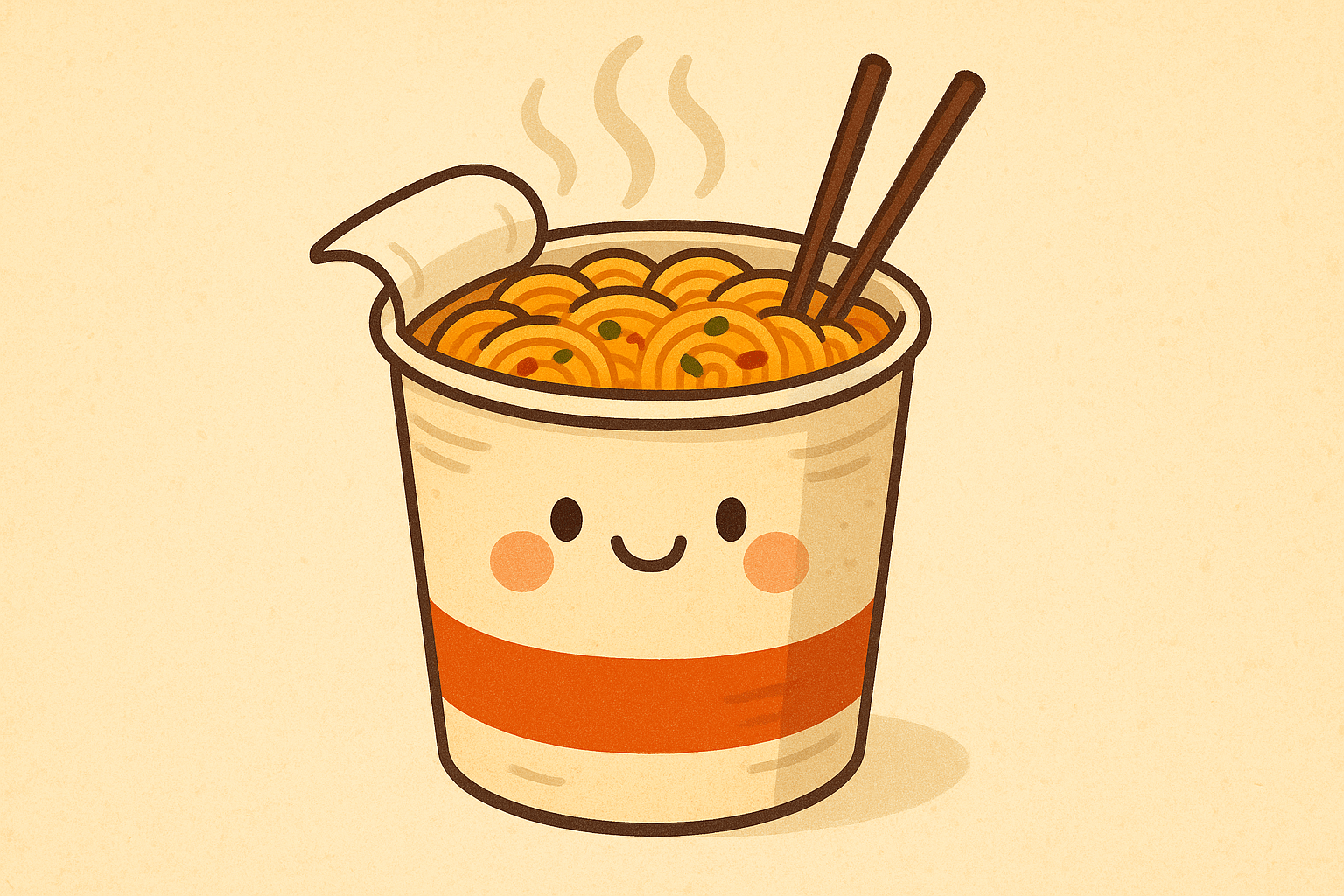
Is Instant Noodles Really That Unhealthy?
Instant noodles aren't a superfood or a supervillain—they're a tool. Here's a calm, science-based look at what's in them and how to upgrade the bowl smartly.
It's late. You're exhausted from work, school, or family life. The fridge looks uninspiring, your brain is fried, and there it is on the shelf: a packet or cup of instant noodles that promises hot, salty comfort in three minutes.
But then the little voice kicks in: "Is this really terrible for me? Am I ruining my health with this?"
You're not the only one caught between convenience and concern. Let's take a calm, science-based look at what's actually in instant noodles, what's "bad," what's not as bad as social media says, and how to enjoy them more smartly without demonizing a food that genuinely helps many people get through tough days.
What's in Instant Noodles, and How Are They Made?
Most instant noodles have three main parts:
- The noodle block
- Usually made from refined wheat flour, water, and salt.
- Often contains palm oil or another vegetable oil, because many noodles are pre-fried to shorten cooking time and improve texture.
- May include alkaline salts (e.g., kansui) that give noodles their springy texture and yellowish color.
- The seasoning packet
- Salt and flavor enhancers (often monosodium glutamate, MSG).
- Sugar or maltodextrin for balance.
- Dried vegetables, soy sauce powder, spices, dehydrated meat flavors, and sometimes hydrolyzed vegetable protein.
- Sometimes contains added fats, preservatives, and anti-caking agents.
- Optional oil or sauce packets
- Usually refined oils, chili oil, sesame oil, or flavored pastes.
- Can significantly raise total fat and sodium.
How they're made: The dough is rolled, cut into noodle strands, steamed, then either deep-fried or air/oven-dried. Fried cakes cook faster and have that signature "instant noodle" mouthfeel; non-fried versions generally have less fat but may take slightly longer to cook.
The Good and the Not-So-Good: What Does the Science Say?
The "Not-So-Good" Side
- Low in fiber and key micronutrients — Most instant noodles are made from refined flour, which means less fiber, B vitamins, and minerals compared to whole-grain options. Low fiber can contribute to poor satiety and blood sugar swings if the meal isn't balanced with other foods.
- High in sodium — Many instant noodle packets contain 800-1,600 mg of sodium, sometimes more, close to (or above) the American Heart Association's ideal daily limit of 1,500 mg, and a big chunk of the general 2,300 mg/day upper limit. Chronic high sodium intake is linked to high blood pressure and cardiovascular risk.
- Refined carbs + fat, not much protein — A typical block is heavy on refined starch and often contains added fat from pre-frying (commonly palm oil). Without added protein (egg, tofu, meat, legumes), the meal can be energy-dense and nutrient-light, which isn't ideal if eaten frequently.
- Overall dietary pattern matters — Observational studies in some countries have found that frequent instant noodle consumption (e.g., several times a week) is associated with higher risk of metabolic syndrome and poorer diet quality when it comes along with low fruit/vegetable intake and other ultra-processed foods, not necessarily because of noodles alone.
The "Not All Bad" Side
- Convenience and food security — Instant noodles are cheap, shelf-stable, and fast, which makes them an important back-up food for students, busy workers, and families with limited access to fresh food. In emergencies, they can be a practical source of calories.
- Calories and carbs are still fuel — Carbohydrates are not the enemy, your brain and muscles use them for energy. Instant noodles are not "toxic"; they're just unbalanced on their own.
- MSG isn't the villain it's made out to be — Large reviews have not found consistent evidence that normal dietary MSG intake causes harm in healthy individuals. Most people tolerate it well; some may be sensitive, but it's not inherently "poison."
The key message: instant noodles are not a nutritious complete meal by themselves, and eating them very often without other healthy foods can pull your overall diet quality down. But they are also not a moral failing or a single "cause" of disease.
How to Make Instant Noodles Healthier (Without Losing the Comfort)
You don't have to give them up. You just have to upgrade the bowl. Here are practical, realistic tweaks:
1. Add protein every time
This is your biggest win. Try adding:
- An egg (boiled, poached in the broth, or stirred in).
- Tofu cubes or tempeh slices.
- Edamame, chickpeas, or other beans (canned/rinsed).
- Leftover chicken, turkey, fish, or lean meat.
Protein helps with satiety, stabilizes blood sugar, and makes the meal feel like an actual lunch or dinner, not a snack.
2. Add fiber and color with vegetables
You can dramatically change the nutritional profile with a handful of plants:
- Frozen mixed vegetables, spinach, peas, corn, broccoli florets.
- Fresh cabbage, bok choy, mushrooms, carrots, bell peppers.
- Even a side salad or fruit if you can't cook veg into the noodles.
Aim to have at least 1–2 handfuls of vegetables in or alongside the bowl.
3. Tame the sodium
- Use only part of the seasoning packet (e.g., half).
- Add flavor with garlic, ginger, chili, sesame oil, herbs, vinegar, or lime instead of more salt.
- Choose "reduced sodium" versions when available.
- Balance the day: if you had a salty noodle meal, keep the rest of your day lower in salt (fresh fruits/veg, unsalted nuts, plain yogurt).
4. Upgrade the base when possible
If you have the option:
- Try non-fried noodles or whole-grain / brown rice / buckwheat (soba) noodles cooked in a simple broth with your own seasoning.
- Some instant brands now offer air-dried or higher-fiber versions.
Even if you stick to classic bricks, the add-ins still make a big difference.
5. Mind your timing and frequency
- Instant noodles can work best as an occasional meal rather than a daily staple, especially if the rest of your diet is light on fruits, vegetables, and whole grains.
- Having them at lunch or an early dinner might feel better than very late at night, especially if the meal is salty and heavy.
- If a week is particularly hectic, aim to balance other meals with more whole foods (fruit at breakfast, salad or bean-based meal another day, etc.).
6. Watch what goes with the noodles
Pairing instant noodles with sugary drinks, lots of snacks, or high-sugar desserts can turn one convenient meal into a very high-calorie, low-nutrient cluster. Better partners:
- Water, sparkling water, or unsweetened tea.
- A piece of fruit for something sweet and fibrous.
A Simple "Better Instant Noodles" Blueprint
Here's a quick formula you can save:
Instant noodle block
- 1 protein
- 1-2 handfuls veg
- half (or less) of seasoning
- extra flavor from herbs/spices
Example:
- Cook noodles with frozen spinach and sliced mushrooms.
- Add a cracked egg or tofu cubes.
- Use half the seasoning + extra ginger, garlic, and a splash of low-sodium soy sauce or rice vinegar.
You've just turned a plain salty bowl into a more balanced, filling meal.
Final Thoughts: Don't Evil-Name Instant Noodles
Instant noodles are not a superfood. They're also not a supervillain. They're a tool, one that can be used in ways that either help you get through a stressful day or, if overused and unbalanced, nudge your diet in an unhealthy direction.
Instead of fear or guilt, aim for awareness and small upgrades:
- Add protein and vegetables.
- Use less seasoning.
- Enjoy them occasionally, not as your only daily meal.
- Balance them with more nutrient-dense foods the rest of the time.
You deserve both comfort and health, and with a little thought, even a humble bowl of instant noodles can move closer to providing both.
References
- Harvard T.H. Chan School of Public Health – The Nutrition Source: "Sodium and Salt." https://www.hsph.harvard.edu/nutritionsource/salt-and-sodium/
- Harvard T.H. Chan School of Public Health – Processed Foods and Health https://nutritionsource.hsph.harvard.edu/processed-foods/
- U.S. Food and Drug Administration (FDA). "Questions and Answers on Monosodium Glutamate (MSG)." https://www.fda.gov/food/food-additives-petitions/questions-and-answers-monosodium-glutamate-msg
Note: The information provided should not replace professional medical advice.