Micro-Exercise and Smart Snacking: Small Habits with Big Impact
Short bursts of movement and small, nutrient-dense snacks can support heart health, blood sugar, energy, and independence—without a gym or complex diet plan.
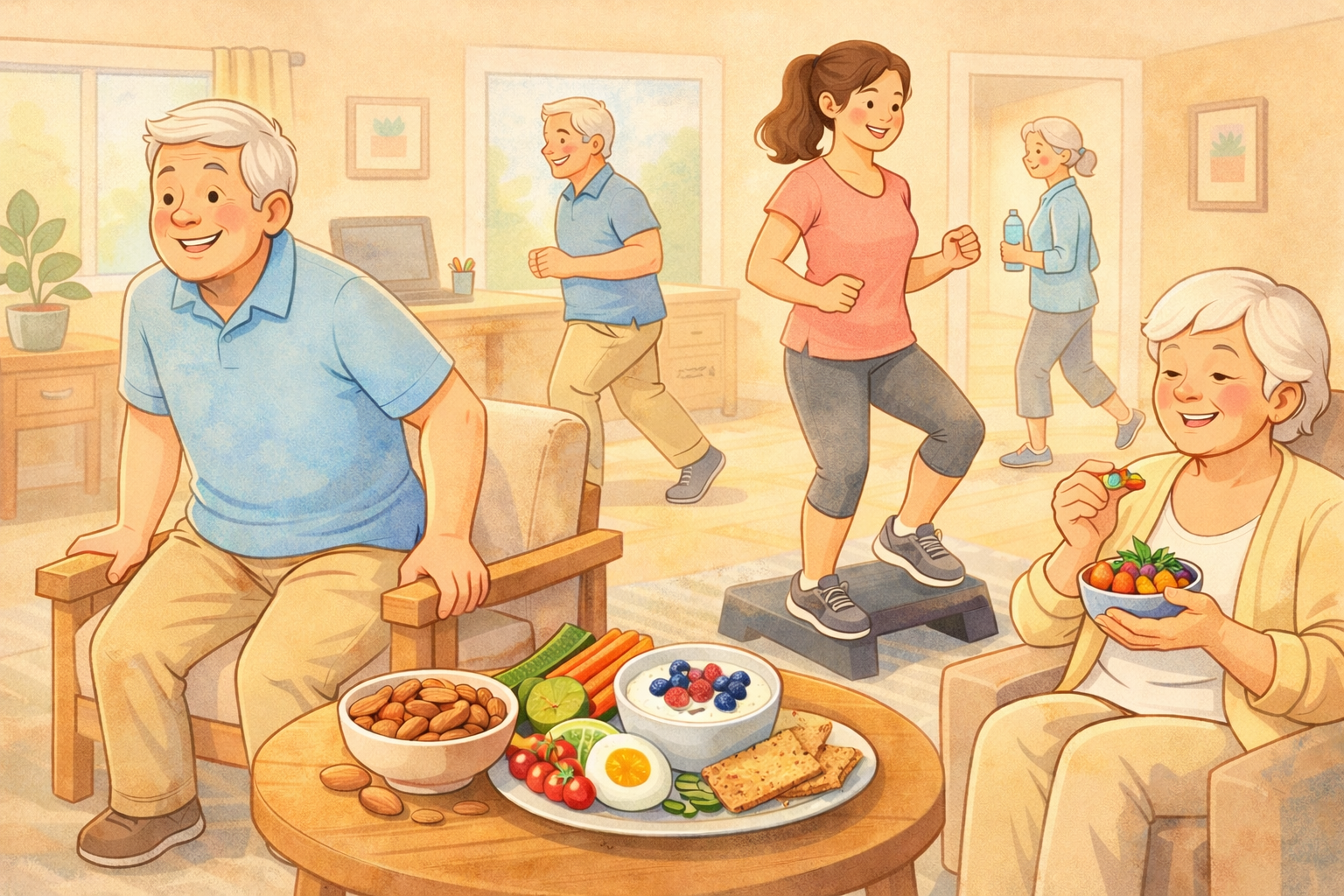
Many people believe health only "counts" if they can fit in a 45-minute workout or cook perfect meals. For busy individuals and older adults, that expectation can feel impossible. Long days at a desk, caregiving, or low energy make it easy to give up and do nothing.
Micro-exercise and smart snacking offer another way.
Short bursts of movement woven into your day and small, nutrient-dense snacks can support heart health, blood sugar, energy, and independence. These habits do not require a gym membership or a complex diet plan. They respect real life.
This article explains why micro-exercise and snacking matter, especially for elders and busy people, and how to practice them in a safe, realistic, and science-informed way.
Why Micro-Exercise and Snacking Matter More Than Ever
Modern life is designed for sitting
Global data show that a large share of adults do not reach recommended physical activity levels, and many spend long hours sitting each day. The World Health Organization now emphasizes that people should both "move more" and "sit less," because sedentary time itself is a health risk.
Large pooled analyses using wearable devices have found that higher total movement at any intensity and less sedentary time are associated with lower risk of early death, even after accounting for traditional exercise. In simple terms, every bit of movement counts.
Breaking up long periods of sitting also appears important. In a well-known study, adults who took more frequent breaks from sedentary time had better waist circumference, blood sugar, and triglyceride levels than those who sat for long, uninterrupted blocks, even if their total sitting time was similar.
Light activity and "exercise snacks" are meaningful
For many older adults and very busy workers, long, intense workouts are not realistic. The good news is that light-intensity and very short bouts of activity still matter:
- Meta-analyses show that light-intensity physical activity (like slow walking or household tasks) is associated with lower mortality in adults, including older adults.
- A 2025 systematic review and meta-analysis reported that "exercise snacks", short bursts of activity done periodically through the day, improved cardiorespiratory fitness and markers of cardiometabolic health, especially in inactive adults.
These findings support the idea that small, frequent movements can be a legitimate part of protecting health, not a consolation prize.
Snacks quietly shape daily nutrition
Snacks can contribute a large share of daily calories. Their quality and timing make a difference.
Harvard's Nutrition Source notes that snacks built from minimally processed foods that contain a mix of protein, healthy fats, and fiber are more likely to support steady energy and appetite control than snacks high in refined starch and added sugar.
More recent work from the ZOE PREDICT study suggests that snack quality, frequency, and timing relate to cardiometabolic health. People who tended to consume higher-quality snacks earlier in the day had more favorable blood sugar and blood lipid responses than those who frequently relied on low-quality, late-night snacks.
For older adults with smaller appetites, snacks can also be a practical way to meet protein, fiber, and micronutrient needs when large meals feel overwhelming.
Why Elders and Busy Individuals Benefit the Most
Older adults
As people age, muscle mass, balance, and cardiovascular reserve gradually decline. Long, uninterrupted sedentary time is linked with poorer metabolic markers in older adults, while more frequent breaks in sitting are associated with better waist circumference, glucose, and triglyceride profiles.
At the same time, appetite and meal size often shrink with age. Smaller, nutrient-dense snacks can help cover protein and energy needs needed to maintain muscle and function.
For elders, micro-exercise and smart snacking can:
- Support balance and leg strength through frequent gentle movement
- Maintain circulation and joint mobility without exhaustive workouts
- Make it easier to meet nutrition needs with multiple small eating occasions
Busy individuals
For people with long workdays, family responsibilities, or caregiving roles, time and energy are limited. Hours of uninterrupted screen time, skipped meals, and impulsive snacking are common.
Micro-exercise and smart snacking help busy people:
- Break up sitting without needing a full workout block
- Stabilize blood sugar and energy with higher-quality snacks
- Reduce the urge to overeat at night after long, exhausting days
The goal is not to be perfect. It is to make small actions work quietly in your favor.
Principles for Micro-Exercise
Think of micro-exercise as "movement built into the fabric of the day" rather than a separate event. Always consider safety and, for elders or people with medical conditions, consult a clinician before changing activity.
1. Break up sitting regularly
Evidence from accelerometer studies and laboratory work suggests that breaking up sitting with short bouts of standing or walking is associated with better metabolic markers than long uninterrupted sitting.
A practical target is to move at least a little every 30 to 60 minutes while awake. This might mean:
- Standing and walking for 2-3 minutes after a meeting or TV episode
- Walking to get water or to a farther restroom instead of staying seated
- Doing a brief set of gentle movements when waiting for the kettle or microwave
2. Keep movements simple, safe, and repeatable
Reviews on exercise snacks emphasize feasibility: simple bouts of movement done consistently are more helpful than complex plans that are never used.
Depending on your ability level, examples of micro-exercise include:
- Standing up and sitting down from a sturdy chair several times
- Marching in place or doing heel raises while holding a counter
- Walking a short lap around your home, office, or yard at a comfortable pace
If you use a cane, walker, or have balance issues, movements should be adapted and supervised as needed.
3. Mix light cardio, strength, and balance over the day
Short bouts accumulated across the day can touch different systems:
- Light cardio: slow or moderate walking, gentle step-ups, or marching in place
- Strength: sit-to-stand from a chair, wall push-ups, or light resistance band work
- Balance: standing on one leg while holding support, heel-to-toe stance, or very slow, controlled walking
Meta-analyses suggest that total volume of movement, including light-intensity activity, is more strongly related to mortality risk than focusing only on vigorous exercise.
Principles for Smart Snacking
Snacks can either support or undermine health. The goal is to make them small, purposeful sources of useful fuel rather than automatic extras.
1. Build snacks from protein + fiber + healthy fats
Harvard and other expert groups recommend snacks that combine high-quality protein, fiber-rich carbohydrates, and healthy fats. This pattern tends to increase satiety and stabilize blood sugar compared with snacks based mainly on refined starch and sugar.
Helpful building blocks include:
- Protein: Greek yogurt, cottage cheese, boiled eggs, edamame, hummus, nuts, seeds, nut butters
- Fiber-rich carbs: fruit, raw or lightly cooked vegetables, whole-grain crackers, oats, beans
- Healthy fats: nuts, seeds, nut butters, avocado, small amounts of olive oil-based dips
For older adults, pairing protein and fiber in snacks can be crucial for maintaining muscle and digestive health when large meals are not appealing.
2. Use snacks to fill nutrient gaps, not just time gaps
Snacks are most useful when they add what meals are missing.
For example:
- If meals lack vegetables, choose snacks that include raw vegetables with hummus or yogurt-based dips.
- If protein intake is low, prioritize snacks like yogurt, edamame, or eggs.
- If fruit intake is low, choose fresh or frozen fruit over pastries or candy.
Reviews on eating frequency indicate that the impact of snacking on health depends heavily on overall dietary pattern and snack quality rather than snack count alone.
3. Be thoughtful about timing and late-night snacking
Emerging work from large nutrition studies suggests that frequent, low-quality snacking late at night is linked with less favorable metabolic markers compared with earlier, higher-quality snacking.
Practical steps:
- Try to keep your last snack small and at least 2–3 hours before bedtime when possible.
- If you want an evening snack, opt for something light with protein or fiber, such as yogurt, a piece of fruit, or a small handful of nuts, instead of large servings of sweets.
A Realistic, Encouraging Takeaway
Micro-exercise and smart snacking will not replace medical care or cure every problem. However, they are powerful tools for busy and older adults because they can be:
- Short
- Flexible
- Low-cost
- Physically and mentally manageable
The science points in a consistent direction:
- Total movement volume and breaks in sitting matter for cardiometabolic health and longevity, even when the movement is light.
- Snack quality and timing influence how you feel and how your body handles blood sugar and blood lipids over time.
You do not need to overhaul your life in one week. Choose one tiny movement habit and one snack habit to upgrade. For example, stand and walk for two minutes each hour during the day, and swap one highly processed snack for a protein-and-fiber option.
Those changes may feel small, but repeated over weeks and months, they can support better stamina, clearer thinking, and more confidence in your daily life.
References
- World Health Organization. Physical activity fact sheet. Updated June 26, 2024. Available at: https://www.who.int/news-room/fact-sheets/detail/physical-activity
- Ku PW, Sun WJ, Shi HY, et al. Device-measured light-intensity physical activity and mortality: a systematic review and meta-analysis. Am J Epidemiol. 2020;189(9):973–984. Available at: https://pubmed.ncbi.nlm.nih.gov/31545531/
- Healy GN, Dunstan DW, Salmon J, et al. Breaks in sedentary time: beneficial associations with metabolic risk. Diabetes Care. 2008;31(4):661–666. Available at: https://diabetesjournals.org/care/article/31/4/661/25574/Breaks-in-Sedentary-TimeBeneficial-associations
- Chen J, Lu Y, Zhao H, Liu H, Yao J. The effectiveness of exercise snacks as a time-efficient treatment for improving cardiometabolic health in adults: a systematic review and meta-analysis. Front Cardiovasc Med. 2025;12:1643153. Available at: https://www.frontiersin.org/articles/10.3389/fcvm.2025.1643153/full
- The Nutrition Source, Harvard T.H. Chan School of Public Health. The science of snacking. Available at: https://nutritionsource.hsph.harvard.edu/snacking/
- Bermingham KM, et al. Snack quality, frequency and timing and cardiometabolic health: findings from the ZOE PREDICT study. Eur J Nutr. 2024;63(5):2171–2184. Available at: https://link.springer.com/article/10.1007/s00394-023-03241-6
- Islam H, Townsend LK, Eys M, et al. A novel strategy to improve cardiometabolic health in inactive adults: exercise snacks. Sports Med. 2021;51(3):487–499. Available at: https://www.fisiologiadelejercicio.com/wp-content/uploads/2023/05/Exercise-Snacks.pdf
- Harvard Health Publishing. Smart snack strategies. Updated April 1, 2022. Available at: https://www.health.harvard.edu/heart-health/smart-snack-strategies
- Harvard Health Publishing. High-protein snacks to build muscle and keep hunger at bay. Published April 18, 2024. Available at: https://www.health.harvard.edu/nutrition/high-protein-snacks-to-build-muscle-and-keep-hunger-at-bay
Note: The information provided should not replace professional medical advice.