Eat to Soothe: A Friendly, Science‑Based Guide to Food and Habits for Stress‑Related Oral Ulcers
Stress is a well-known trigger for recurrent mouth ulcers. The right food choices can calm irritation, support healing, and lower the chance of another painful round.
A big deadline, a tough conversation, a week of poor sleep, then suddenly, a sting on the inside of your lip or the edge of your tongue. If you've ever asked, "Is there anything I can eat to make these canker‑like ulcers hurt less, or keep them from popping up so often?" you're not alone. Stress is a well‑known trigger for recurrent aphthous stomatitis, and while food doesn't cause every sore, the right choices can calm irritation, support healing, and lower the chance of another round.
In this guide, you'll learn which foods tend to be soothing, how nutrients like B‑vitamins, iron, zinc, and omega‑3s support the mouth's fast‑turnover tissues, and simple ways to weave these choices into everyday life, especially during high‑stress weeks. Educational only; use this as a starting point and check with your clinician or dentist if ulcers are frequent, large, or slow to heal.
Foods That Help: Soothe, Nourish, and Support Healing
A smart "ulcer‑friendly" plate does three things: (1) reduces sting and friction, (2) delivers nutrients the oral lining needs to rebuild, and (3) tempers low‑grade inflammation that often rises with stress.
1) Soft, cool, non‑acidic bases
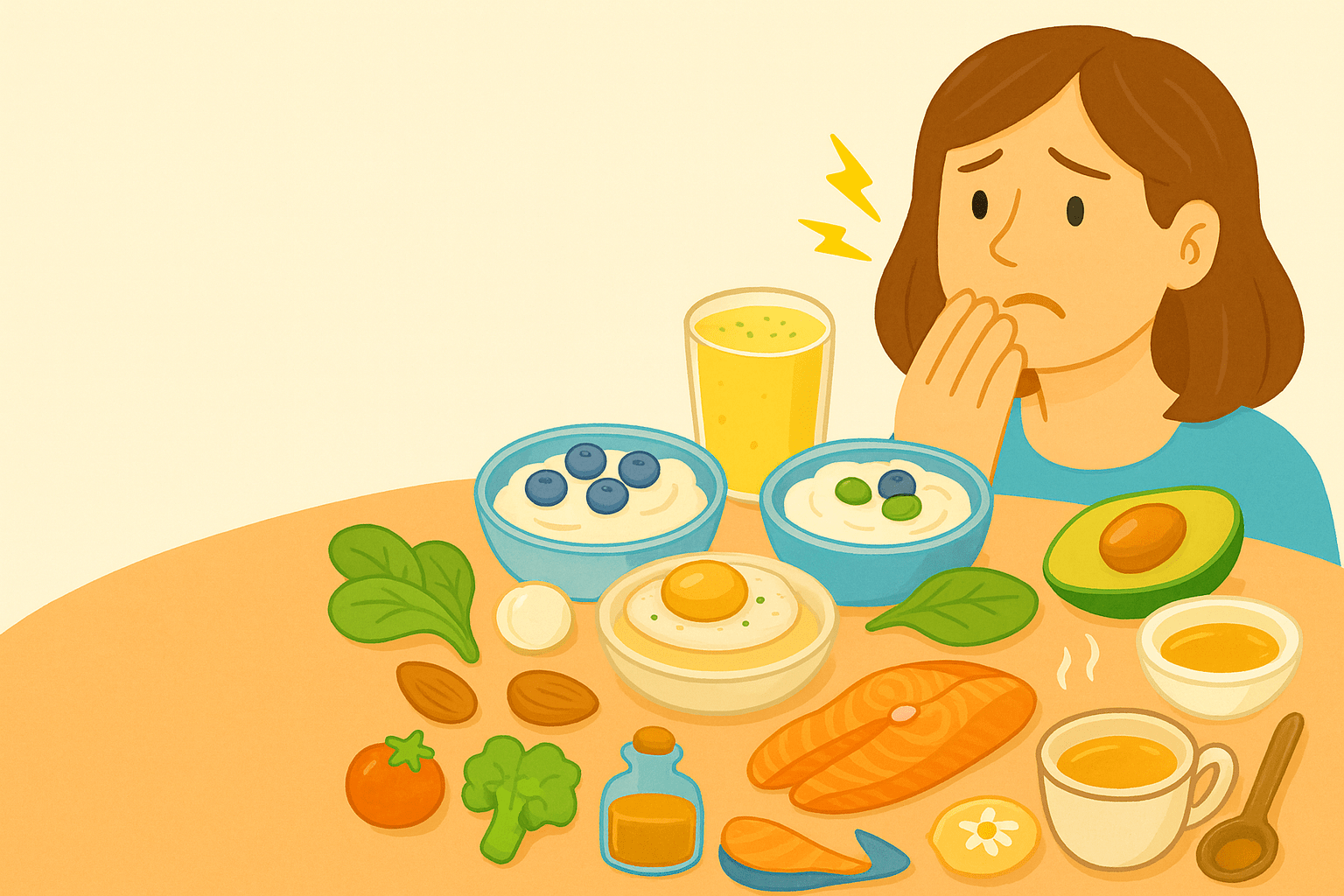
Think smoothies, plain yogurt, cooled oatmeal, chia pudding, soft scrambled eggs, mashed avocado, hummus, and pureed soups. Cooler temperatures and softer textures lower mechanical irritation so eating hurts less. Choose neutral or slightly alkaline options while a sore is active; skip citrus, vinegar, and very spicy add‑ins until pain settles.
2) Protein for tissue repair
The mouth's mucosa turns over rapidly. Include 20–30 g of protein at meals to supply amino acids for repair: Greek yogurt, soft tofu, cottage cheese, eggs, well‑cooked legumes or lentil soups, poached fish, or shredded chicken in broth. Pairing protein with soft textures (e.g., yogurt + peanut butter; lentil soup drizzled with olive oil) makes eating more comfortable.
3) Vitamin B12, folate, and iron
Deficiencies in B12, folate, or iron are associated with more frequent oral ulcers in some people, and correcting them can help reduce recurrences. Food sources: B12 (dairy, eggs, fish; fortified plant milks if you're plant‑based), folate (lentils, beans, spinach), iron (soft cooked lentils/beans, eggs; heme iron from soft fish or poultry). If you suspect a deficiency (fatigue, pallor, frequent sores), ask your clinician about a blood test before supplementing.
4) Zinc
Zinc supports immune defenses and epithelial repair. Foods gentle on the mouth include soft scrambled eggs, yogurt, hummus, and tender fish. Pumpkin seeds and nuts are rich too—blend them into smoothies or nut butters if chewing is painful.
5) Omega‑3s and anti‑inflammatory fats
Omega‑3 fats (EPA/DHA from salmon, sardines; ALA from walnuts, chia, flax) and extra‑virgin olive oil can support a lower‑inflammation diet pattern. Stir ground flax into yogurt, blend chia into smoothies, drizzle EVOO on soups, or try soft baked salmon.
6) Probiotic‑rich foods
Plain yogurt with live cultures or kefir may help maintain a healthier oral and gut microbiome, which interacts with local immune responses. If dairy isn't your thing, consider unsweetened plant‑based yogurts with live cultures. Aim for unsweetened options to avoid sugar sting.
7) Vitamin C (without the burn)
Vitamin C supports collagen formation in the oral mucosa, but acidic foods can hurt. Choose less‑acidic sources and formats: steamed broccoli, bell peppers blended into soup, cooked kale/spinach, or a buffered vitamin C powder mixed into a smoothie (if recommended by your clinician). Avoid direct contact of citrus juices with open sores while painful.
8) Honey (culinary use)
A small amount of honey (e.g., dabbed onto a sore before a meal or sipped in warm—not hot—tea) can feel soothing and may help keep the area moist. Choose this as a comfort strategy rather than a cure, and avoid in children under 1 year. If you have diabetes, factor honey into your carb total.
9) Gentle herbal sips
Lukewarm chamomile or licorice root (deglycyrrhizinated licorice, DGL) teas are commonly used to soothe oral tissues. Keep temperatures modest to avoid thermal sting, and talk with your clinician if you take blood‑pressure or other medications.
10) Hydration helpers
Dry mouth increases friction. Sip water through the day; try neutral, non‑acidic broths and herbal teas. If a sore flares after a stressful day + lots of coffee, consider replacing one cup with herbal tea for a few days.
Foods and drinks to limit during a flare: citrus and other acidic juices, vinegar‑heavy dressings, tomatoes/tomato sauces, very spicy dishes, sharp/rough chips or crusts, alcohol, and alcohol‑based mouthwashes—these often sting and prolong discomfort.
Seamlessly Merging Soothing Eating into Real Life
Build a soft‑textures toolkit. Keep a few staples on hand: plain Greek yogurt, eggs, soft tofu, hummus, canned salmon/tuna, frozen berries (for non‑acidic smoothies), oats, chia, bananas, avocado, boxed low‑sodium broth. During a flare, you can assemble pain‑aware meals in minutes.
Make two "default" breakfasts and two lunches. Example breakfasts: (1) chia‑oat pudding with yogurt, ground flax, and blueberries; (2) soft scrambled eggs with avocado and wilted spinach. Example lunches: (1) lentil‑vegetable soup finished with EVOO; (2) hummus bowl with mashed avocado, soft‑roasted veggies, and a drizzle of tahini.
Blend, don't chew. On painful days, blend proteins and micronutrients into smoothies: Greek yogurt + kefir + ground flax + frozen blueberries + a handful of spinach (mild) + a splash of fortified plant milk for B12 (if needed). Keep it cool, not icy.
Season for comfort. Lean on herbs (parsley, dill, basil), garlic cooked until soft and sweet, and a squeeze of non‑acidic flavor (e.g., a splash of olive oil or tahini) instead of vinegars or hot chiles.
Pair food shifts with stress care. Because stress is a common trigger, add a 60‑second breathing break before meals (inhale 4, exhale 6) and aim for consistent sleep. Even modest changes reduce cortisol swings that can exacerbate flares.
Mind your oral care products. A soft‑bristle brush and gentle technique prevent extra trauma. Some people prefer SLS‑free toothpaste (sodium lauryl sulfate) during recurrent sores, as SLS can irritate oral mucosa in sensitive individuals. Alcohol‑free mouth rinses may sting less.
Track your personal triggers. For one or two weeks, note big stressors, new foods, sleep, and any mouth soreness. Many people find patterns (e.g., all‑nighters + extra coffee + hot sauce weekends) that are fixable.
Know when to ask for help. Large, frequent, or non‑healing ulcers; sores accompanied by fever; or ulcers with other symptoms (GI issues, weight loss, genital ulcers, eye pain) warrant medical/dental evaluation to rule out deficiencies, medications, infections, or systemic conditions.
Sample One‑Day "Mouth‑Friendly" Menu (Adjust as Needed)
- Breakfast: Chia‑oat pudding made with fortified plant milk, topped with Greek yogurt, mashed blueberries, and ground flax; lukewarm chamomile tea with a touch of honey.
- Snack: Smooth peanut‑butter banana kefir smoothie (add a handful of spinach if tolerated).
- Lunch: Red‑lentil and carrot soup blended smooth, drizzled with EVOO; soft whole‑grain toast lightly spread with hummus.
- Snack: Cottage cheese or soft tofu with mashed avocado and chopped chives.
- Dinner: Baked salmon (or soft white fish) with mashed sweet potato and steamed broccoli; water or herbal tea.
Wrap‑Up: Soothe Today, Lower the Odds Tomorrow
You can't control every flare, but you can lower pain and shorten downtime. Soft, cool, non‑acidic foods make eating tolerable; protein, B‑vitamins, iron, zinc, vitamin C, omega‑3s, and probiotic‑rich foods give your mouth the raw materials to heal. Layer in stress‑calming habits, gentle oral care, and hydration, and you've built a practical plan to get through stressful weeks with fewer, and less painful, ulcers. Your mouth heals quickly; give it what it needs.
References
- Mayo Clinic. "Canker sore (aphthous ulcer)." https://www.mayoclinic.org/diseases-conditions/canker-sore/symptoms-causes/syc-20370615
- NIH Office of Dietary Supplements. "Vitamin B12 Fact Sheet for Consumers." https://ods.od.nih.gov/factsheets/VitaminB12-Consumer/
- NIH Office of Dietary Supplements. "Iron Fact Sheet for Consumers." https://ods.od.nih.gov/factsheets/Iron-Consumer/
- NIH Office of Dietary Supplements. "Zinc Fact Sheet for Consumers." https://ods.od.nih.gov/factsheets/Zinc-Consumer/
Note: The information provided should not replace professional medical advice.