Eat to Ease Tech Neck & Back: A Friendly, Science‑Based Guide to Food, Posture, and Daily Habits
Long days with laptops and phones leave shoulders tight and backs achy. Here's what to eat to lower day-to-day discomfort and what simple actions prevent end-of-day pain.
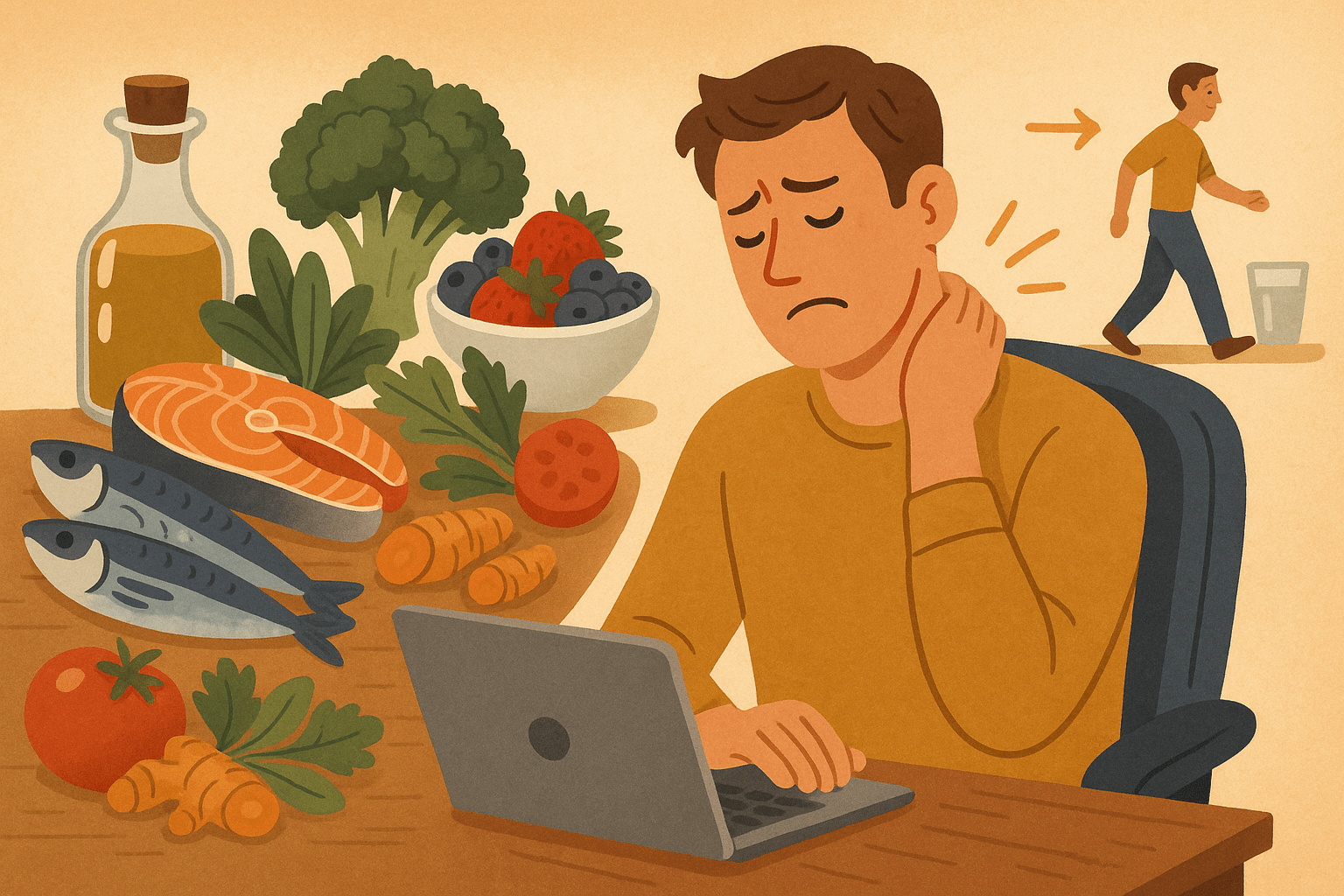
Do You Know What to Eat (and Do) to Calm Work‑Related Shoulder & Back Pain?
Long days with laptops, phones, and tablets (our beloved "3C" devices) can leave shoulders tight, upper backs achy, and necks stiff. You may already stretch or buy a new chair, but have you ever asked: What should I eat to lower day‑to‑day discomfort? Which foods help muscles and connective tissue recover? And what simple actions during the day prevent that familiar end‑of‑day throb?
In this guide, we'll start with pain‑reducing foods and nutrients, then walk through smart actions and postures you can use right away, and finally show how to merge these choices seamlessly into your lifestyle. Use this as a friendly blueprint and adapt it with your healthcare professional if you have specific conditions.
Food First: What to Eat to Help Relieve Shoulder & Back Discomfort
A helpful nutrition pattern does three things: (1) tamps down chronic, low‑grade inflammation, (2) supports muscle and connective‑tissue repair, and (3) stabilizes energy and hydration so you move well and hold better posture.
1) Fatty fish (salmon, sardines, trout, mackerel). Marine omega‑3s (EPA/DHA) help resolve inflammation and may modestly reduce musculoskeletal pain for some people. Omega‑3s also support cell‑membrane fluidity in muscles and nerves. Practical tip: grill or bake fish 2–3 times weekly; choose low‑mercury, canned options in water to keep sodium reasonable.
2) Extra‑virgin olive oil (EVOO). Rich in polyphenols and oleocanthal—a compound with ibuprofen‑like COX‑inhibiting activity in lab studies—EVOO is a cornerstone of anti‑inflammatory eating. Swap it for butter in sautés and use liberally on salads and cooked vegetables.
3) Colorful berries (blueberries, strawberries, blackberries). Anthocyanins in berries combat oxidative stress and may help post‑exercise muscle soreness. They pair well with protein (e.g., Greek yogurt) to steady blood sugar and curb mid‑afternoon slumps that worsen posture.
4) Leafy greens & crucifers (spinach, kale, arugula, broccoli). Provide vitamin K, folate, magnesium, and sulforaphane precursors. Magnesium is crucial for muscle relaxation and nerve function; crucifer compounds upregulate the body's antioxidant defenses. Lightly steam or sauté and add EVOO to enhance absorption of fat‑soluble nutrients.
5) Ginger & turmeric. Daily ginger (fresh or powdered) and turmeric (with a pinch of black pepper to boost curcumin absorption) have evidence for easing exercise‑induced and osteo‑muscular discomfort in some studies. Add ginger to tea or stir‑fries; simmer turmeric in soups or make "golden milk."
6) Tart cherries (or 100% tart cherry juice). Rich in anthocyanins that have been studied for reduced soreness and improved recovery after strenuous activity. If using juice, keep portions modest (e.g., 4–8 oz) and pair with protein to blunt a sugar spike.
7) High‑quality protein (eggs, poultry, tofu/tempeh, beans, Greek yogurt). Amino acids are the raw materials for muscle repair and collagen turnover in tendons/ligaments. Distribute 20–30 g protein at each meal to support recovery without excess calories.
8) Collagen + vitamin C combo. Small human trials suggest gelatin/collagen taken with vitamin C before activity can increase collagen synthesis in connective tissues. Practical play: 10–15 g collagen in yogurt or a smoothie with berries and lemon 30–60 minutes before rehab or a walk.
9) Whole grains & legumes (oats, barley, lentils, beans). Fiber improves insulin sensitivity and lowers systemic inflammation markers over time. Choose intact grains, and rinse canned beans to reduce sodium.
10) Hydrating produce and fluids (water, herbal teas, cucumbers, watermelon, citrus). Discs and muscles are water‑hungry. Even mild dehydration raises perceived effort and can aggravate tension headaches and muscle tightness. Keep a bottle at your desk and front‑load fluids earlier in the day.
What to limit: ultra‑processed snacks, refined sugars, and excess alcohol—all linked with higher inflammatory markers and poorer sleep, which amplifies pain sensitivity.
Move & Sit Smarter: Daily Actions and Postures That Prevent Pain
Set your base. Chair height so hips are slightly above knees; feet flat or on a footrest; back supported with a small lumbar cushion or towel roll. Keyboard near elbow height to keep shoulders relaxed; screen top at or just below eye level.
Micro‑breaks beat marathons. Every 20–30 minutes, stand or change position for 30–60 seconds. Walk to fill your bottle, do three wall angels, or two sets of scapular squeezes. Little and often > big and rare.
De‑tighten the usual suspects.
- Pecs: doorway stretch (forearms on the frame, gentle step‑through) 2×30 seconds.
- Upper traps/levator: gentle ear‑to‑shoulder stretch, hold 20–30 seconds each side.
- Thoracic spine: seated or floor "open books" (rotations) 6–8 reps each side.
Strengthen what holds you tall. 2–3 days/week: chin tucks (deep neck flexors), rows or band pull‑aparts (mid‑back), wall angels (scapular control), Y‑T‑W lifts (low load), glute bridges (to offload lumbar). Aim for high‑quality reps, not strain.
Phone and laptop hygiene. Bring the phone to eye level; avoid long neck flexion. For laptops, use a stand + external keyboard/mouse when possible.
Walk after work blocks. 5–10 minutes resets posture, boosts circulation, and—paired with sunlight—helps your sleep window later (sleep loss increases pain sensitivity).
Sleep setup. Side sleepers: pillow between knees; back sleepers: small pillow under knees. Choose a comfortable, medium‑firm mattress if you prefer.
Breathing matters. Occasional slow nasal breaths (4–6 per minute) downshift the nervous system, reducing guarding/tension in shoulders.
Make It Stick: Seamlessly Merging Food & Habits into Your Lifestyle
Build an anti‑inflammatory plate, most meals. Half vegetables (include leafy/cruciferous), a palm‑size protein, a fist of intact whole grains or beans, EVOO, plus herbs/spices. Batch‑cook on Sundays: roast pans of vegetables, simmer a pot of lentils, and grill fish or chicken for quick mix‑and‑match bowls.
Anchor snacks to posture breaks. Pair micro‑breaks with a glass of water and a protein‑plus‑produce snack (e.g., Greek yogurt + berries; hummus + carrots). You'll move more and eat better.
Pre‑activity collagen + vitamin C. On days you do rehab or a strength session, try the collagen combo 30–60 minutes beforehand.
Evening wind‑down = tomorrow's posture. Limit late caffeine and heavy, high‑sugar meals that disrupt sleep; consistent sleep lowers next‑day pain sensitivity.
Hydration cues. Keep a bottle within reach; aim for pale‑straw urine. Add citrus slices or mint if that helps you drink more.
Ergonomics once, reminders forever. Take 15 minutes to dial in your chair, monitor, and keyboard today; set a repeating 30‑minute reminder to change position.
Sunday grocery short‑list. EVOO, frozen berries, leafy greens, crucifers, canned salmon or sardines, eggs, Greek yogurt, lentils/beans, ginger, turmeric, citrus, cucumbers, whole grains (oats, barley).
Travel/office kit. Mini resistance band, collapsible phone stand, and a refillable bottle—small tools that change your default.
Wrap‑Up: Small Daily Choices, Calmer Shoulders & Backs
There's no single superfood or perfect chair. Relief comes from layers: an anti‑inflammatory way of eating, steady hydration, brief posture resets, light strength work, and sleep that lets the nervous system exhale. Start with one or two changes this week: berries at breakfast, phone at eye level, a 10‑minute walk after lunch, and build from there. Your shoulders and back will remember.
References
- Cochrane Collaboration. Exercises for neck pain (Cochrane Review). https://www.cochranelibrary.com/cdsr/doi/10.1002/14651858.CD004250.pub5/full
- NIOSH/CDC. Computer Workstation Ergonomics (Ergonomic Solutions). https://www.cdc.gov/niosh/topics/ergonomics/ergonomic-solutions.html
- OSHA. Computer Workstations eTool. https://www.osha.gov/etools/computer-workstations
- Black, C.D., et al. Ginger (Zingiber officinale) reduces muscle pain after eccentric exercise. Journal of Pain. 2010;11(9):894–903. https://pubmed.ncbi.nlm.nih.gov/20418184/
- Wang, H., et al. Tart cherry supplementation and recovery from exercise: systematic review. Nutrients. 2019;11(2):228. https://doi.org/10.3390/nu11020228
- NIH Office of Dietary Supplements. Magnesium Fact Sheet for Consumers. https://ods.od.nih.gov/factsheets/Magnesium-Consumer/
- Harvard T.H. Chan School of Public Health. The Nutrition Source: Healthy Fats & Inflammation. https://www.hsph.harvard.edu/nutritionsource/what-should-you-eat/fats-and-cholesterol/
Note: The information provided should not replace professional medical advice.