The Truth About Cane Sugar: What the Buzz Around Coca-Cola Really Means
Coca-Cola's switch from HFCS to cane sugar sparked headlines — here's what cane sugar actually is, how it compares to other sweeteners, and whether it changes the health equation.
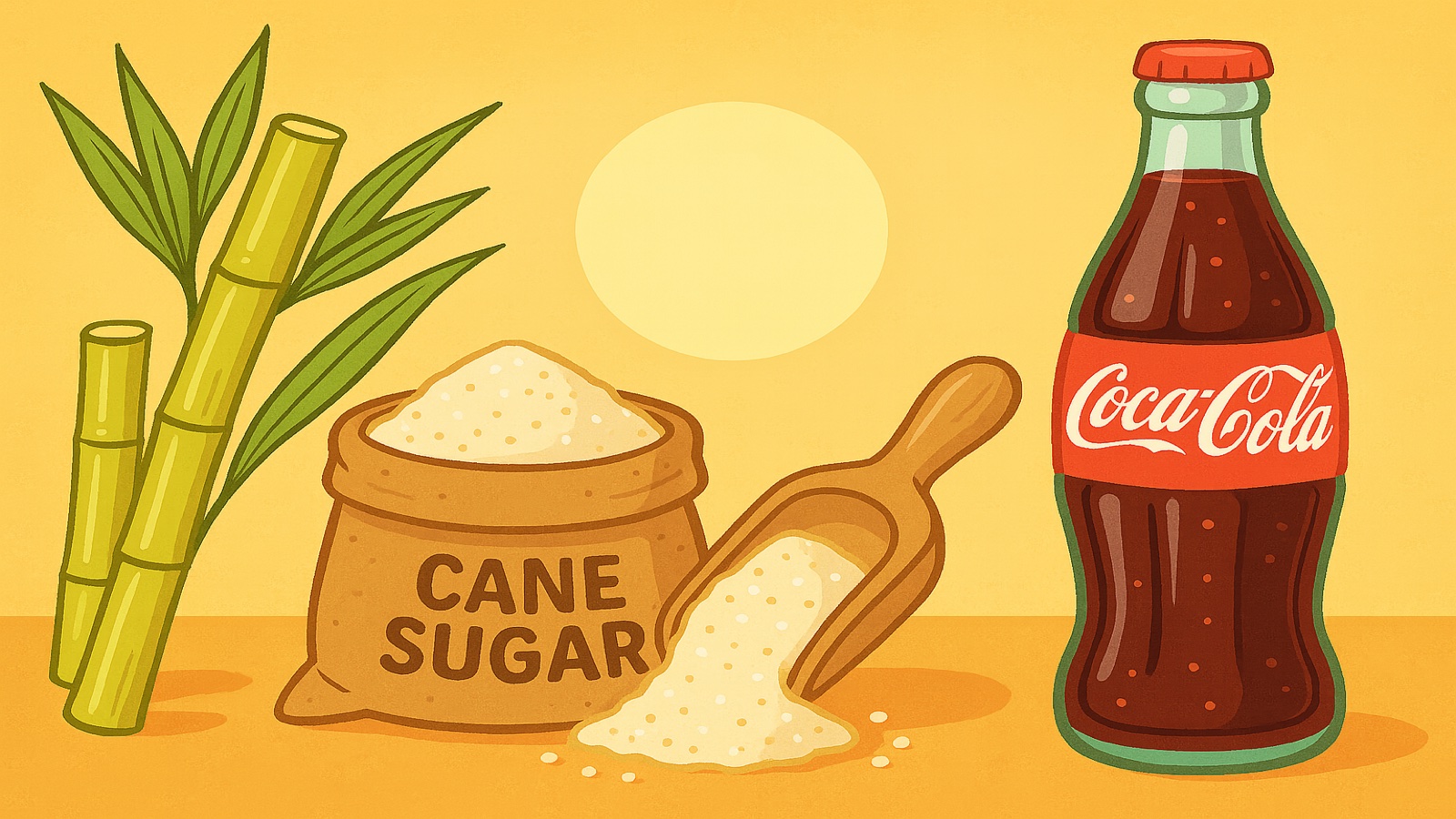
With Coca-Cola announcing a recipe tweak to swap high-fructose corn syrup for cane sugar in some of its drinks, everyone is suddenly talking about this classic sweetener again. You have likely seen the headlines, but what does this change actually mean for your health, your taste buds, and your grocery list? Let's break it down in a friendly and science-backed way.
What Is Cane Sugar and How Is It Made?
Cane sugar is made by extracting juice from sugarcane stalks, clarifying it, and then evaporating the water to form sugar crystals. This process yields sucrose, a disaccharide made of glucose and fructose. Unlike high-fructose corn syrup (HFCS), which is processed from corn starch and often contains more fructose than glucose, cane sugar contains equal parts of both.
The resulting sugar has a rich, sweet taste that blends easily into beverages and foods. That balance of flavors and the minimal processing make cane sugar appealing in more natural or artisanal recipes.
Nutritional Snapshot: Cane Sugar vs. Other Sweeteners
Cane sugar has about 16 calories per teaspoon, similar to table sugar and slightly more than honey. But in terms of blood sugar response, the glycemic index (GI) of cane sugar hovers around 65, placing it in the moderate GI category. For comparison:
- High-fructose corn syrup: ~58–62 GI
- Honey: ~50–60 GI
- Agave nectar: ~15–30 GI
- Stevia and monk fruit: ~0 GI
Nutritionally, cane sugar does not offer meaningful vitamins or minerals — it is still an added sugar. But compared to HFCS, it is seen as a slightly better option due to more natural processing and a more predictable metabolic pathway in the body.
What the Coca-Cola Recipe Change Really Means
From a holistic nutritionist's view, switching to cane sugar might be a step in a better direction, but it does not make soda "healthy."
The benefit? Cane sugar, unlike HFCS, has a more natural ratio of glucose to fructose and is less likely to contribute to liver fat accumulation when consumed in moderation. Studies suggest that high levels of fructose in HFCS may play a larger role in insulin resistance, metabolic dysfunction, and even fatty liver disease (Tappy et al., 2010).
However, cane sugar is still an added sugar, and therefore, overconsumption is linked to inflammation, obesity, and heart disease.
That said, some consumers report that sodas sweetened with cane sugar (like Mexican Coca-Cola) taste smoother and less cloying, which might lead to less overconsumption. But moderation is still key.
Final Thoughts: It Is Still Sugar, But an Upgrade?
If you are reaching for a sweet treat or soda, products sweetened with cane sugar might be a better option than those with HFCS, especially when used sparingly. Still, whole foods like fruits, naturally sweetened teas, or homemade desserts using small amounts of sugar substitutes remain healthier daily choices.
No matter the label — cane sugar, raw sugar, or turbinado — being mindful of total intake is what truly matters.
References: Tappy and Lê (2010) — Metabolic effects of fructose; Stanhope et al. (2009) — Fructose vs. glucose sweetened beverages; Bray et al. (2004) — HFCS and obesity
Note: The information provided should not replace professional medical advice.