December Wellness: A Friendly, Science-Backed Food Intake Guide for Winter
How winter shifts hydration, vitamin D, and appetite — plus 12 practical tips for warming meals, smart snacks, and steady energy through December.
It is December! The season of early sunsets, busy work sprints, school finals, family commitments, and (let us be honest) lots of tempting seasonal treats. Taking care of your body now is not just about feeling cozy; it is about staying sharp for work or school, keeping your immune system resilient, and having the steady energy to enjoy time with the people you love.
Winter vs. Summer: How Your Body's Fuel Needs Shift
Your body does not run exactly the same in January as it does in July. Several cold-weather factors can nudge your nutrition needs and appetite:
- Diet-induced thermogenesis (DIT): All meals generate some heat as your body digests and metabolizes food. Emphasizing protein and complex carbohydrates in winter can help stabilize energy and modestly support warmth.
- Hydration patterns change: Cold, dry air plus heated indoor environments increase water loss through breath and skin. People often drink less water in winter because they feel less thirsty.
- Vitamin D exposure drops: Shorter days and more time indoors lower natural vitamin D synthesis — a nutrient tied to bone, muscle, and immune function.
- Seasonal produce mix changes: Winter brings hearty greens, citrus, crucifers, root vegetables, and legumes — nutrient-dense options that pair well with warming cooking methods like roasting and stewing.
- Activity and sleep rhythms shift: Less daylight can compress outdoor time and affect circadian rhythm, nudging appetite, mood, and food choices.
Physical Changes You Might Notice in Winter
- Lower thirst cues despite equal or greater fluid loss (dry skin, chapped lips, darker urine).
- Energy and mood dips tied to sleep disruption, lower daylight, and less movement.
- Increased cravings for quick carbs and rich foods — normal when you are cold or underslept.
- Dryness and immune vulnerability, especially with frequent indoor gatherings.
- Heavier feeling or bloating after salty/processed meals and less activity.
These are not "willpower" problems — they are seasonal physiology. Your game plan is to feed the season intelligently.
Practical, No-Nonsense Tips to Stay Healthy This Winter
1) Build meals with the warming trifecta: protein + complex carbs + plants. Aim for ~25–35 g protein at main meals (eggs, fish, poultry, tofu/tempeh, beans, yogurt), a fist-size serving of whole grains or starchy vegetables (oats, barley, potatoes, squash), and at least half a plate of colorful produce. This steadies blood sugar, supports satiety, and provides a small thermogenic bump.
2) Soup and stew your way to comfort (and micronutrients). Batch a pot each week: aromatic base → legumes or lean protein → crucifers/root veg → whole grains. Freeze portions. Liquids help hydration; potassium-rich veg help balance sodium.
3) Hydrate warm and early. Start your day with 12–16 oz (350–500 ml) of water or tea, then sip regularly. Broths, herbal teas, and diluted hot cider (light on added sugar) count. Pale-yellow urine by midday is a simple cue that you are on track.
4) Mind winter-critical nutrients: vitamin D, B12, iron, iodine, selenium.
- Vitamin D: fatty fish, fortified dairy/plant milks; ask your clinician about checking levels.
- B12: animal foods or fortified products for plant-based eaters.
- Iron: beans, lentils, leafy greens, meats; pair plant iron with vitamin C (citrus, peppers).
- Iodine/selenium: iodized salt, sea fish; Brazil nuts (1–2) provide selenium.
Food first; supplement only as needed.
5) Favor healthy fats that travel well in winter cooking. Olive oil, nuts, seeds, and avocado support heart health and satiety. Add ground flax or chia to porridge; use olive oil to finish soups and roasted vegetables.
6) Spice for flavor and perceived warmth. Ginger, garlic, turmeric, black pepper, paprika, cumin, cinnamon, and chili add aromatic heat and help you rely less on salt and sugar.
7) Keep added sugars and sodium in check without losing joy. Lean on fruit-forward desserts (baked apples/pears, citrus), smaller portions of treats, and salt-smart cooking (acids and herbs). Processed winter comfort foods can be sodium-dense; drain/rinse canned beans and choose low-sodium stocks.
8) Plan smart snacks for work and school. Protein + fiber wins: yogurt with fruit and nuts, hummus and veg, edamame, tuna-bean salad, cottage cheese with berries, roasted chickpeas, apple + nut butter, whole-grain crackers + cheese.
9) Align food with light and sleep. Get morning light exposure; keep the last meal 2–3 hours before bed; front-load calories earlier in the day when possible. Better sleep = better appetite control and immune function.
10) Move daily, even in small bites. Three 10-minute "movement snacks" (walks, mobility, light strength) boost circulation, mood, and metabolic flexibility — especially helpful between desk time and evening meals.
11) Alcohol: keep it moderate and strategic. Alcohol disrupts sleep architecture and can give a false sense of warmth by pulling heat to the skin. Keep pours modest, alternate with water, and favor nonalcoholic warm beverages most nights.
12) Sample one-day winter menu (mix and match).
- Breakfast: Steel-cut oats cooked in milk/fortified soy drink with cinnamon, raisins; side of eggs or tofu; green tea.
- Lunch: Lentil-barley soup with carrots, kale; citrus-walnut salad; whole-grain bread with olive oil.
- Snack: Greek or soy yogurt with berries + flax; herbal tea.
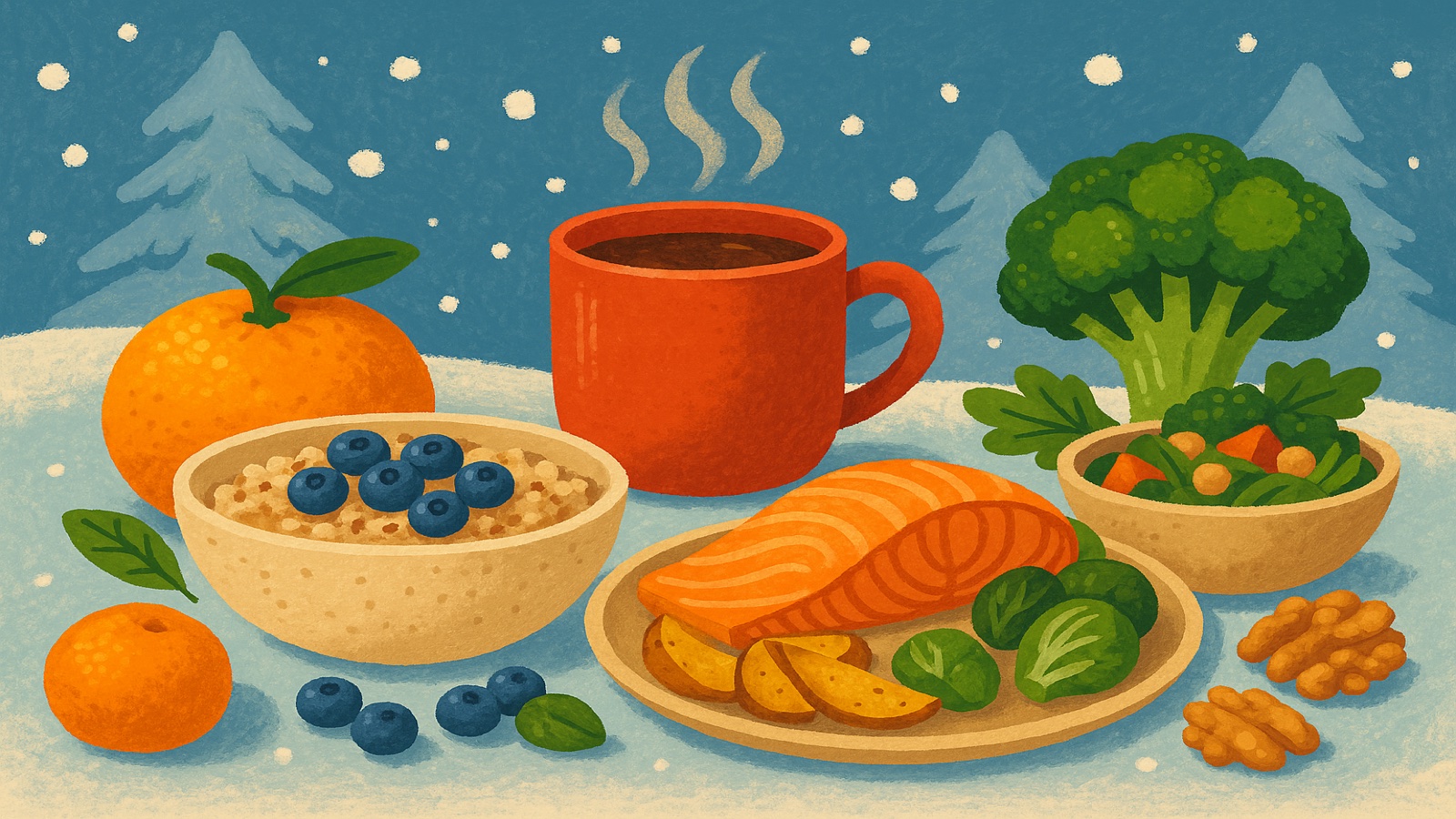
- Dinner: Baked salmon (or tempeh) with roasted potatoes (skin on) and Brussels sprouts; quinoa pilaf; chamomile.
Warm Wishes for Winter
December asks a lot of you, but it can also be deeply nourishing. Feed the season with steady, warm meals; drink to hydrate, not just to celebrate; chase daylight when you can; and protect your sleep. Most of all, share good food with good people. Here is to a healthy, energized winter and a joyful Christmas just around the corner.
References: Westerterp (2004) — Diet-induced thermogenesis; NIH Office of Dietary Supplements — Vitamin D Fact Sheet; U.S. Physical Activity Guidelines for Americans, 2nd ed.
Note: The information provided should not replace professional medical advice.