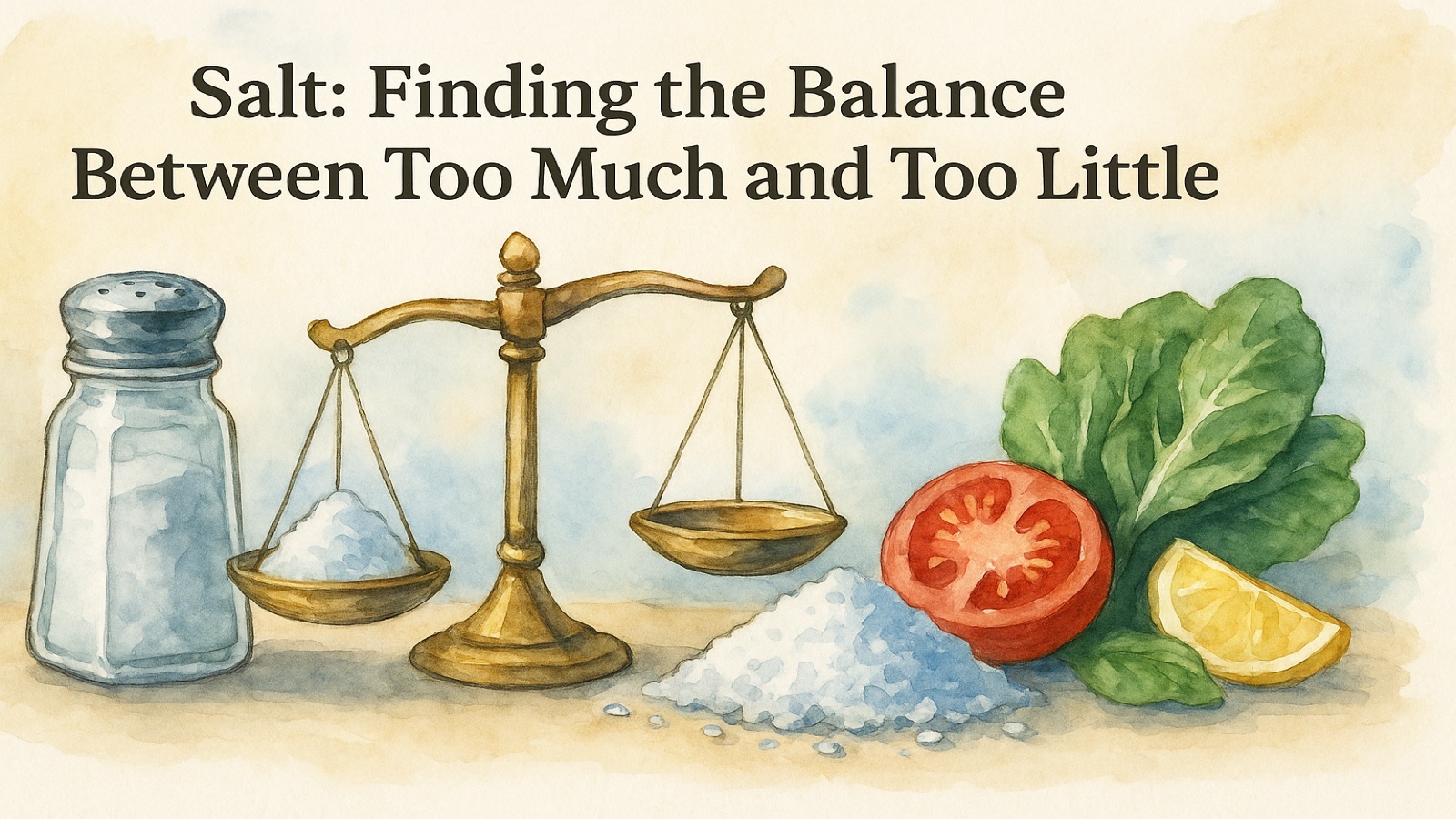
Salt: Finding the Balance Between Too Much and Too Little
Too much sodium raises long-term risk, too little can be dangerous in heat — a practical guide to balancing salt intake for daily health and summer hydration.
Salt is one of the oldest ingredients known to humankind. Whether sprinkled on eggs, stirred into soups, or baked into breads, it is a staple in almost every kitchen. But here is a question worth asking: if salt is everywhere, how much should we actually be consuming, and why does it matter?
Let's take a closer look at why moderate salt intake is crucial to health, what happens when it is too high or too low, and how to maintain a smart salt strategy, especially in the heat of summer.
Why Salt Matters: More Than Just Taste
Salt is made up primarily of sodium chloride, and sodium plays a vital role in the human body. It helps regulate:
- Fluid balance
- Nerve function
- Muscle contraction
The World Health Organization (WHO) recommends that adults consume less than 5 grams (about 1 teaspoon) of salt per day, which equals about 2 grams of sodium.
Too little sodium can lead to health issues, while too much, unfortunately common in modern diets, can cause serious long-term problems. Finding that balance is key.
What Happens with Too Much Salt?
Modern processed and packaged foods often contain hidden sodium, which contributes to excessive intake. According to the Centers for Disease Control and Prevention (CDC), more than 90% of Americans consume more sodium than recommended.
Health risks of high salt consumption include:
- High blood pressure (hypertension): Excess sodium increases water retention, raising blood volume and blood pressure.
- Heart disease and stroke: Elevated blood pressure is a major risk factor.
- Kidney damage: The kidneys must work harder to excrete excess sodium.
- Osteoporosis: Excess salt can increase calcium loss through urine.
- Stomach cancer: Some studies show a link between high salt intake and gastric cancer, especially in diets high in salty preserved foods.
A 2013 meta-analysis in The BMJ found that reduction in daily sodium intake led to statistically significant reduction in stroke risk and overall cardiovascular events.
And What About Too Little Salt?
While less common, sodium deficiency (hyponatremia) can be just as dangerous. It usually occurs due to excessive sweating, overhydration, or conditions affecting hormone balance.
Symptoms include:
- Fatigue and weakness
- Headache
- Confusion
- Seizures (in severe cases)
This is particularly relevant for endurance athletes, older adults, or individuals with health conditions affecting fluid balance.
A 2014 study published in the New England Journal of Medicine found that both high and very low sodium intake were associated with increased cardiovascular risks, reinforcing the importance of moderation.
Salt and Summer: What to Know in the Heat
Summer heat means more sweating, which means more electrolyte loss, including sodium. This is why maintaining the right salt balance is even more important when temperatures soar.
Key points during summer:
- Replenish with smart hydration: Water is essential, but in cases of heavy sweating, consider drinks with electrolytes, especially after outdoor workouts.
- Watch for symptoms: Muscle cramps, dizziness, or fatigue could signal electrolyte imbalance.
- Avoid salty processed snacks: These do not provide the hydration and electrolyte balance your body needs.
- Include naturally salty foods like celery, beets, or tomatoes for a healthier source of sodium.
How to Manage Salt Intake Smartly
1. Read Labels
Processed foods are the major source of hidden sodium. Learn to read Nutrition Facts labels, and aim for products with less than 140 mg of sodium per serving.
2. Cook More at Home
When you cook your own food, you control the salt content. Use herbs, citrus, and spices to bring out flavor without relying on salt.
3. Be Mindful of "Health Halo" Foods
Items like soups, dressings, and even whole-grain breads can have high sodium. Do not assume something is low-salt without checking.
4. Choose Potassium-Rich Foods
Potassium helps counterbalance sodium's effects. Add bananas, avocados, sweet potatoes, and leafy greens to your meals.
5. Gradually Reduce Your Salt Preference
Your taste buds adapt. If you slowly reduce the salt you add to food, over time you may find you do not miss it.
6. Sea Salt or Himalayan Salt? Be Cautious
These alternatives may have trace minerals, but they still contain sodium. The health benefits are negligible compared to total sodium intake.
A Friendly Reminder
Salt is essential to life, but like most things in nutrition, balance is everything. In summer, when sweat and heat take a toll, staying mindful of your sodium needs can help you stay energized, focused, and safe. Think of salt not just as seasoning, but as a nutrient that deserves attention and respect.
Take a moment to check your salt habits today, and do not forget, flavor can come from many places, not just the shaker.
References: World Health Organization — Sodium reduction; Mozaffarian et al. (2014) — Global sodium consumption and cardiovascular death; Aburto et al. (2013) — Lower sodium intake and health outcomes; CDC — About salt and sodium
Note: The information provided should not replace professional medical advice.