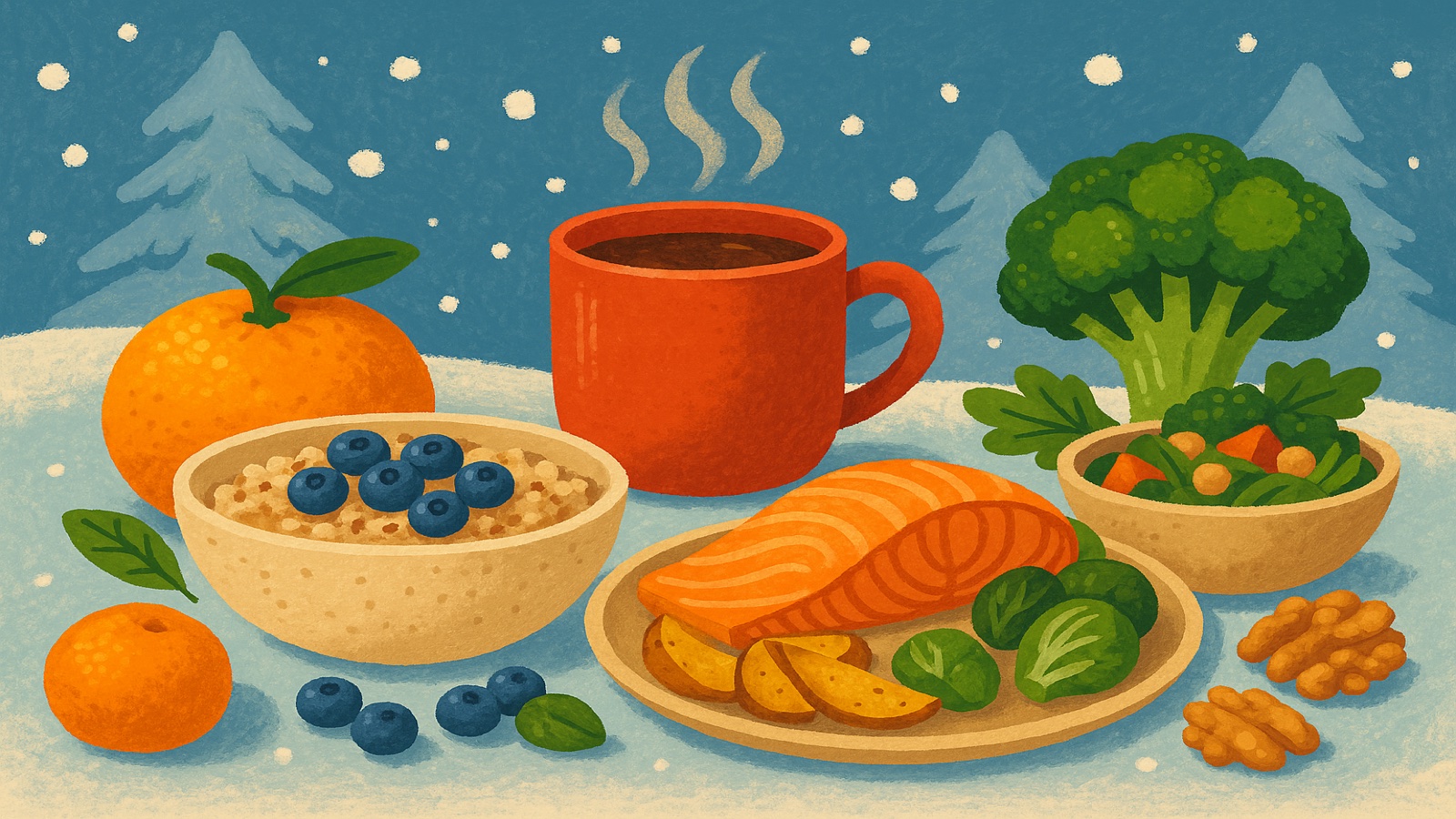
Cozy From the Inside Out: Food & Lifestyle Ways to Stay Warm After Mid-Autumn
Protein, complex carbs, warming spices, and simple daily habits that support circulation, energy, and core temperature when the post-autumn chill sets in.

The first post-mid-autumn chill hits different. One day you are in a light sweater; the next, your fingers are cold on the morning commute and your toes will not thaw. Here is the pleasant surprise: smart choices in the kitchen (plus a few daily habits) can literally help you feel warmer from the inside out. No gimmicks, just physiology, flavor, and a bit of seasonal common sense.
The Big Idea: How Food Helps You Feel Warm
Staying warm is not only about coats and heaters. Your body produces heat through:
- Diet-induced thermogenesis (DIT): the energy (heat) your body expends to digest, absorb, and metabolize food. Protein has the highest "thermic effect," followed by carbs, then fats.
- Fuel availability: regular, balanced meals give your body steady energy for heat production.
- Fluid and electrolyte balance: warm, well-seasoned fluids support circulation and comfort.
- Micronutrients: iron, iodine, selenium, vitamin B12, and vitamin D support oxygen delivery, thyroid function, muscle activity, and immune balance — all relevant to feeling warm and energetic.
- Sensible habits: caffeine, alcohol, sleep, and movement all nudge your thermal comfort in specific ways.
Think of your meals as internal layering: a base of complex carbs, a mid-layer of protein, and a top layer of healthy fats and warming liquids.
Principles for "Warming" Eating and Living
- Prioritize protein at each meal (and include complex carbs). Protein has a higher thermic effect than fats or carbs, modestly increasing heat production after eating. Pair it with complex carbohydrates (oats, barley, brown rice, potatoes, beans, lentils) to provide steady fuel your body can convert into warmth.
- Hydrate, preferably warm. A mug of broth, tea, or warm lemon water adds comfort and supports circulation and digestion. In cool, dry air we still lose fluid (and cold-induced diuresis is real), so regular warm beverages help.
- Think "soups and stews" for low-effort warmth. Soups, stews, and congee are naturally hydrating, easy to digest, and an excellent vehicle for protein, fiber, and spices. Their lower energy density helps you eat adequate volume with nutrient richness and cozy satisfaction.
- Use spices and aromatics for flavor-forward warmth. Ginger, garlic, pepper, turmeric, cumin, paprika, cinnamon, and chili bring aroma, enhance perceived warmth, and may have modest thermogenic effects (especially chili's capsaicin), while helping you rely less on salt.
- Support thyroid and oxygen delivery. Feeling cold can worsen with low iron (reduced oxygen delivery) or inadequate iodine/selenium (thyroid hormone production). Keep an eye on these nutrients from foods first; supplement only if a clinician recommends.
- Avoid the alcohol "warmth" trap. Alcohol causes peripheral vasodilation. You feel hot briefly while you are actually losing core heat faster. For true warmth, choose hot nonalcoholic drinks or dilute alcohol and keep it moderate.
- Move regularly. Frequent light movement (walks, gentle mobility) drives muscle activity and circulation — both key to feeling warm. Bonus: movement improves sleep and appetite, which supports better daytime thermogenesis.
- Sleep well. Poor sleep dysregulates appetite and stress hormones, undercutting daytime energy and your natural temperature rhythms. Aim for a consistent 7–9 hours.
Practical Tips You Can Use This Week
1) Build a "warming breakfast" template
- Oatmeal cooked with milk (or fortified soy/oat drink), topped with Greek yogurt or nut butter, cinnamon, and chopped nuts.
- Or eggs/soft tofu scramble with mushrooms and spinach, whole-grain toast, and a side of fruit.
Why: protein + complex carbs = steady fuel and a measurable bump in diet-induced thermogenesis.
2) Soup smarter (batch once, eat thrice)
Make a big pot: onion-garlic-ginger base → lentils or beans → chunky vegetables → barley or potatoes → olive oil finish. Portion and freeze.
Why: hydrating, mineral-rich, and reliably comforting; easy to reheat when you are cold and tired.
3) Use broth as a cooking liquid
Simmer whole grains (barley, farro, brown rice) and vegetables in low-sodium broth with bay leaves, black peppercorns, and a chili flake pinch.
Why: savory warmth with built-in electrolytes and flavor.
4) Dial up "warming" spices
- Ginger tea with lemon in the afternoon.
- Sprinkle black pepper and turmeric on eggs or tofu; paprika and cumin on roasted vegetables; cinnamon in porridge.
Why: aromatic heat, improved palatability with less salt, and modest thermogenic support from chili's capsaicin.
5) Choose protein that fits your routine
- Quick: canned salmon/tuna with white beans + olive oil + lemon + chili flakes.
- Cozy: chicken-barley stew or lentil-sweet potato chili.
- Plant-forward: tempeh stir-fry over brown rice with ginger-garlic-soy.
Why: adequate protein across meals supports both warmth (thermogenesis) and muscle maintenance.
6) Do not fear hearty carbs: time them
Have complex carbs at breakfast and lunch (oats, barley, quinoa, potatoes, beans). Consider a smaller but still present portion at dinner if it suits your sleep.
Why: steady glucose availability helps your body maintain heat, mood, and focus.
7) Respect iron, iodine, selenium, and B12
- Iron: legumes, leafy greens, meats; pair plant iron with vitamin C (lemon, citrus, peppers) to boost absorption.
- Iodine: dairy, eggs, sea fish, iodized salt (if you use salt, choose iodized).
- Selenium: Brazil nuts (1–2), fish, eggs, whole grains.
- B12: dairy, eggs, fish/meat; fortified plant milks/cereals for vegans.
Why: oxygen delivery and thyroid function are central to feeling warm and energetic.
8) Warm beverages, wisely caffeinated
Green or black tea offers a mild thermogenic/catechin effect; coffee warms and perks, but avoid overdoing caffeine late (sleep matters). Add a splash of milk for extra protein and comfort.
9) Alcohol: keep it light and late-afternoon only (if at all)
If you choose a mulled drink, keep the pour small and pair with a substantial, protein-rich meal; switch to a nonalcoholic hot beverage after.
10) "Thermal snacks" between meals
- Miso soup with tofu cubes and scallions.
- Hot cocoa made with milk or fortified plant milk (go easy on sugar).
- Ginger-lemon honey tea when the 3 p.m. chill hits.
Why: warmth, fluids, and a little fuel to keep your core temp comfy.
11) Cook once, reheat many
Batch-cook grains, beans, stews, and roasted root vegetables (carrots, squash, beets). Reheat with a splash of broth and olive oil to restore moisture and heat.
12) Season liberally, salt moderately
Use acids (lemon, vinegar), herbs, and spices to make food exciting without oversalting. If you use salt, iodized salt helps cover iodine needs.
One-Day "Stay-Warm" Sample Menu
- Breakfast: Steel-cut oats cooked in milk, stirred with cinnamon and raisins; side of scrambled eggs with black pepper; hot green tea.
- Lunch: Lentil-barley soup with carrots, celery, and kale; slice of whole-grain bread with olive oil; ginger tea.
- Snack: Cottage cheese or soy yogurt with berries and chopped walnuts; hot lemon water.
- Dinner: Salmon (or tofu) and potato-green bean tray bake with rosemary, garlic, and olive oil; side of warm quinoa pilaf.
- Evening mug: Low-sugar hot cocoa or chamomile.
The Bottom Line
Staying warm after mid-autumn is not only about sweaters and thermostats. It is about strategic nourishment: protein at every meal, complex carbs for steady fuel, warm hydrating foods, and bold, warming flavors. Add gentle daily movement and solid sleep, and you have layered up from the inside — safely, deliciously, and scientifically.
Make a pot of soup, put the kettle on, and let your kitchen be your coziest room this season.
References: Westerterp (2004) — Diet-induced thermogenesis; Dulloo et al. (1999) — Green tea catechins and energy expenditure; NIH Office of Dietary Supplements — Iron Fact Sheet; NIH Office of Dietary Supplements — Iodine Fact Sheet; NIH Office of Dietary Supplements — Selenium Fact Sheet
Note: The information provided should not replace professional medical advice.