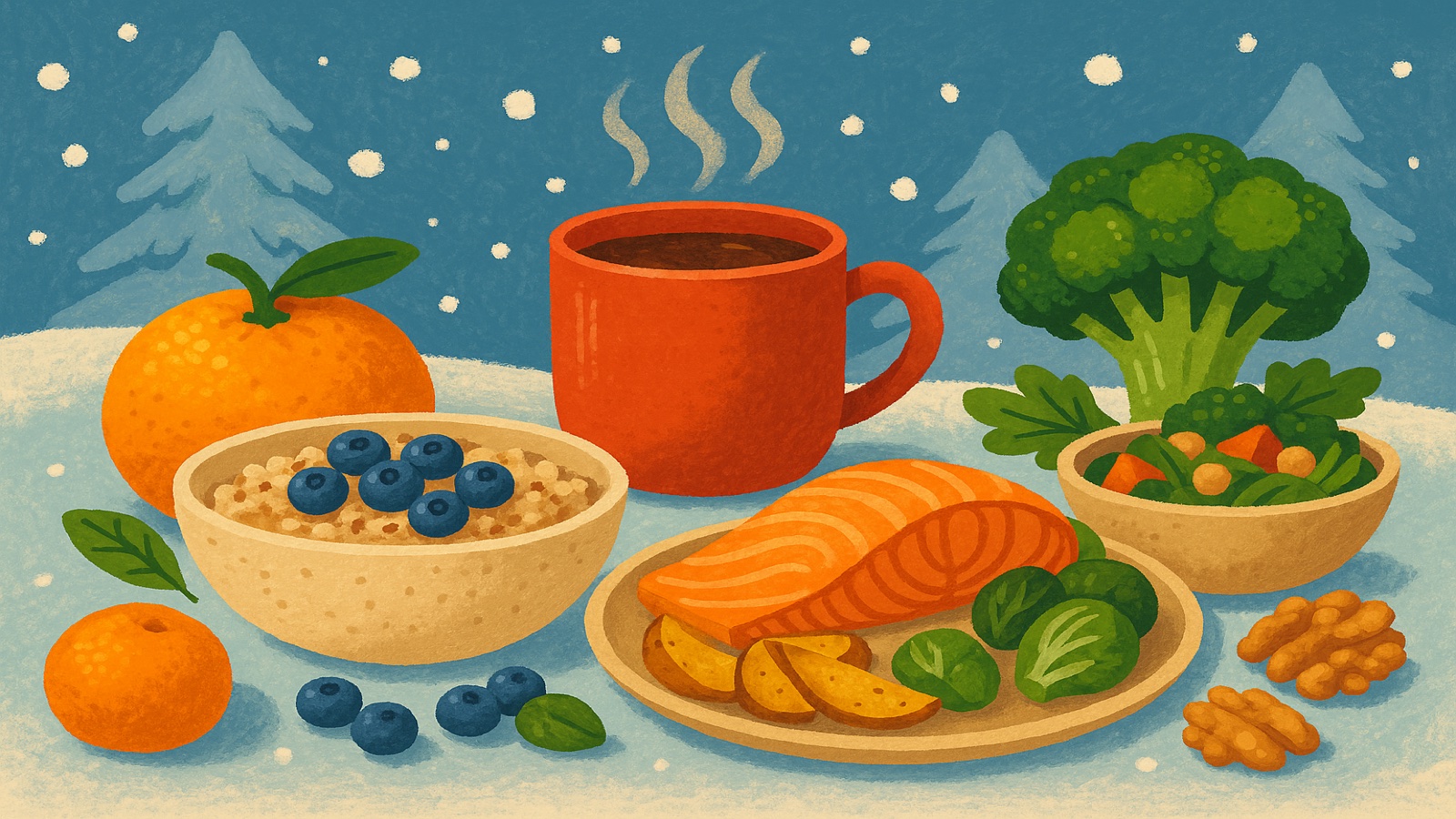
Eating Well in Stormy Weather: How Food Choices Protect Your Health
Storm-ready nutrition for power outages and stress — how to build a balanced pantry, stay hydrated, keep food safe, and eat balanced meals when the forecast turns rough.
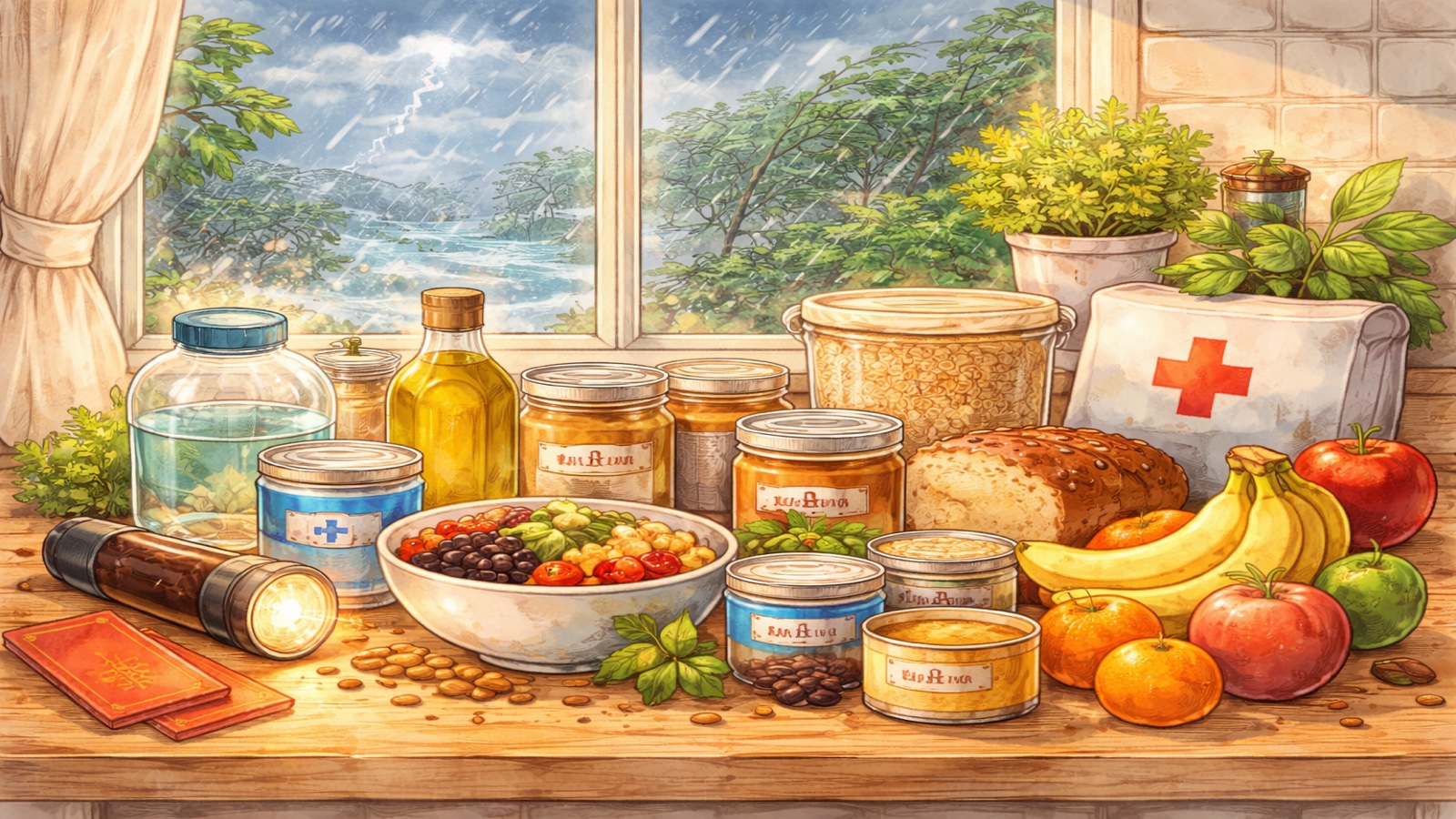
When the forecast turns to heavy rain, wind, floods, or snow, most of us think about flashlights, chargers, and sandbags. But have you ever stopped to ask: "Am I prepared to eat in a way that actually helps my body during stormy weather?"
Storms can mean power outages, limited grocery access, stress, disrupted routines, and a lot of time indoors. All of those affect what we eat, how our bodies feel, and how well we recover afterward. With a little planning and a few smart choices, your food can support your energy, immune system, and mood instead of becoming another problem to manage.
This article walks through common (not-so-ideal) storm eating habits and then offers practical, science-backed tips for what to eat before, during, and after storms to stay well.
How We Usually Eat During Storms
In real life, storm food often looks like this:
- Last-minute shopping for chips, instant noodles, cookies, frozen pizza, and soda "just in case"
- Skipping fresh produce because we worry it will spoil if the power goes out
- Relying on comfort foods that are very salty, fatty, or sugary to cope with stress or boredom
- Drinking less water because we are indoors and "do not feel thirsty"
- Eating whatever survived the outage without thinking about food safety
These choices make sense emotionally, but they come with clear downsides:
- High sodium and ultra-processed foods: Many shelf-stable snacks and canned meals are very high in salt and low in fiber and micronutrients. High sodium intake is linked to increased blood pressure and higher risk of heart disease and stroke over time, and storms often hit older adults and people with chronic conditions hardest.
- Blood sugar swings and low energy: Sweets and refined starches (white bread, pastries, many crackers and instant noodles) cause quick spikes and crashes in blood sugar. That can worsen fatigue, irritability, and stress during a period when you already feel off-routine.
- Dehydration without noticing: In cold or stormy weather, you may not feel thirsty, but your body still needs adequate fluid to support circulation and brain function. The American Heart Association notes that staying well hydrated helps the heart pump blood more easily and supports muscle efficiency.
- Foodborne illness risk after power outages: If storms cause outages, refrigerated or frozen foods can quickly become unsafe. The CDC emphasizes that refrigerated perishable foods (meat, eggs, dairy, leftovers, cut fruit/veg) are generally unsafe after about 4 hours without power if the fridge door is opened. Eating spoiled food can add diarrhea, vomiting, and fever on top of an already stressful situation.
- Micronutrient gaps over several days: When storms last a few days and we live mostly on salty snacks and simple carbs, we may fall short on vitamins, minerals, and protein that support the immune system and healing.
The good news: small, practical shifts in what you store and how you eat can solve most of these problems.
Smart Food Strategies for Stormy Weather
1. Build a Balanced "Storm Pantry" Before You Need It
Preparedness guidance from Ready.gov and CDC suggests having at least a 3-day supply of non-perishable food and about 1 gallon of water per person per day for drinking and basic uses, with more if possible.
Instead of filling that pantry with only chips and instant ramen, think in food groups:
Hydration and fluids
- Bottled water
- Unsweetened shelf-stable beverages (like 100% juice boxes in small portions)
Protein
- Canned beans (black beans, chickpeas, lentils)
- Canned tuna, salmon, or chicken
- Shelf-stable tofu or vacuum-packed lentil/bean pouches
- Peanut butter or other nut/seed butters
Carbohydrates (preferably higher fiber)
- Oats, instant plain oatmeal packets
- Brown rice or quick-cooking whole grains
- Whole grain crackers
Fruits and vegetables
- Canned vegetables (low-sodium if possible)
- Canned tomatoes
- Canned fruit packed in water or its own juice (not heavy syrup)
- Dried fruits (raisins, apricots, dates)
Healthy fats and extras
- Unsalted nuts and seeds
- Olive or canola oil
- Shelf-stable milk or fortified plant milks in cartons
University and extension guidance on emergency food supplies emphasizes storing foods that are nutrient-dense, easy to prepare, and safe at room temperature, and keeping them in airtight containers in a cool, dark place. That way, even if the power goes out, you can still assemble meals that contain protein, fiber, and key micronutrients.
2. Choose "Comfort Food with Benefits"
Storms naturally push us toward comfort foods. Instead of fighting that impulse, upgrade it.
Harvard Health suggests improving comfort foods by swapping in whole grains, more vegetables, and healthier fats while preserving flavor. During storms, that might look like:
- Choosing canned bean chili with added canned tomatoes and frozen or canned vegetables instead of only instant noodles
- Using oats to thicken soups and stews instead of only white flour
- Making a simple lentil soup with canned lentils, canned tomatoes, dried herbs, and a bit of olive oil
- Serving whole grain crackers with peanut butter and banana instead of pastries alone
Warm, high-volume foods like soups, stews, and oatmeal can help you feel satisfied with fewer empty calories and provide hydration at the same time.
3. Prioritize Hydration, Even When It Is Cold and Stormy
It is easy to forget about drinking when you are stuck indoors and not sweating, but your body still needs water for circulation, temperature control, and mental clarity. The American Heart Association notes that good hydration helps the heart pump blood more easily and muscles work more efficiently.
Practical hydration tips for storms:
- Follow emergency water storage guidance. CDC recommends storing at least 1 gallon of water per person per day for at least 3 days, and ideally more if you can. This covers drinking, basic cooking, and teeth brushing.
- Use foods that contribute water. Harvard Health points out that many foods, including fruits, some vegetables, and even cooked grains, contain a significant amount of water. If your water supply is limited, hydrating foods like canned fruit in juice, soups, and stews help.
- Watch out for sugary and high-caffeine drinks. Hot chocolate, sweetened coffee drinks, and sodas are comforting but can add a lot of sugar and may not hydrate as effectively as water or herbal tea.
A simple rule: keep a dedicated water bottle near you, and aim to sip regularly throughout the day, not just when you feel very thirsty.
4. Keep Food Safe During and After Power Outages
Storms often mean power loss. Food safety then becomes as important as food choice.
The CDC and USDA give clear, consistent guidance:
- Keep refrigerator and freezer doors closed as much as possible.
- If unopened:
- Refrigerators generally keep food safe for up to 4 hours without power.
- A full freezer keeps food safe for about 48 hours; a half-full freezer for about 24 hours.
- After 4 hours without power:
- Move perishable refrigerated foods into a cooler with ice if possible to keep them at or below 40°F (4°C).
- Throw away perishable foods that have been above 40°F for more than 2 hours (meat, poultry, fish, eggs, milk, leftovers, cut fruit and vegetables).
- Never taste food to see if it is safe. "When in doubt, throw it out."
After floods or severe storms, any food that has come into contact with flood or storm water should also be discarded.
These rules can feel strict, but they are designed to prevent foodborne illnesses, which can be dangerous, especially when medical services are harder to access during emergencies.
5. Eat Regular, Balanced Meals to Support Your Immune System and Mood
Storms disrupt routines, and it is common to snack all day or skip real meals. Your body, however, does better with roughly regular eating times and balanced plates:
- Include:
- A protein source (beans, fish, poultry, eggs, tofu, nut butter)
- A fiber-rich carbohydrate (whole grains, starchy vegetables, or beans)
- Vegetables and/or fruit
- A small amount of healthy fat (nuts, seeds, olive oil)
Even when options are limited, you can approximate this pattern with pantry foods. For example:
- Brown rice + canned black beans + canned corn and tomatoes + olive oil
- Whole grain crackers + canned tuna + canned vegetable soup
- Instant oats + peanut butter + dried fruit
Eating this way supports more stable blood sugar, steadier energy, and better satiety. Over several days, it also helps maintain micronutrient intake that supports immune function.
6. Be Gentle With Salt, Sugar, and Alcohol
Stressful weather makes it easy to lean heavily on salty snacks, sweets, and extra drinks. Keeping these in check during storms is especially helpful for:
- People with high blood pressure, heart disease, kidney disease, or diabetes
- Older adults, whose bodies may be more sensitive to fluid and electrolyte shifts
General, evidence-based guidance:
- Try to limit very salty, highly processed foods as your main fuel. Use them as side items, not centerpieces.
- Keep sweets as small, intentional treats instead of all-day grazing.
- Use alcohol cautiously; it can affect sleep, judgment, and hydration.
Final Encouragement: Let Your Storm Habits Work For You
Storms will always disrupt routines. That part is out of our control. What you can control is the kind of fuel you give your body while the wind howls or the rain pours.
A few key actions go a long way:
- Build an emergency pantry that includes nutritious, shelf-stable foods, not just snacks.
- Prioritize hydration, even when you are indoors and not sweating.
- Practice basic food safety during and after power outages.
- Aim for simple, balanced meals with protein, fiber, and some fruits or vegetables.
- Use comfort foods thoughtfully, with small upgrades that protect your heart and energy.
If you put even one or two of these tips into practice before the next storm, you are already helping your future self weather it with more strength, comfort, and resilience.
References: American Heart Association — Staying Hydrated, Staying Healthy; CDC — Keep Food Safe After a Disaster or Emergency; Ready.gov — Build a Kit; CDC — How to Create and Store an Emergency Water Supply; University of Georgia Cooperative Extension — Preparing an Emergency Food Supply
Note: The information provided should not replace professional medical advice.