Refresh Your Body: Smart Hydration and Summer-Friendly Foods
From daily water habits to high-water foods and heat-safe routines, here is how to stay hydrated, energized, and sharp throughout summer.
The sun is high, the days are long, and the air smells like sunscreen and barbecues. Flip-flops slap against hot sidewalks, fans buzz in windows, and the craving for something cool and refreshing is stronger than ever. Yes, summer is here. With all its brightness and warmth, it invites us outdoors to beaches, parks, trails, and patios, but it also challenges our bodies to adapt to higher temperatures and longer exposure to heat. It is a time of joy and movement, but it is also a season where hydration becomes not just helpful, but essential.
Why Staying Hydrated in Summer Matters
Our bodies are composed of around 60% water, and every system depends on it — from regulating temperature to carrying nutrients and flushing out toxins. In hot weather, we lose more fluids through sweat, especially during outdoor activities or long hours in the sun.
A 2015 study published in Nutrition Reviews found that even mild dehydration can impair mood, memory, and brain performance in all age groups. Dehydration also affects physical performance, increasing fatigue and reducing endurance. According to the CDC, severe dehydration can lead to heat exhaustion or heat stroke, two heat-related illnesses that spike in frequency during summer months.
Cases of summer dehydration are more common than many realize. Emergency departments frequently report increased visits from individuals experiencing dizziness, confusion, dry mouth, or rapid heartbeat, all signs of dehydration. Children and older adults are particularly vulnerable due to reduced thirst perception or limited ability to regulate body temperature.
That is why drinking fluids regularly and consuming water-rich foods are key to staying well throughout the season. Hydration supports everything from skin elasticity and digestion to energy levels and cognitive clarity.
Hydration Strategies: Water, Foods, and Lifestyle Tips
Drink Water Often and Mindfully
Water is, without question, the most direct and effective way to stay hydrated. The National Academies of Sciences recommends about 3.7 liters per day for men and 2.7 liters for women, including fluid from all sources. In hot weather, that need increases.
Tips to make it easier:
- Carry a reusable water bottle and refill it throughout the day.
- Infuse water with lemon, cucumber, or mint for flavor.
- Set phone reminders to drink at regular intervals.
- Sip water before meals and after bathroom breaks to stay on track.
Eat Your Hydration: Summer Foods That Help
Hydrating foods not only help maintain fluid balance but also supply essential electrolytes and nutrients that support cellular hydration and body cooling.
Top hydrating foods to include:
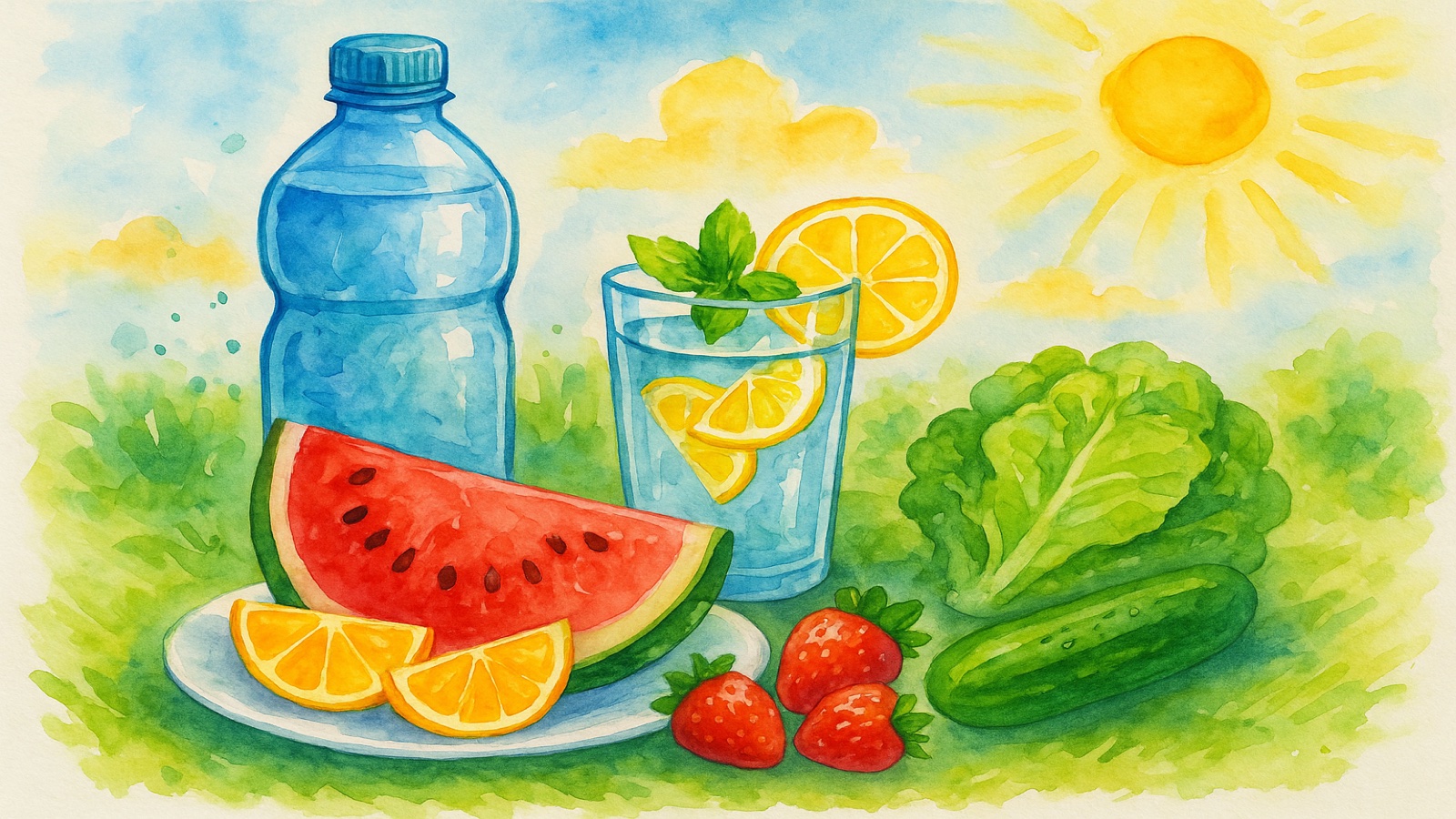
- Cucumbers (96% water): Cooling and refreshing.
- Watermelon (92% water): Hydrating and rich in antioxidants.
- Strawberries (91% water): Good source of vitamin C and natural sweetness.
- Zucchini (94% water): Light and versatile in summer meals.
- Oranges and citrus fruits: Vitamin C plus potassium.
- Lettuce and celery: Crisp, cooling, and high in water.
A 2020 review in Nutrients confirms that fruits and vegetables with high water content can meaningfully contribute to hydration status.
Pair these foods with light meals like quinoa bowls, cold pasta salads, or yogurt parfaits to create satisfying, hydrating dishes without weighing you down.
Wellness Habits for Hot Days
Hydration is also about behavior. Certain habits can either support or sabotage your efforts to stay cool and hydrated.
Lifestyle practices to stay cool and hydrated:
- Time outdoor activities wisely: The hottest hours (typically 11 a.m. to 4 p.m.) pose the greatest dehydration risk.
- Dress smart: Loose-fitting, light-colored, breathable fabrics help reduce heat buildup.
- Rest strategically: Sit in shade or air-conditioned spaces during peak heat.
- Limit dehydrating agents: Alcohol and excess caffeine may increase fluid loss.
- Listen to your body: Headaches, fatigue, dry mouth, and dark urine are key warning signs.
Make Hydration a Summer Habit
Now that you know how vital hydration is and how easy it can be with the right tools, it is time to put it into practice. Keep a bottle nearby, snack on juicy fruits, pay attention to your body's signals, and build daily rituals that protect your health in the heat.
This summer, let every sip and every bite support your energy and well-being. Stay cool, stay nourished, and let hydration be your secret weapon for feeling great all season long.
References: Benton and Young (2015) — Hydration status and mental performance; CDC — Heat-related illnesses; Manz and Wentz (2005) — Hydration and chronic disease prevention
Note: The information provided should not replace professional medical advice.