Whole Foods Versus Fortified Trend Foods: What Is the Difference, and Which One Should You Choose?
High-protein cereal, vitamin water, fortified oat milk — when whole foods win, when fortification helps, and a practical filter for trend foods at the store.
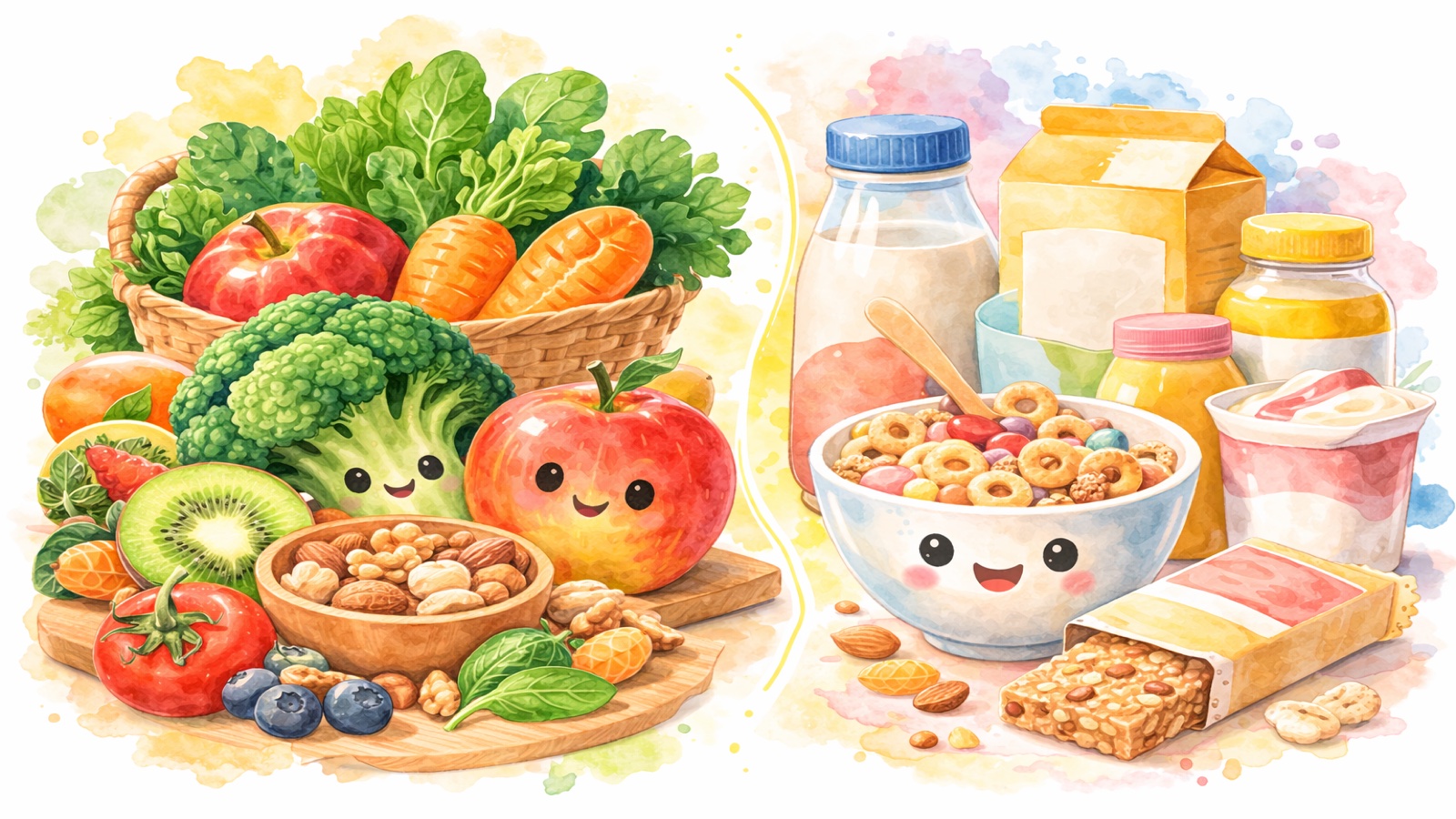
Have you noticed how often foods are now marketed with extra promises? High-protein cereal. Fiber-boosted snack bars. Vitamin water. Calcium-added oat milk. Probiotic soda. Iron-fortified crackers. These products can sound impressive, and sometimes they are genuinely helpful. But they also raise an important question: what is the difference between whole foods and fortified foods, and when does each one make sense?
This is a timely question because the modern grocery store is full of "trend foods" that seem healthier because something has been added to them. At the same time, many nutrition professionals continue to emphasize whole and minimally processed foods as the foundation of a healthy diet. The result is a lot of confusion.
The good news is that this does not have to be an either-or debate. Whole foods and fortified foods each have a place. The key is understanding what they are, what they do well, where they fall short, and how to make the smartest choice for your real life.
What Are Whole Foods?
Whole foods are foods that are close to their natural form, with little or minimal processing. They are not always completely untouched, but they are generally recognizable as the food they started as. Examples include:
- Fresh fruits and vegetables
- Beans and lentils
- Whole grains like oats, brown rice, barley, and quinoa
- Nuts and seeds
- Eggs, fish, plain yogurt, and minimally processed dairy
- Fresh meat or poultry without heavy processing
The World Health Organization states that a healthy diet is based on a variety of unprocessed and minimally processed foods, including vegetables, fruits, legumes, nuts, and whole grains. Harvard's Nutrition Source makes a similar point, emphasizing that whole grains and minimally processed foods offer a broader nutritional package than refined or highly manipulated alternatives.
Whole foods are valuable not only because of the nutrients listed on a label, but because of the full matrix of fiber, naturally occurring vitamins and minerals, water content, texture, and plant compounds such as polyphenols and carotenoids. In many cases, that combination influences fullness, blood sugar response, gut health, and long-term disease risk in ways that single nutrients alone cannot fully reproduce.
For example:
- A whole apple provides fiber, water, vitamin C, and plant compounds that help with satiety and slow digestion.
- Oats provide not only carbohydrates, but also fiber, some protein, and a structure that affects how quickly they are digested.
- Beans provide plant protein, iron, magnesium, potassium, and fiber together in one food.
This is one reason many dietary guidelines still place whole or minimally processed foods at the center of healthy eating patterns.
What Are Fortified Foods?
Fortified foods are foods that have nutrients added to them. Sometimes the nutrients were lost during processing and are added back. Sometimes they are added to help address nutrient gaps in the population.
The FDA describes fortification as the addition of nutrients to foods in accordance with its fortification policy, and it specifically discourages indiscriminate fortification simply for marketing purposes. Harvard's Nutrition Source explains that fortified foods contain vitamins or minerals added after processing, either to replace nutrients that were removed or to supply nutrients that are lacking in the average diet.
Examples of fortified foods include:
- Milk or plant milks with added vitamin D and calcium
- Breakfast cereals with added iron, folic acid, or B vitamins
- Corn masa flour products fortified with folic acid
- Orange juice with added calcium or vitamin D
- Some breads or grain products with folic acid and iron
- Certain snack bars or beverages with added protein, fiber, or vitamins
Fortification is not automatically a gimmick. In public health, it has played a meaningful role. A classic example is folic acid fortification, which helps reduce the risk of neural tube defects in pregnancy. The NIH Office of Dietary Supplements explains that folate is naturally present in some foods, while folic acid is added to fortified foods and supplements. The FDA also provides specific guidance on folic acid fortification of corn masa flour products, reflecting how fortification can be used to improve population health.
Another major example is vitamin D fortification. The NIH Office of Dietary Supplements notes that obtaining sufficient vitamin D from natural food sources alone is difficult for many people, and that consuming vitamin D-fortified foods can be essential for maintaining adequate vitamin D status.
So fortified foods are not inherently "fake" or unhealthy. The question is how they fit into the larger pattern of eating.
Whole Foods Versus Fortified Foods: What Are the Main Differences?
1. Nutrient package versus single-nutrient boost
Whole foods generally provide a broad package of nutrients and beneficial compounds. A fortified food usually highlights one or several added nutrients. For instance:
- Whole oats offer fiber, some protein, minerals, and natural structure.
- A fortified cereal may offer added iron and B vitamins, but can still be highly refined and high in added sugar.
A food can be fortified and still be nutritionally weak overall if the rest of the product is mostly refined starch, added sugar, or sodium.
2. Fiber and food structure
Many whole foods naturally provide fiber, which helps with satiety, digestive health, and glycemic control. Fortified foods may have fiber added, but the health experience is not always the same as eating a whole food that naturally contains fiber in its original structure.
Harvard emphasizes that whole grains offer a "complete package" of health benefits that refined grains do not. That idea applies more broadly to many whole foods.
3. Degree of processing
Fortified foods are often, though not always, more processed. Some are helpful staples, such as fortified milk alternatives. Others are highly processed products that have had nutrients added back in or added on top. WHO continues to recommend minimizing highly processed foods even if they carry nutrition claims.
4. Role in public health versus role in marketing
Some fortified foods clearly serve a public health purpose, such as folic acid-fortified grains or vitamin D-fortified dairy and plant milks. Others are better understood as convenience products or marketing responses to consumer demand for protein, fiber, probiotics, or functional ingredients.
That does not mean they are useless. It means you should ask: Is this food helping me meet a real need, or is the label mostly making a weak food look stronger than it is?
When Whole Foods Are Usually the Better Choice
For most day-to-day eating, whole foods should be the default choice. They tend to be the better option when:
You want a strong nutritional foundation
WHO, Harvard, and many other authorities still agree that healthy eating starts with minimally processed foods such as vegetables, fruits, whole grains, legumes, nuts, and seeds.
You are trying to improve fullness and appetite control
Whole foods tend to be more filling because of their fiber, water content, chewing time, and natural structure. An orange is usually more satisfying than a sweetened vitamin drink. A bowl of oats tends to be more filling than a sweetened high-protein cereal bar.
You want to reduce added sugar, sodium, or ultra-processed foods
Many "functional" or trend products still contain meaningful amounts of sugar, salt, or refined ingredients. A fortified food is not automatically a lower-sugar, lower-sodium, or less processed food.
You are aiming for long-term dietary quality
Healthy diets are built on patterns. Whole foods help create patterns that support heart health, blood sugar control, and gut health over time.
When Fortified Foods Can Be a Smart Choice
Fortified foods can absolutely be useful, and sometimes they are one of the most practical options.
1. When a nutrient is hard to get in adequate amounts
This is one of the strongest reasons to use fortified foods.
- Vitamin D: Hard to obtain from food alone for many people. Fortified milk or plant milk can be very useful.
- Folate/Folic acid: Fortified grains help reduce neural tube defects at the population level.
- Vitamin B12: For people who eat very little or no animal food, fortified foods can help support adequate intake.
2. When dietary preferences or restrictions make certain nutrients harder to obtain
For example:
- A vegan may choose fortified soy milk with calcium, vitamin D, and B12.
- Someone who does not tolerate dairy may rely on a fortified milk alternative rather than trying to get all calcium elsewhere.
- A person with low appetite may benefit from strategically fortified foods if whole-food intake is limited.
3. When convenience genuinely matters
Real life is not always ideal. Sometimes a fortified cereal with milk and fruit is a far better breakfast than skipping breakfast entirely. Sometimes a fortified whole-grain bread can be a practical staple. Convenience matters, especially when it helps people move toward better patterns rather than away from them.
4. When the base food is already reasonably healthy
A fortified food can be a strong choice when the underlying food is good to begin with. Examples might include:
- Fortified unsweetened soy milk
- Fortified plain yogurt alternatives
- Whole-grain breakfast cereal that is also low in added sugar and high in fiber
These are different from products that are essentially sweets or refined snacks with a few vitamins sprinkled in.
How to Decide in Real Life: A Practical Nutritionist's Filter
When comparing a whole food and a fortified trend food, ask these questions:
1. What is the food underneath the claim?
If the package says "high protein" or "added vitamins," look beyond the headline. Is it still mostly refined starch, sugar, and additives? Or is it built on a nutritious base?
2. What problem is this food solving?
- Is it helping you meet a real nutrient gap such as vitamin D, calcium, or B12?
- Is it just appealing because the label sounds healthy?
3. Could a whole-food option do the job just as well?
Examples:
- Instead of a fiber-enhanced cookie, could you eat fruit plus nuts?
- Instead of a sugary vitamin water, could you drink water and eat an orange?
- Instead of a "protein cereal" with lots of sugar, could you have plain yogurt with oats and seeds?
4. Is the fortified food adding to a healthy pattern or distracting from it?
A fortified food should ideally support your diet, not become an excuse to eat more highly processed foods.
Practical Scenarios: When to Choose Which
Scenario 1: Breakfast
- Whole-food choice: Oatmeal with fruit, nuts, and yogurt.
- Fortified-food choice: A low-sugar fortified cereal with milk or fortified soy milk.
A wholesome nutritionist would usually favor the oatmeal, but the cereal can still be reasonable if it is convenient, low in sugar, and paired with protein and fruit.
Scenario 2: Dairy-free lifestyle
- Whole-food option: Leafy greens, tofu, beans, nuts, and seeds.
- Fortified-food option: Unsweetened fortified soy or oat milk.
In this case, a fortified beverage may be a very practical and helpful addition, especially for calcium and vitamin D.
Scenario 3: Quick snack
- Whole-food option: Apple plus peanut butter, or carrots and hummus.
- Fortified trend option: A "protein bar" with added vitamins.
The whole-food option is usually the better default, but the bar may be useful for travel or emergencies if it has a reasonable ingredient profile.
Scenario 4: Pregnancy or preconception
Whole foods remain foundational, but folic acid-fortified foods and supplements are especially important because folate adequacy is a public health priority during this life stage.
A Balanced Bottom Line
Whole foods and fortified foods do not need to be enemies. Whole foods should usually form the core of your eating pattern because they provide a broader, more naturally balanced nutritional package and are consistently supported by major health organizations. Fortified foods can be excellent tools when they address a real nutrient need, fit your dietary pattern, or make healthy eating more practical.
A good rule of thumb is this:
- Let whole foods be the foundation.
- Let fortified foods be strategic helpers, not the stars of the show.
If you use that framework, you can enjoy the convenience of modern products without losing sight of what actually builds health over time.
References: World Health Organization — Healthy diet; Harvard T.H. Chan — Healthy Eating Plate; Harvard T.H. Chan — Whole Grains; FDA — Questions and Answers on FDA's Fortification Policy; Harvard T.H. Chan — Processed Foods and Health; NIH Office of Dietary Supplements — Folate Fact Sheet; FDA — Fortifying Corn Masa Flour Products with Folic Acid; NIH Office of Dietary Supplements — Vitamin D Fact Sheet; FDA — Consumer Research on Labeling, Nutrition, Diet, and Health
Note: The information provided should not replace professional medical advice.